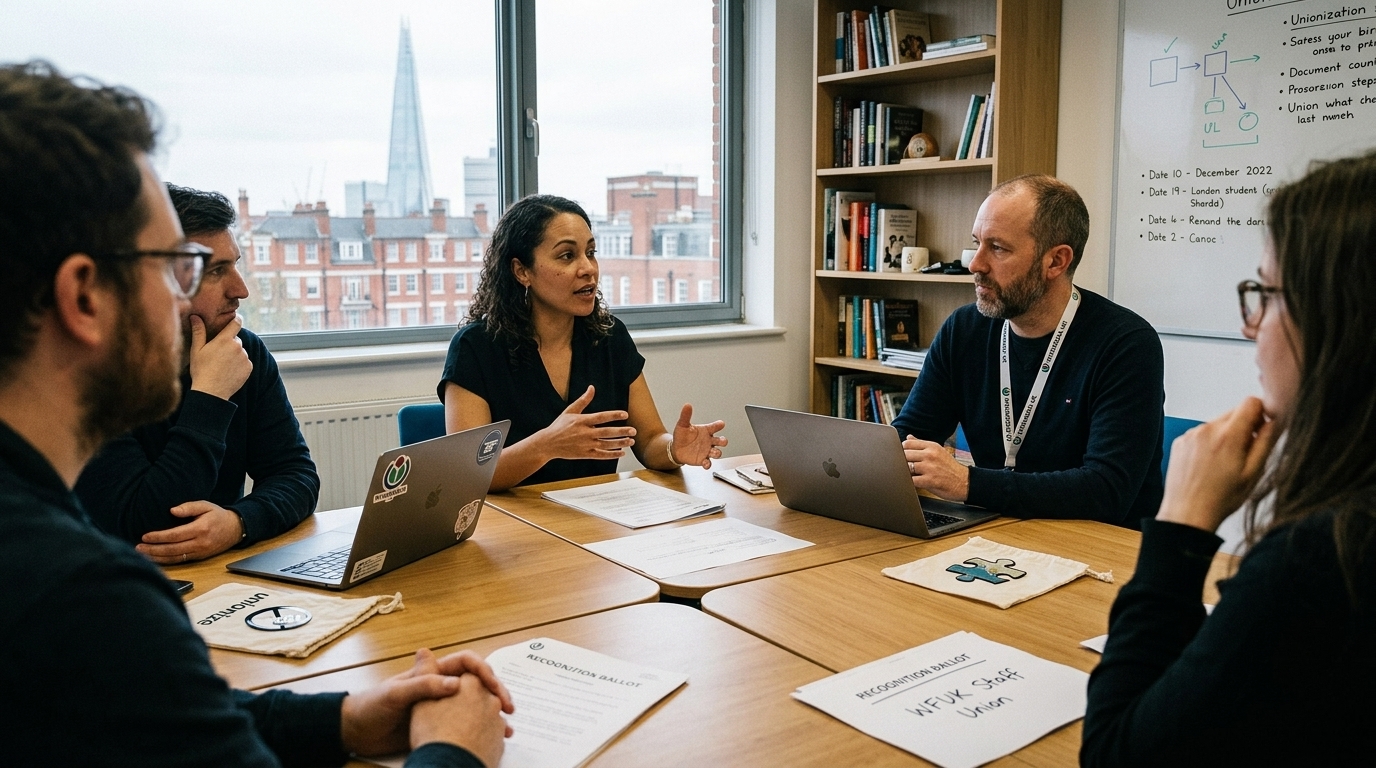
In a move that signals a significant shift within the nonprofit organization responsible for the world’s most extensive repository of knowledge, UK-based staff at the Wikimedia Foundation (WMF) have formally requested union recognition. On Wednesday, employees delivered a letter to WMF leadership calling for the voluntary recognition of their union, citing a need for improved transparency, job security, and a meaningful voice in the organization's strategic direction.
The Backdrop of Labor Unrest
This push for unionization is not an isolated event but rather the culmination of growing tensions within the WMF. Over the past two years, the foundation has navigated turbulent waters, mirroring the broader tech industry's instability. The 2023 layoffs, which saw the departure of approximately 5% of the global workforce, shattered the long-standing perception of the WMF as a sanctuary from the volatility of the private sector. For many UK employees—who play pivotal roles in maintaining the technical infrastructure and administrative operations of Wikipedia—the layoffs were a wake-up call regarding their lack of collective bargaining power.
Wikipedia operates on a unique and delicate balance: a global community of volunteer editors who generate content, supported by the WMF, which handles the legal, financial, and technical heavy lifting. This structure often creates internal friction. Staff members frequently find themselves caught between the ideological demands of the volunteer community and the operational mandates of a leadership team tasked with keeping the platform viable in a hyper-competitive digital landscape.
The AI Inflection Point
Central to the staff's concerns is the rapid advancement of Artificial Intelligence. Large Language Models (LLMs) like OpenAI’s GPT-4 and Google’s Gemini rely heavily on Wikipedia's corpus for training. While this underscores the platform's indispensable value, it also poses an existential threat to its traditional model. If AI-driven search results and chatbots become the primary way users access information, Wikipedia’s traffic—and consequently, its donation-based revenue stream—could face a sharp decline.
Staff members argue that the WMF has yet to articulate a comprehensive strategy that protects human labor in the face of increasing automation. There is a palpable fear that the foundation might prioritize AI integration over the retention of specialized staff. "We aren't Luddites; we understand the potential of AI," one staffer noted. "But we want to ensure that the human experts who have built and maintained this ecosystem aren't treated as disposable assets in the pursuit of the next technological trend."
The Mechanics of Recognition
Under UK labor law, voluntary recognition is the preferred path for establishing a union's right to represent workers in collective bargaining. Should the WMF refuse this request, the staff can petition the Central Arbitration Committee (CAC) to mandate recognition through a formal ballot. However, a forced recognition process often breeds animosity—a result the WMF, which prides itself on a culture of collaboration and openness, likely wishes to avoid.
The WMF’s initial response has been characteristically cautious, stating that it "values the contributions of all staff members" and will "review the request through the appropriate channels." Nevertheless, the tech industry’s history with unionization suggests that management often views such moves as a threat to organizational agility, leading to protracted negotiations.
Conclusion: Redefining the Digital Commons
The unionization drive at the Wikimedia Foundation is a landmark moment for the nonprofit tech sector. It highlights the reality that even organizations dedicated to the public good are not immune to the pressures of the modern labor market. As the digital commons face unprecedented challenges from AI and shifting economic models, the people behind the scenes are demanding a seat at the table. How the WMF handles this request will not only shape its internal culture but will also set a precedent for how labor and mission-driven technology intersect in the 21st century.