As Tim Cook prepares to hand over the keys to the world’s most valuable company, a retrospective of his 15-year tenure offers a rare glimpse into the psyche of a leader tasked with stepping out from the shadow of a giant. In a recent, wide-ranging interview with Bloomberg, Cook did not shy away from discussing the darkest moments of his career, as well as those he considers the pinnacle of his contribution to technology and humanity.
His admission regarding the Apple Maps “flub” in 2012 is more than mere self-criticism. It is a reminder of a period when many believed that Apple, without Steve Jobs, had lost its way. However, it was this very crisis that forged Cook’s management style: operational discipline, public accountability, and an unwavering commitment to a long-term vision.
The Maps Trauma and the Lesson of Humility
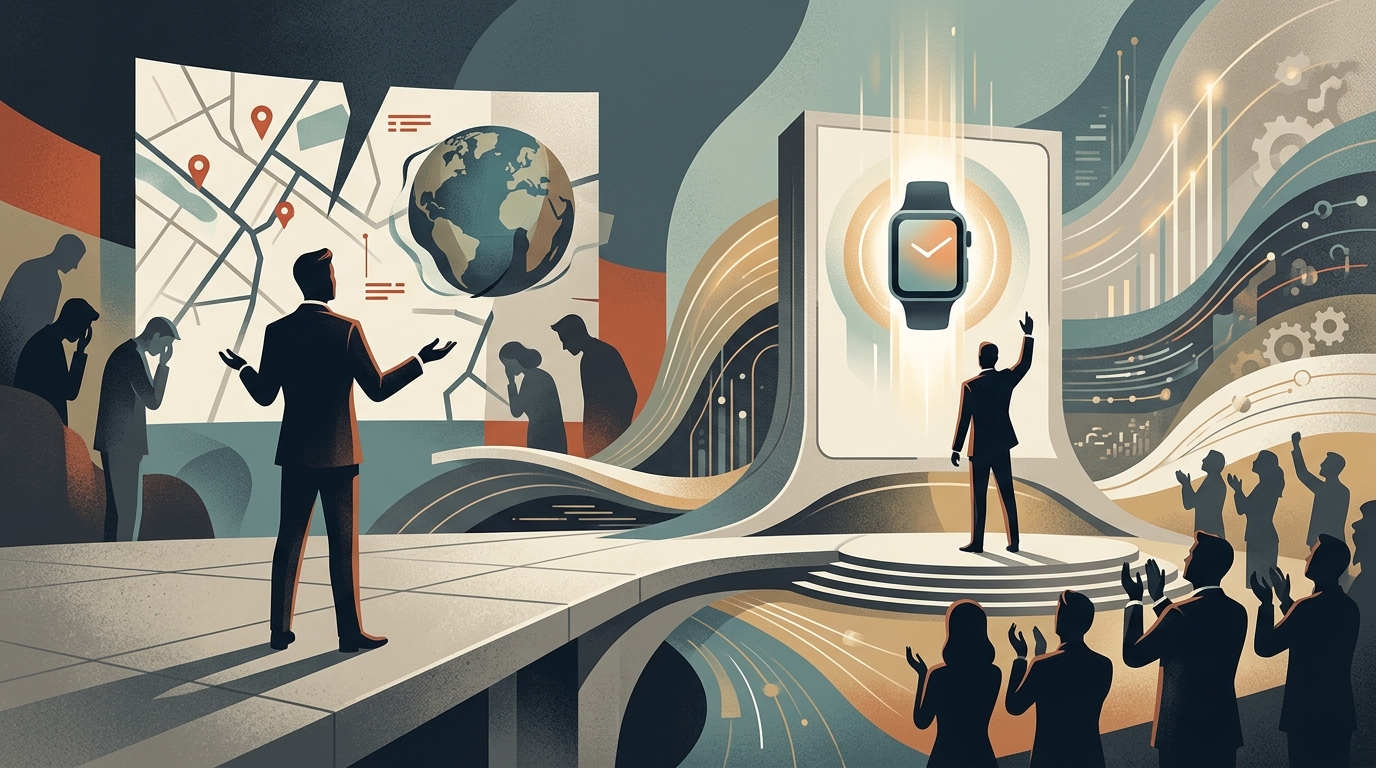
In 2012, Apple decided to replace Google Maps with its own proprietary application. The result was catastrophic: distorted landscapes, incorrect directions, and a global outcry. “It was my first really big mistake as CEO,” Cook admits today. This crisis led to the departure of Scott Forstall, a close Jobs lieutenant, and marked the beginning of a new culture of collaboration within Cupertino.
Cook recalls the letter of apology he wrote at the time, a move deemed “un-Apple” by the company’s traditionalist fans. “We had to be honest with our users. Trust is the hardest thing to earn and the easiest thing to lose,” he notes. This experience taught Apple that hardware is no longer enough; the services ecosystem requires a different approach, based on continuous improvement and humility toward data.
Apple Watch: Tim Cook’s Personal Bet
If the iPhone was Steve Jobs’ child, the Apple Watch is undeniably Tim Cook’s legacy. Despite initial criticisms that it was a “luxury accessory without a clear purpose,” the watch evolved into the world’s leading health device. For Cook, this is his proudest achievement.
- The Health Pivot: From simple step counting, the Watch moved into detecting atrial fibrillation, falls, and blood oxygen levels.
- Independence from iPhone: The gradual decoupling of the device made it essential for millions of users.
- Cultural Footprint: The Watch didn’t just change Apple; it transformed the entire wearables industry.
“When I look back, I believe Apple’s greatest contribution to mankind will be in the area of health,” Cook says. This statement underscores the company’s shift from a gadget manufacturer to an organization aiming to improve quality of life. The Apple Watch was the vehicle for this transformation, proving that Cook could innovate in his own, more methodical and human-centric way.
The Road Ahead and the Shadow of AI
As Cook prepares for his exit, Apple finds itself at a new crossroads. The advent of Apple Intelligence and the integration of generative AI into every facet of the operating system represent the final major act of his tenure. Although the company faced criticism for its late entry into the AI space, Cook remains optimistic.
“We don’t want to be the first; we want to be the best,” he repeats, echoing an old Apple mantra.
Cook’s legacy will be judged not only by the products but by the company’s financial explosion—reaching multi-trillion-dollar valuations—and its ethical stance on privacy and the environment. The Apple of 2026 is a company that reflects its leader’s personality: steady, cautious, immensely profitable, and deeply embedded in the daily lives of modern humans. The remaining question is whether his successor can maintain this balance between operational excellence and the need for the next “One More Thing.”