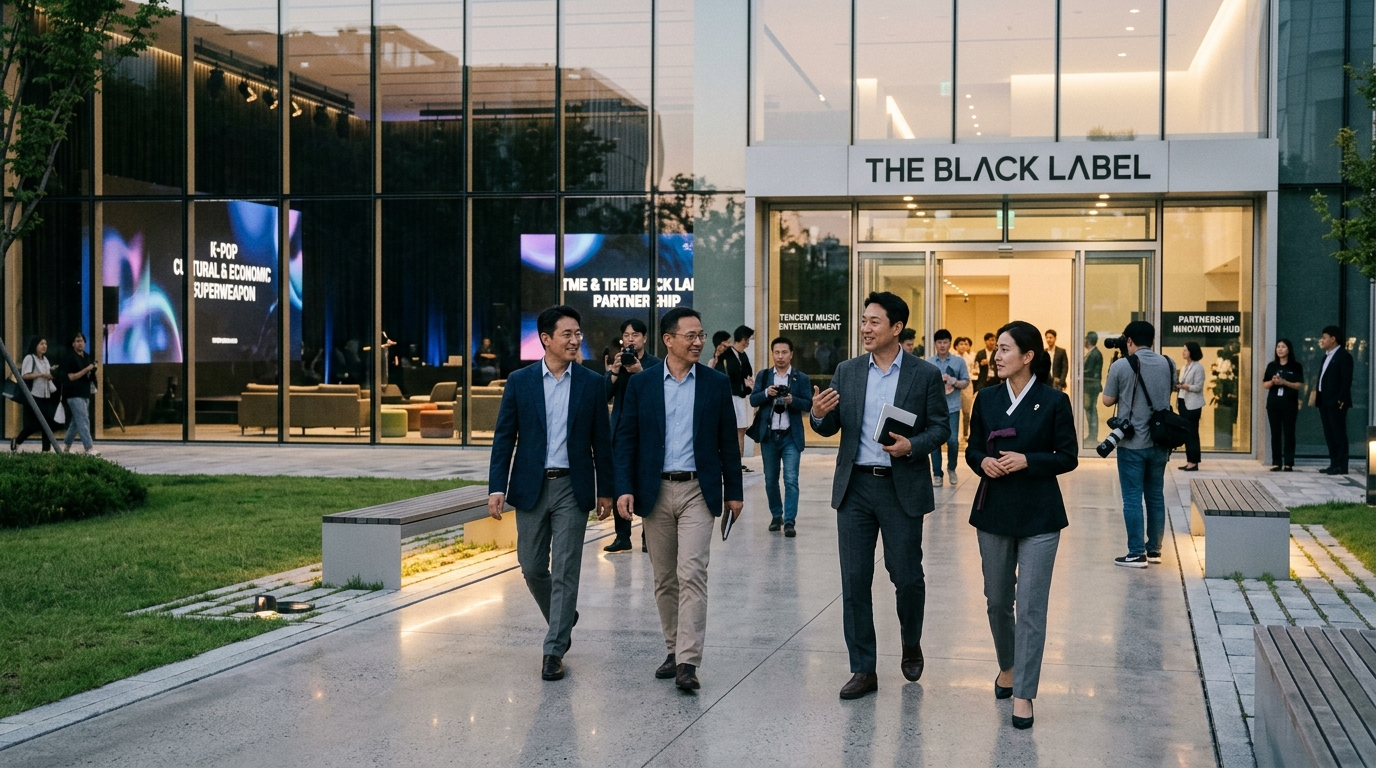
At the intersection of technology, streaming, and global pop culture, a new financial agreement confirms that K-pop is no longer just a musical genre, but a comprehensive intellectual property (IP) ecosystem. The Black Label Inc., the rising production studio led by legendary producer Teddy Park, has announced a capital raise of 120 billion won (approximately $80 million). The investment comes from giants such as the music arm of Tencent Holdings Ltd. and Krafton Inc., the creator of the global phenomenon PUBG.
The Rise of The Black Label and the Netflix Connection
This move is far from accidental. The Black Label has managed to position itself at the heart of global attention by handling the soundtrack for Netflix’s new production, 'KPop Demon Hunters.' The series, which blends anime aesthetics with Korea’s musical energy, serves as a perfect example of the media convergence that modern investors crave. Teddy Park, the mastermind behind the biggest hits of BLACKPINK and BIGBANG, has built a structure that transcends the traditional boundaries of a record label.
The investment from Tencent Music Entertainment (TME) highlights the strategic importance of the Chinese market, despite periods of geopolitical tension. For Tencent, access to The Black Label’s catalog and creative genius means dominance across Asia’s streaming platforms. On the other hand, Krafton’s participation suggests a deeper connection between music and gaming. In the era of the metaverse and digital experiences, K-pop idols are becoming video game characters, and their music provides the sonic backdrop for interactive entertainment.
Strategic Expansion and Independence
For years, The Black Label operated as a subsidiary or close associate of YG Entertainment. However, the recent capital raise signals a clear path toward full independence. With $80 million, the company plans to expand its infrastructure, invest in AI technologies for content production, and bolster its artist roster. The market expects The Black Label to evolve into a global player capable of directly competing with traditional powerhouses in Hollywood and New York.
Krafton’s interest is particularly revealing. The gaming industry is constantly seeking ways to increase user engagement. Integrating exclusive music and creating in-game virtual concerts is the new frontier. The Black Label, with its ability to produce viral content, is the ideal partner for this transformation. Their collaboration is expected to bring about new forms of entertainment where the lines between viewer, player, and listener become increasingly blurred.
The Geopolitics of Entertainment
Beyond the numbers, this deal reflects the shift of cultural power toward the East. K-pop has proven it can transcend linguistic and cultural barriers with an efficiency that few Western products have achieved in recent years. Tencent’s investment—a Chinese company—in a Korean studio, despite challenges in bilateral relations, shows that capital and popular culture can serve as bridges.
However, reliance on major investors carries risks. The pressure for constant profitability and the need for 'globalized' content might dilute the unique artistic identity that made The Black Label stand out. Teddy Park must balance artistic integrity with shareholder demands in an environment where artificial intelligence is already beginning to play a role in songwriting and the creation of digital idols.
Conclusion: The Future of the Creative Economy
The case of The Black Label is emblematic of where the global creative economy is headed. It is no longer about isolated songs or movies, but about creating multi-layered franchises that span multiple platforms. With the support of Tencent and Krafton, the company now has the fuel to conquer not just the charts, but also the screens and controllers of consumers worldwide. K-pop, through The Black Label, proves to be South Korea’s most sophisticated export, capable of rearranging the balances in the global entertainment industry.