Stellantis, the world’s fourth-largest automaker, finds itself at a defining crossroads. Following a period of intense internal friction and the departure of the iconic yet polarizing Carlos Tavares, the group has unveiled a revised investment roadmap totaling €60 billion through 2030. This strategy is not merely a financial commitment; it is a full-scale tactical realignment, placing clear emphasis on strengthening its core pillars—Jeep and Peugeot—while integrating Chinese technology to stave off global competition.
The Transition from Austerity to Growth
For years, Stellantis was synonymous with the draconian cost-cutting measures of Carlos Tavares. While this approach preserved profitability during volatile periods, it left behind aging dealership networks and a vacuum in fresh product lineups, particularly in the North American market. The new €60 billion plan signals a pivot toward product renewal. The company aims to launch dozens of new models based on its four STLA platforms (Small, Medium, Large, Frame), which are engineered to be "multi-energy," allowing for the production of electric, hybrid, and internal combustion variants on the same assembly lines.
This flexibility is the linchpin for survival in a market where demand for battery electric vehicles (BEVs) has shown signs of cooling. Stellantis recognizes that it cannot rely solely on electrification if it intends to protect its market share in regions like South America or the Middle East, where charging infrastructure remains underdeveloped.
Jeep and Peugeot: The Two Pillars of the Empire
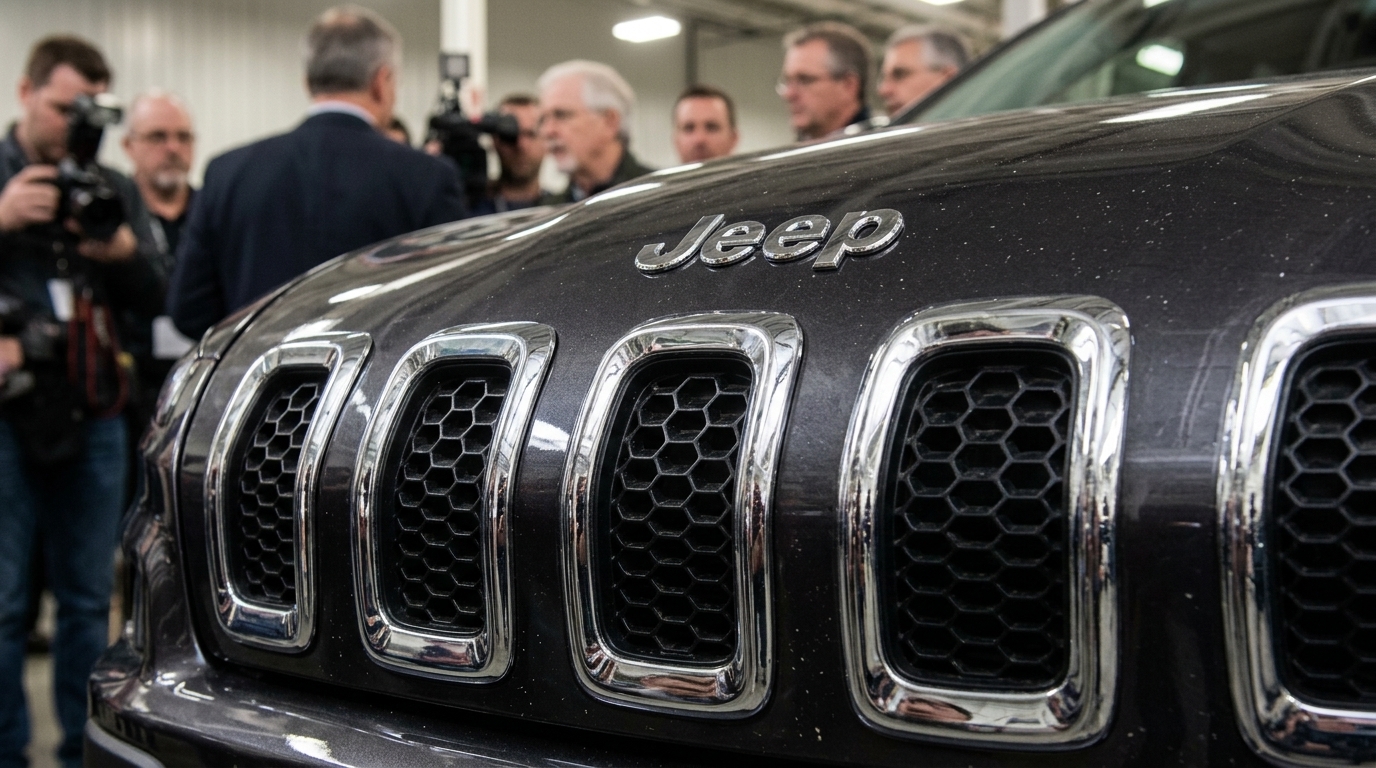
The strategy focuses heavily on two key brands. Jeep remains the group's "profit engine," especially in the United States. With the introduction of the electric Wagoneer S and the rugged Recon, Jeep is attempting to modernize its image without alienating its hardcore fan base. The challenge here is twofold: reclaiming lost market share in the U.S. and expanding its footprint in Europe with smaller models like the Avenger.
On the other hand, Peugeot serves as the benchmark for the European market. With the rollout of the new E-3008 and E-5008, the French brand is positioning itself as the primary challenger to Volkswagen and emerging Chinese manufacturers. The focus on high-end design and the proprietary i-Cockpit technology serves as the differentiator that Stellantis hopes will maintain high margins despite fierce pricing pressure.
The Leapmotor Alliance: "If You Can't Beat Them, Join Them"
One of Stellantis' most audacious moves is its strategic partnership with the Chinese automaker Leapmotor. Rather than attempting to match the manufacturing cost advantages of Chinese rivals from scratch, Stellantis acquired a stake in the company and established Leapmotor International. This joint venture allows Stellantis to distribute affordable electric cars in Europe and other international markets, leveraging its own extensive distribution and logistics networks.
"The partnership with Leapmotor gives us a speed and cost advantage that would have taken us years to develop independently," group executives noted.
This move, however, is not without risk. Relying on Chinese technology during a period of escalating trade tariffs and geopolitical tensions between the EU and China could prove to be a double-edged sword. Stellantis is betting that assembling certain Leapmotor models in European plants—such as Tychy in Poland—will bypass tariff barriers and appease local regulators.
Challenges and the Future of the 14 Brands
The lingering question is whether Stellantis can viably maintain all 14 of its brands, ranging from Alfa Romeo and Maserati to Lancia and Chrysler. The new leadership appears to be granting each brand a "final window" to prove its worth over the next five years. The €60 billion investment will be distributed, but it is clear that priority will be given to those that generate the highest sales volumes and margins.
In conclusion, Stellantis is attempting a bold leap forward. Armed with massive capital, a more flexible approach to powertrains, and a clever—if controversial—alliance with China, the group is trying to redefine itself. The success of this plan will determine not only the future of the company but the broader identity of the European automotive industry as it faces its greatest existential challenge in a century.