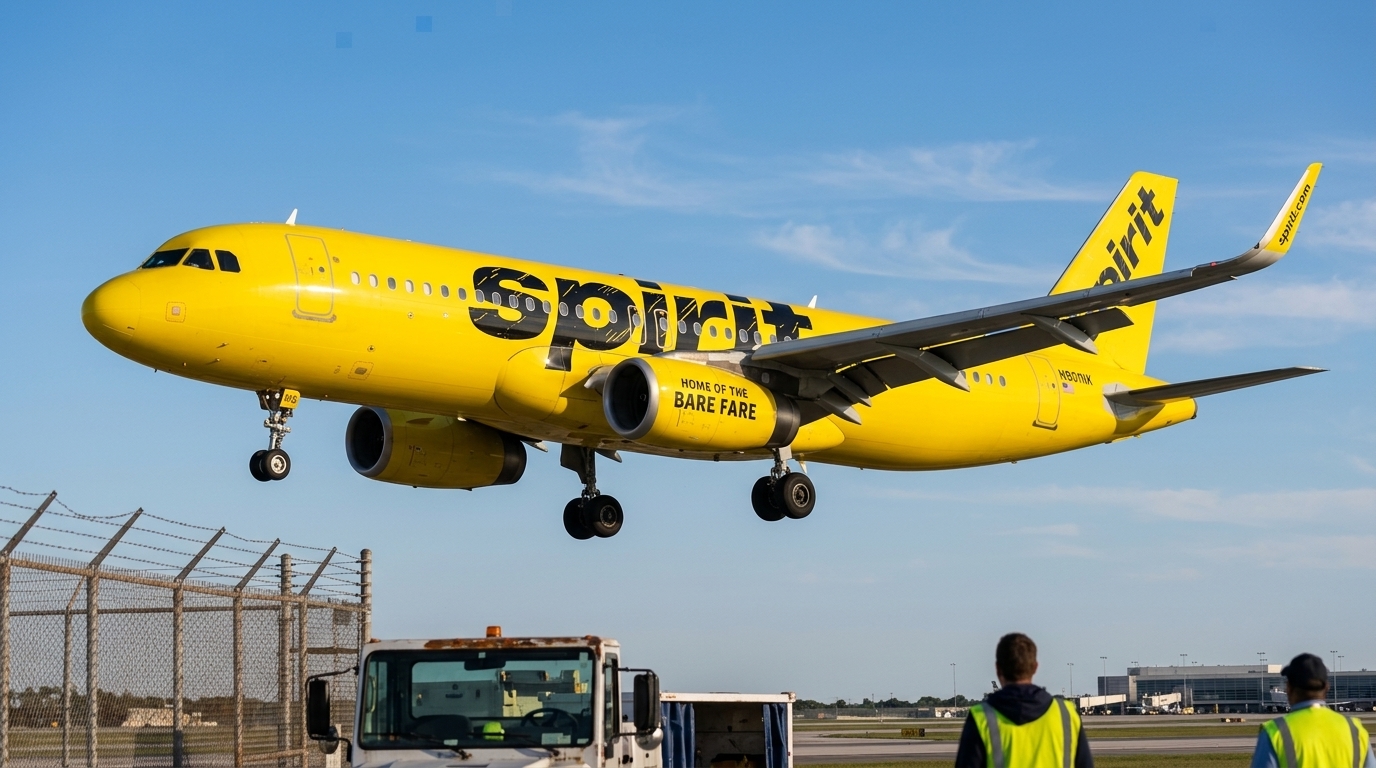
The announcement that Spirit Airlines is shutting its doors after 34 years of operation is not merely a piece of business news; it is the conclusion of a chapter that redefined air travel in the United States and beyond. The carrier, synonymous with its bright yellow livery and the controversial "bare fare" strategy, has finally buckumbed to the weight of mounting debt, legal entanglements, and a shifting consumer landscape that no longer tolerates the absence of basic amenities.
Spirit’s downfall was not a sudden event. For months, industry analysts had been sounding the alarm regarding its precarious financial position. The failure of its merger with JetBlue Airways, blocked by the U.S. Department of Justice on antitrust grounds, proved to be the fatal blow. Without the lifeline provided by JetBlue and burdened with debt exceeding $3 billion, Spirit found itself in a death spiral from which it could not escape.
The Rise and Fall of the Ultra-Low-Cost Model
Founded in 1980 as Charter One and rebranded as Spirit in 1992, the airline's true revolution began in the mid-2000s when it adopted the Ultra-Low-Cost Carrier (ULCC) model. The philosophy was simple yet radical: the passenger pays only for the seat. Everything else—from carry-on bags to a cup of water—was an additional charge. This strategy allowed the company to offer tickets at prices often lower than a restaurant meal.
For years, this model triumphed. Spirit forced major legacy carriers like Delta, American, and United to introduce "Basic Economy" tiers to compete. However, the pandemic altered the equation. Post-2020, operational costs—fuel, labor, and maintenance—skyrocketed. Concurrently, consumer demand shifted. Travelers, deprived of movement for two years, began seeking experience and comfort, increasingly shunning the spartan conditions offered by Spirit.
"Spirit Airlines wasn't just an airline; it was a social experiment in how low a price could go before the consumer said 'enough'," notes a veteran aviation industry analyst.
The Judicial Blockade and the Fatal End
The attempted rescue through JetBlue was management's final hope. The $3.8 billion deal would have created the fifth-largest carrier in the U.S. However, the Biden administration, pursuing a rigorous antitrust policy, argued that the acquisition would harm budget-conscious travelers who relied on Spirit’s low prices. The irony is now stark: the attempt to "protect" competition has resulted in the total elimination of one of the market's key competitors.
Beyond legal woes, Spirit faced technical catastrophes. Issues with Pratt & Whitney Geared Turbofan engines forced the airline to ground dozens of its Airbus A320neo aircraft, dramatically slashing revenue during a period where every dollar was vital. A lack of liquidity and the inability to refinance bonds maturing in 2025 and 2026 made bankruptcy and subsequent liquidation inevitable.
Market Implications and the Consumer Impact
Spirit’s exit from the market will have immediate and painful consequences for travelers. The absence of a player that consistently drove prices down means that fares on many U.S. domestic routes are expected to rise significantly. Secondary airports that relied on Spirit for the bulk of their traffic now face an economic crisis.
Furthermore, this collapse sends a clear signal to the industry: the "unbundled" price model may have reached its limits. Consumers now appear to prioritize value for money over the absolute lowest price. Southwest Airlines, for instance, while low-cost, maintained free checked bags and a level of service that Spirit stubbornly refused to adopt until it was far too late.
- Increase in airfares on previously low-cost routes.
- Loss of thousands of jobs for flight crews and ground staff.
- Redistribution of slots at major hub airports.
- Wall Street's re-evaluation of investments in ultra-low-cost models.
The closure of Spirit Airlines marks the end of a period of hyper-expansion for cheap flights. For 34 years, the company allowed millions of people who could not otherwise afford to fly to see the world. However, in the brutal world of aviation, good intentions and low prices are not enough to defeat the mathematics of debt and the competition of giants.