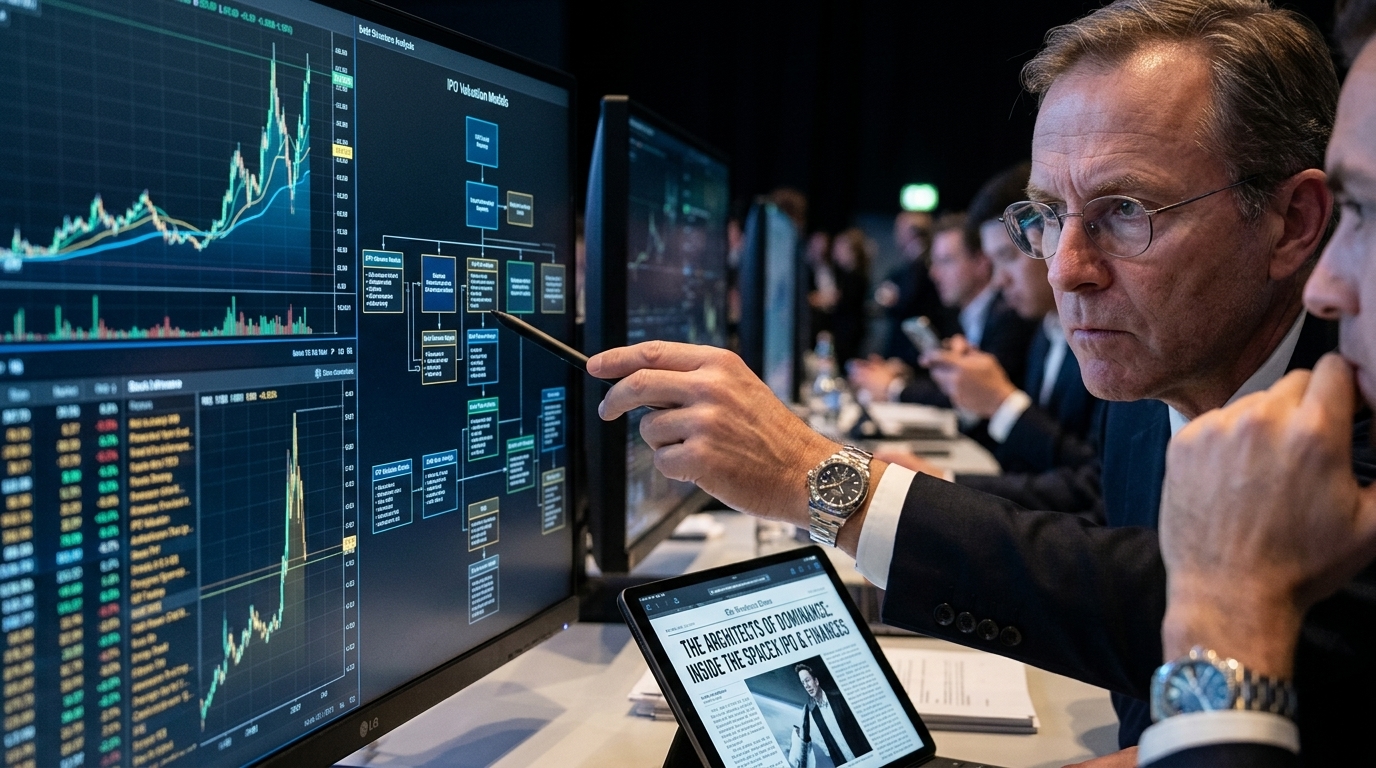
SpaceX's announcement regarding the filing of an amended prospectus for a share sale valued at up to $86 billion is more than just a stock market headline; it is the official validation of a new era. With the share price set at $135, Elon Musk is not only solidifying his position as the world's wealthiest individual but is also transforming space exploration from a romanticized state-led endeavor into a profitable industrial reality. This move, expected to absorb massive liquidity from international markets, reflects absolute investor confidence in SpaceX's vision, despite the geopolitical and economic uncertainties plaguing the rest of the tech sector.
The Financial Architecture of an Empire
SpaceX has achieved what was deemed impossible two decades ago: making access to space economically viable through rocket reusability. The current valuation, reaching record levels, is built upon three central pillars. First, the undisputed dominance of Falcon 9 launches, which have become the "workhorse" of the space economy. Second, the rapid development of Starship, the largest rocket ever built, which promises to reduce the cost per kilogram of payload to unprecedented levels. Third, and perhaps most importantly, the maturation of the Starlink network.
Investors aren't just buying "rockets"; they are buying the future of global telecommunications. Starlink, having already surpassed critical subscriber milestones, now functions as the steady revenue stream financing Musk's most ambitious goals for Mars. The liquidity generated from this share sale will allow the company to accelerate Starship testing, which is the key to NASA's Artemis program and humanity's return to the Moon.
Starlink: The Golden Goose
If SpaceX is the body, Starlink is the lifeblood keeping it alive. The company's ability to provide satellite internet to every corner of the globe has created a de facto monopoly in areas where traditional infrastructure fails to reach. The geopolitical significance of Starlink became evident in recent international conflicts, where access to the network became a factor of national security. This dimension provides the company with a value that transcends narrow financial metrics, making it a strategic partner for governments and defense organizations.
- Provision of broadband connectivity to remote areas and maritime sectors.
- Military utility through the Starshield program.
- Continuous reduction in user terminal production costs.
- Partnerships with airlines for in-flight internet.
This momentum explains why the market is willing to pay the $135 per share premium. In a world hungry for data and connectivity, SpaceX owns the "rails" upon which the next generation of digital services will run.
The Musk Factor and Future Challenges
Despite its impressive trajectory, SpaceX is not without risks. Elon Musk's persona remains an unpredictable variable. His political stances and involvement with the X platform (formerly Twitter) have occasionally caused concern among institutional investors. Furthermore, increasing pressure from regulatory bodies, such as the FAA in the US, regarding the environmental impact of launches in Texas, creates bureaucratic hurdles that could delay the Starship timeline.
"SpaceX is no longer competing with other companies; it is competing with physics and time," say Wall Street analysts.
Competition, though significantly behind, is beginning to organize. Jeff Bezos's Blue Origin and China's state space agencies are investing billions to close the gap. However, SpaceX maintains the first-mover advantage and a vertically integrated production model that allows it to innovate faster than any bureaucratic organization. The mammoth IPO is the fuel that will allow Musk to maintain this safety margin, turning SpaceX into the undisputed ruler of the skies for decades to come.