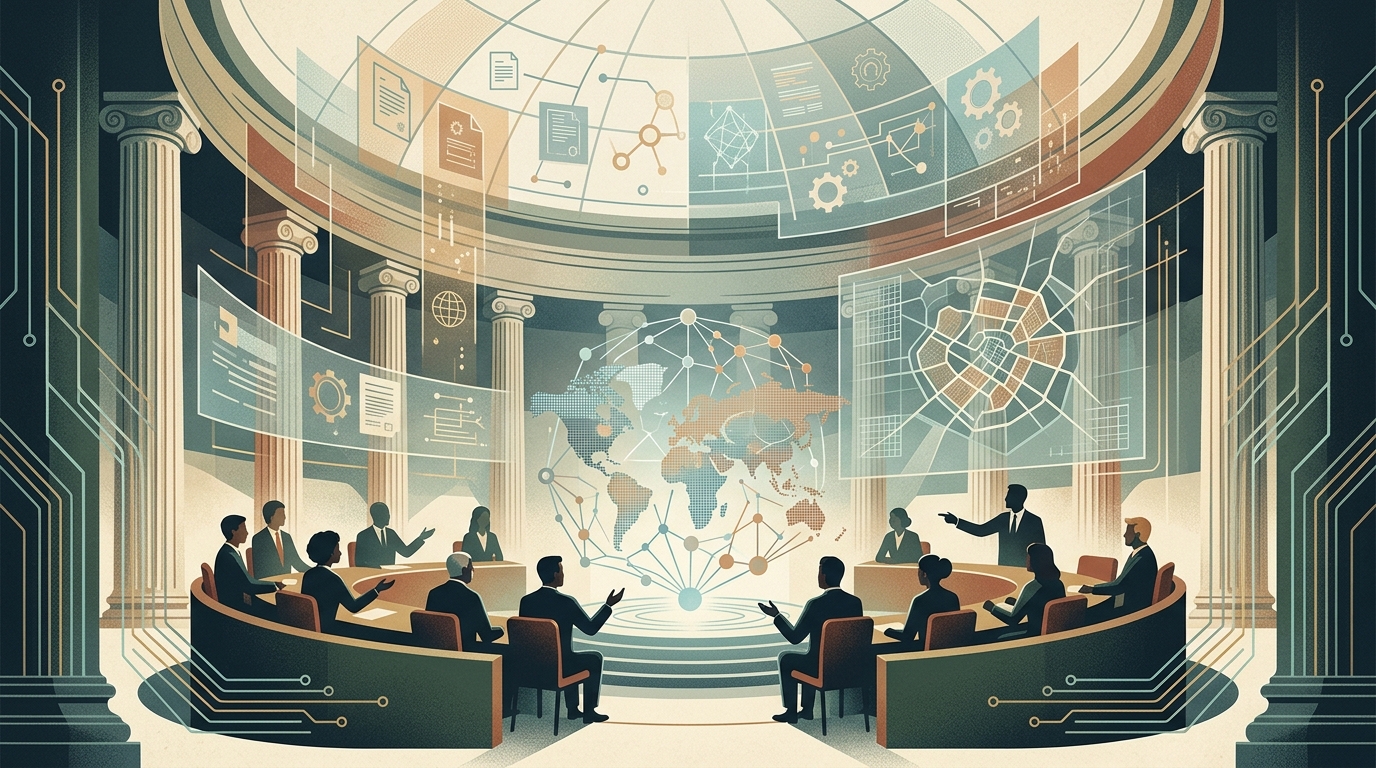
At the dawn of the Fourth Industrial Revolution, the discourse surrounding Artificial Intelligence (AI) is shifting from the realm of technological innovation to that of social and political necessity. It is no longer merely a series of smart algorithms facilitating daily life, but a foundational infrastructure that is increasingly equated with electricity, water, and telecommunications. A recent analysis by Naftemporiki poses the critical question: How can AI be transformed into a public utility, and what are the terms of this transition?
The Nature of Digital Infrastructure
To understand AI as a public utility, we must first recognize its ubiquitous nature. Today, AI influences healthcare, education, the administration of justice, and public administration decision-making. When a system becomes essential for exercising basic citizen rights and the smooth functioning of the state, it ceases to be a mere commercial product. The concept of "public utility" implies three core pillars: universal access, continuity of service, and affordability.
However, the current reality is far from this ideal model. AI power is concentrated in the hands of a few tech giants (Big Tech), creating a new form of dependency. If AI is to function as a public utility, states and international organizations must ensure that access to large language models and computational power is not a privilege of the few, but a right of the many.
Terms and Conditions for Democratization
Transforming AI into a public utility is not an automatic process. It requires strict conditions, first and foremost digital sovereignty. For Greece and Europe, this means reducing dependence on American or Chinese ecosystems. Creating national or European cloud infrastructures and developing open-source models are essential steps to ensure that citizen data remains under domestic control.
- Transparency and Accountability: Algorithms that make decisions regarding social benefits, hiring, or medical diagnoses must be open to audit. The "black box" of AI has no place in a public utility service.
- Energy Sustainability: AI infrastructures consume vast amounts of energy and water. The transition to a utility model must be accompanied by green investments, ensuring that digital progress does not undermine climate goals.
- Education and Skills: Public utility means that the citizen knows how to use the good. Without mass digital literacy, AI will widen social inequalities rather than bridge them.
The Regulatory Challenge
The European Union, with the AI Act, has taken the first step. However, regulating AI as a public utility requires more than prohibitions; it requires active support. Just as the state finances the road network, it should also finance the "digital networks" of AI. This includes supporting research centers and small-to-medium enterprises developing specialized applications for the public interest.
"Artificial Intelligence is the electricity of the 21st century. Just as we cannot imagine life without power, we will soon be unable to imagine it without the assistance of machine intelligence. The bet is whether this electricity will belong to everyone or only to those who own the power plants."
In conclusion, treating AI as a public utility is a political choice. It requires a shift from the model of "unbridled free market" to a model of "regulated growth with a social focus." Greece, as an EU member, must lead this conversation, ensuring that the digital transition strengthens democracy and social cohesion rather than undermining them.