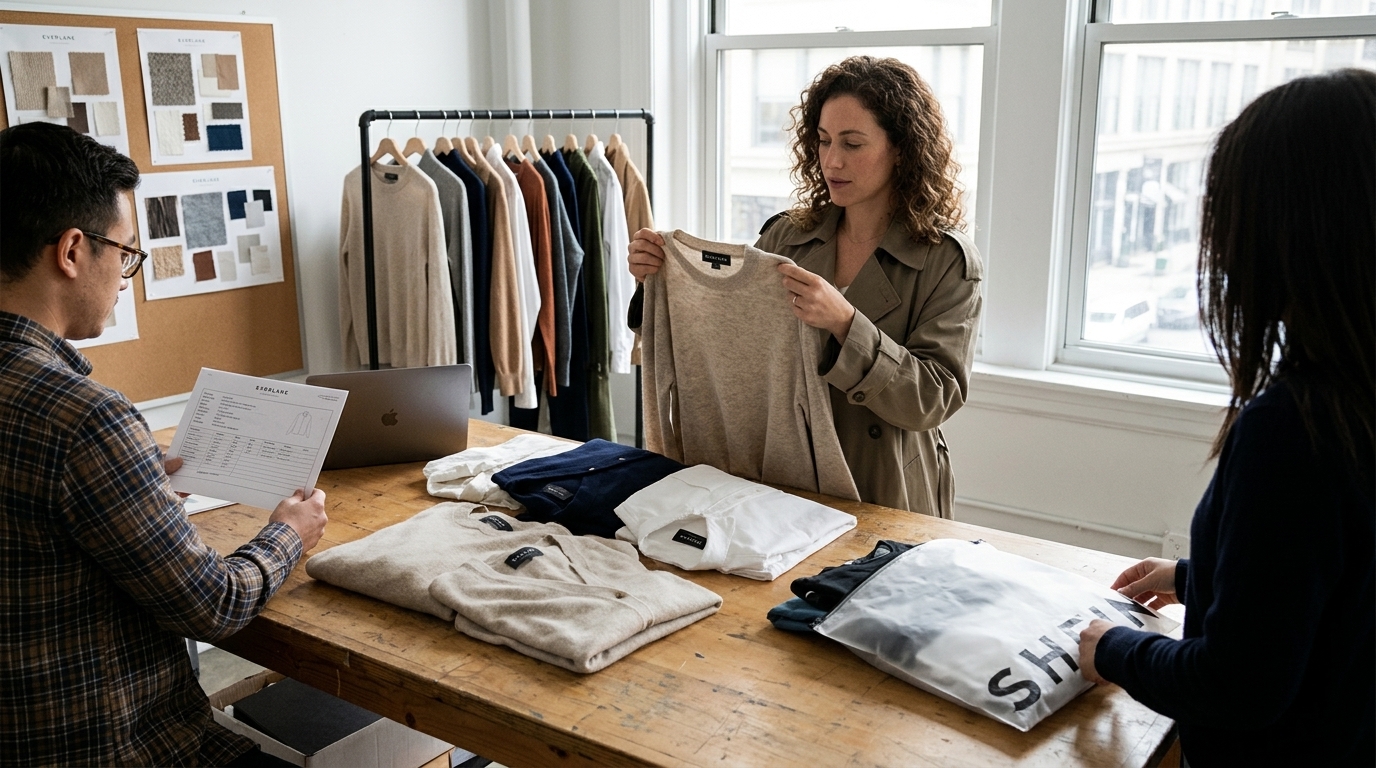
In a move that has sent shockwaves through the global fashion industry, the Chinese ultra-fast fashion behemoth Shein has announced the acquisition of Everlane for a reported $100 million. This news is not merely a business transaction; it represents a deeply ironic turning point in the history of modern apparel. On one side, we have a company repeatedly criticized for its environmental footprint and opaque labor practices; on the other, the brand that built its empire on the mantra of 'Radical Transparency'.
A Strategic Facelift Ahead of the IPO
Shein is not buying Everlane for its revenue figures, which are minuscule compared to the Chinese group's multi-billion dollar turnover. It is buying something far more precious: legitimacy. As Shein prepares for its highly anticipated Initial Public Offering (IPO) on international markets, it remains under the intense scrutiny of regulators in Europe and the United States. Allegations of copyright infringement, massive waste production, and supply chain shadows have been significant hurdles for institutional investors who prioritize ESG (Environment, Social, Governance) criteria.
By integrating Everlane into its portfolio, Shein acquires an 'ethical certificate'. Everlane, under the leadership of Michael Preysman, became famous for revealing the exact production cost of every garment—from raw materials to transportation. This legacy serves as the perfect reputational 'laundry' for a giant seeking to prove it can pivot toward 'quiet luxury' and sustainability. However, the core question remains: can the model of overproduction coexist with Everlane’s foundational values?
The Fall of Everlane: The Harsh Reality of Ethical Fashion
Why did Everlane accept an acquisition at a price point considered relatively low for its brand equity? The answer lies in financial exhaustion. Despite its loyal consumer base, Everlane struggled to maintain profitability in a world where production costs are rising and competition from platforms like Temu and Shein itself is squeezing margins. The company had already undergone layoffs and restructuring in previous years, proving that 'ethical fashion' is a difficult and expensive equation to balance.
This acquisition highlights a somber truth about the industry: independent sustainability-focused brands often lack the capital to scale up without attaching themselves to massive conglomerates. Everlane needed Shein’s logistics prowess and technological infrastructure to survive, even if it meant losing a piece of its 'soul'. Shein possesses the world’s most sophisticated inventory management system, which could help Everlane reduce deadstock—a move that is theoretically 'green' but practically serves the bottom line.
The Paradox of Quiet Luxury
The term 'quiet luxury' dominated trends throughout 2024 and 2025, promoting high-quality, timeless pieces without overt logos. Shein, traditionally associated with ephemeral trends that last only as long as a TikTok video, is now attempting to penetrate this market segment. Everlane is the perfect gateway. With its minimalist designs and premium fabrics, it appeals to a more mature and affluent demographic that Shein has struggled to reach until now.
However, analysts warn of the risk of 'brand dilution'. If Everlane’s production is moved to Shein’s mass-production facilities in China or Brazil without the rigorous oversight the brand once promised, consumers will notice immediately. The challenge for Shein is to maintain Everlane as an autonomous, premium entity, using it as a laboratory to improve its own practices. If it fails, it will have simply purchased an empty shell.
Conclusion and Future Outlook
This move is part of a broader trend of consolidation within the fashion industry. Major players are buying the innovation and ethics they cannot produce organically. For the consumer, this acquisition creates a moral dilemma: will they continue to support Everlane knowing the profits fuel the Shein machine? Or is this partnership the only way to make sustainable fashion accessible to the masses?
Regardless, May 18, 2026, will be remembered as the day the lines between fast fashion and sustainability blurred permanently. Shein is no longer just a purveyor of cheap clothes. It is a strategic investor reshaping the retail landscape, daring us to re-evaluate what 'transparency' truly means in the age of hyper-globalization.