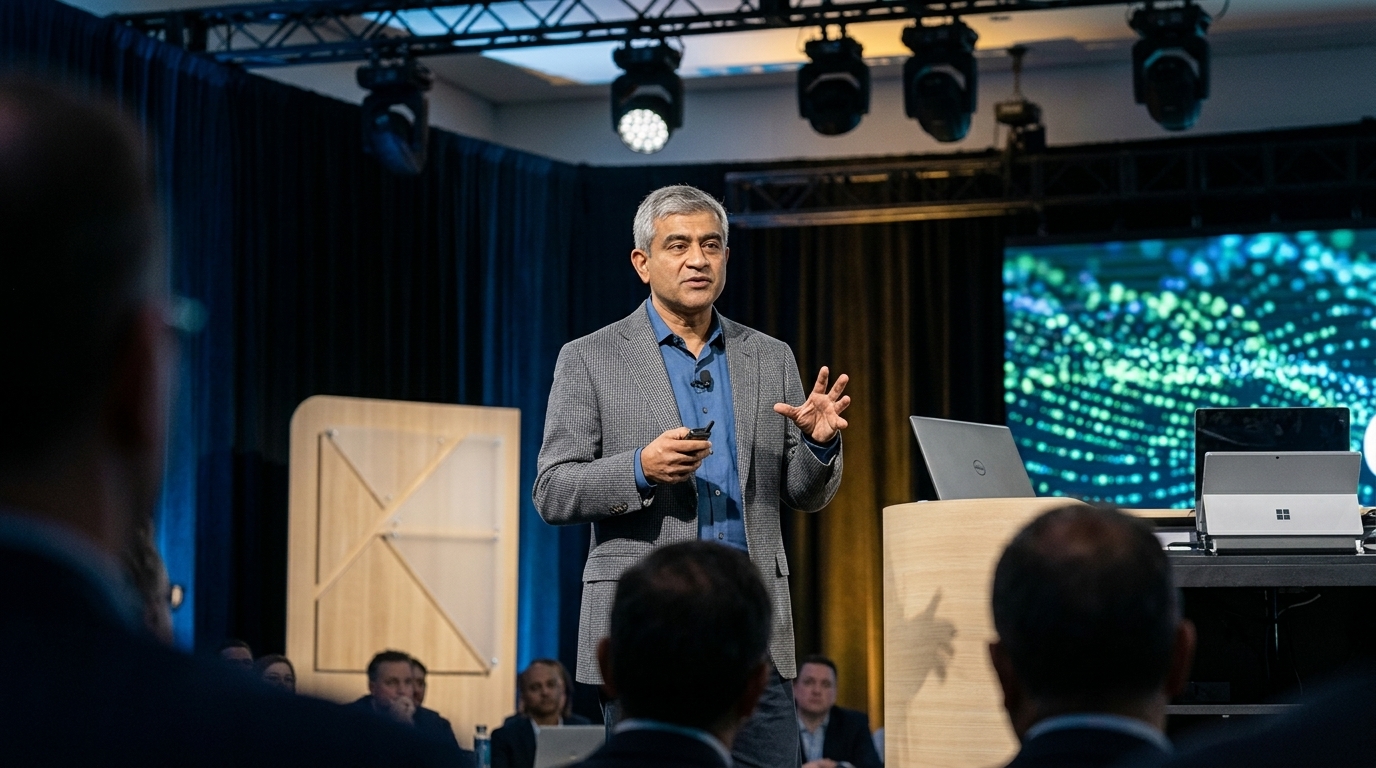
In Las Vegas, during the Knowledge 2026 annual conference, the atmosphere bore no resemblance to the existential dread often described by Wall Street analysts regarding the Software-as-a-Service (SaaS) sector. While doomsayers warn of a looming ‘SaaSpocalypse’—where generative AI (GenAI) renders traditional software platforms obsolete—ServiceNow, the workflow management giant, is presenting a diametrically opposite narrative. For the company’s Chief Operating Officer (COO), Amit Zavery, the period of flashy demos and ‘sexy’ promises is over. Now begins the phase of ‘heavy lifting.’
Beyond the Hype: The Reality of Integration
ServiceNow’s core thesis is clear: AI is not a SaaS killer, but its ultimate catalyst. However, this acceleration requires a fundamental reorganization of how businesses operate. According to Zavery, most organizations have spent the last 18 months experimenting with isolated chatbots. The challenge they face now is how to integrate this technology into the core of their business processes, from HR to technical support and supply chain management.
This process, which Zavery describes as ‘heavy lifting,’ involves data cleansing, unifying fragmented systems, and training AI models on specific, proprietary corporate data. “It’s no longer about who has the smartest general-purpose model,” he notes. “It’s about who can make AI work within the context of your specific business rules and constraints.” ServiceNow positions itself as the connective tissue, the ‘platform of platforms’ that allows this transition to happen without collapsing existing infrastructure.
Debunking the ‘SaaSpocalypse’
The term ‘SaaSpocalypse’ gained traction when some investors feared that AI would allow companies to write their own software or that per-seat pricing would collapse as automation reduces headcount. ServiceNow, however, sees a different dynamic. Instead of a decline in demand, it sees a need for deeper automation that only a robust SaaS platform can provide.
- Value vs. Seats: The shift toward value-based pricing allows software companies to charge for the outcomes AI generates, rather than the number of humans clicking a mouse.
- Complexity: The more AI an enterprise uses, the more complex data governance and security management become, making specialized platforms more essential than ever.
- Democratization of Development: AI allows non-technical employees to create applications (low-code/no-code), but these apps need a controlled environment to run—and that environment is SaaS.
ServiceNow’s Strategy for 2026
With its market capitalization hovering around $96 billion, ServiceNow is not resting on its laurels. Its strategy focuses on ‘practical AI.’ This means models that are smaller, faster, and more specialized than the massive LLMs from OpenAI or Google. During the conference, the company showcased new capabilities that allow for automated code generation to solve technical issues in seconds, as well as AI agents that can make decisions and execute tasks autonomously.
“AI will not replace software. It will make it invisible and ubiquitous,” Zavery stated. “But to get there, we have to walk through the muddy path of implementation.”
The message to the market is clear: the era of easy excitement has passed. The companies that will survive and dominate are those that do not fear the ‘dirty’ work of infrastructure. For ServiceNow, the ‘SaaSpocalypse’ is a myth that ignores the massive need for organization in a world flooded with AI-generated outputs. The real battle is being fought now in the trenches of operational efficiency.