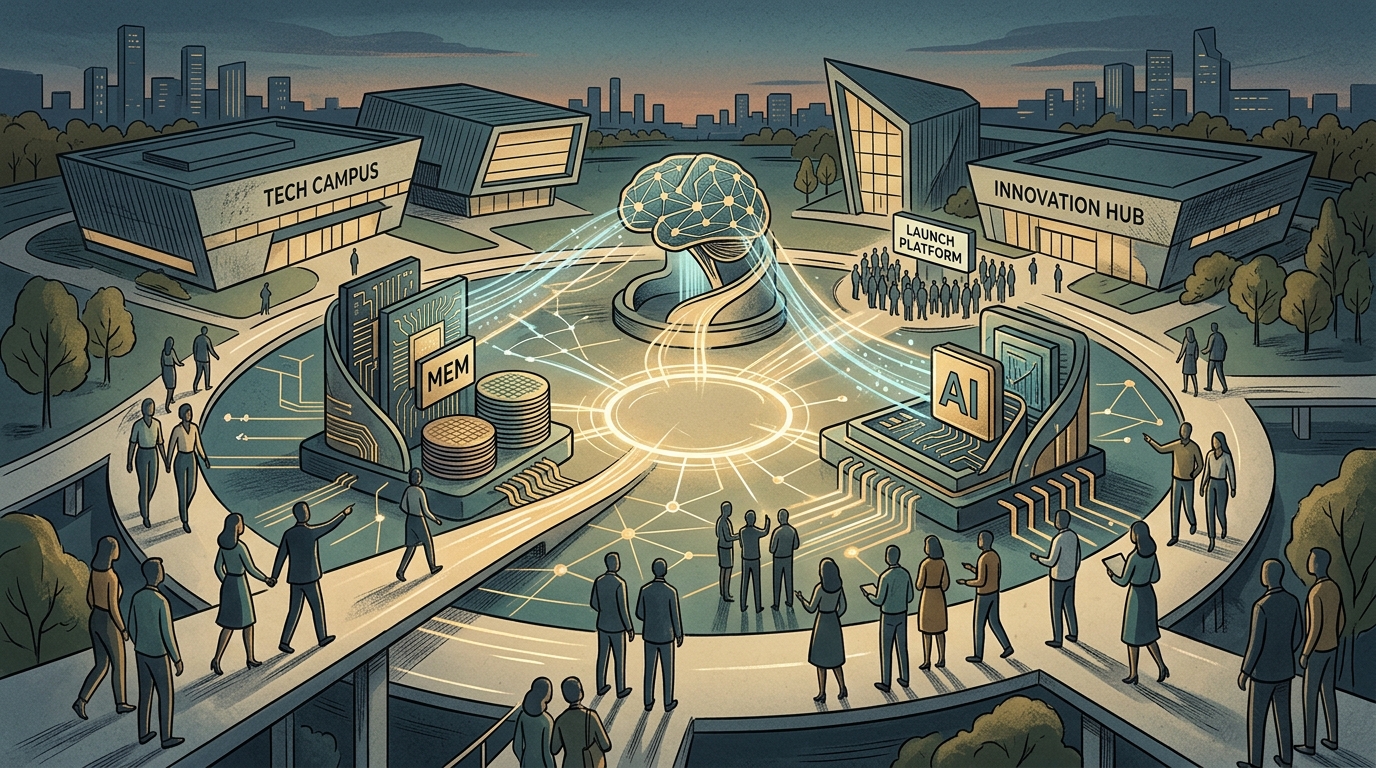
In a move that highlights the growing convergence between hardware and software in the era of generative artificial intelligence, South Korean tech giants Samsung Electronics and SK Hynix have participated in a new strategic funding round for Anthropic. Anthropic, widely considered the primary challenger to OpenAI and the creator of the Claude model family, is increasingly becoming a focal point for companies that control the production of critical AI components.
This investment is far more than a simple capital injection; it is a clear statement of intent from Seoul. As the world becomes increasingly dependent on High Bandwidth Memory (HBM) chips—a market where SK Hynix and Samsung hold the lion's share—close collaboration with the creators of Large Language Models (LLMs) is becoming essential for maintaining technological leadership.
The Strategic Imperative of HBM Memory
The rise of Anthropic and its Claude models has fueled an insatiable demand for computational power. However, this power depends not only on NVIDIA's GPUs but also on the speed at which data is transferred to them. This is where Samsung and SK Hynix step in. HBM memory is the "fuel" that allows models like Claude 3.5 Sonnet to operate with the speed and precision required by modern enterprises.
By investing in Anthropic, the two Korean firms aim to ensure that their next generation of chips is perfectly optimized for Anthropic’s algorithms. This is a process of "co-design," where software dictates hardware requirements and hardware evolves to serve software. This vertical integration is expected to reduce power consumption in data centers—one of the most significant challenges facing the AI revolution today.
Geopolitical Implications and the OpenAI Rivalry
This move occurs within a landscape of intense geopolitical competition. While Microsoft has locked in its partnership with OpenAI and Google develops its own Gemini, Anthropic has managed to maintain relative independence, attracting investments from Amazon and now the semiconductor leaders. For South Korea, Anthropic represents the ideal vehicle to avoid total reliance on the Microsoft/OpenAI ecosystem.
Furthermore, Anthropic promotes the concept of "Constitutional AI," focusing on safety and ethics. This profile aligns perfectly with the corporate values of Samsung, which seeks to integrate AI into its devices (smartphones, home appliances) in a way that inspires consumer trust. The integration of Claude's capabilities into future Galaxy smartphones now seems more likely than ever.
The Future of the AI Supply Chain
SK Hynix's participation is particularly noteworthy, given that the company is currently the primary supplier for NVIDIA. By investing in Anthropic, SK Hynix is diversifying its risk. Should the AI model market become more multipolar, SK Hynix will already have a consolidated position among the key players. Analysts suggest that this funding round will allow Anthropic to accelerate the development of Claude 4, which is rumored to surpass all existing technologies in capability.
In conclusion, the investment by Samsung and SK Hynix in Anthropic marks the end of an era where semiconductor companies were mere suppliers. Today, they are becoming strategic architects of intelligence, shaping not only how chips are manufactured but also how the machines of the future "think." The battle for AI supremacy is no longer fought solely in the codebases of Silicon Valley, but also in the silicon foundries of Seoul.