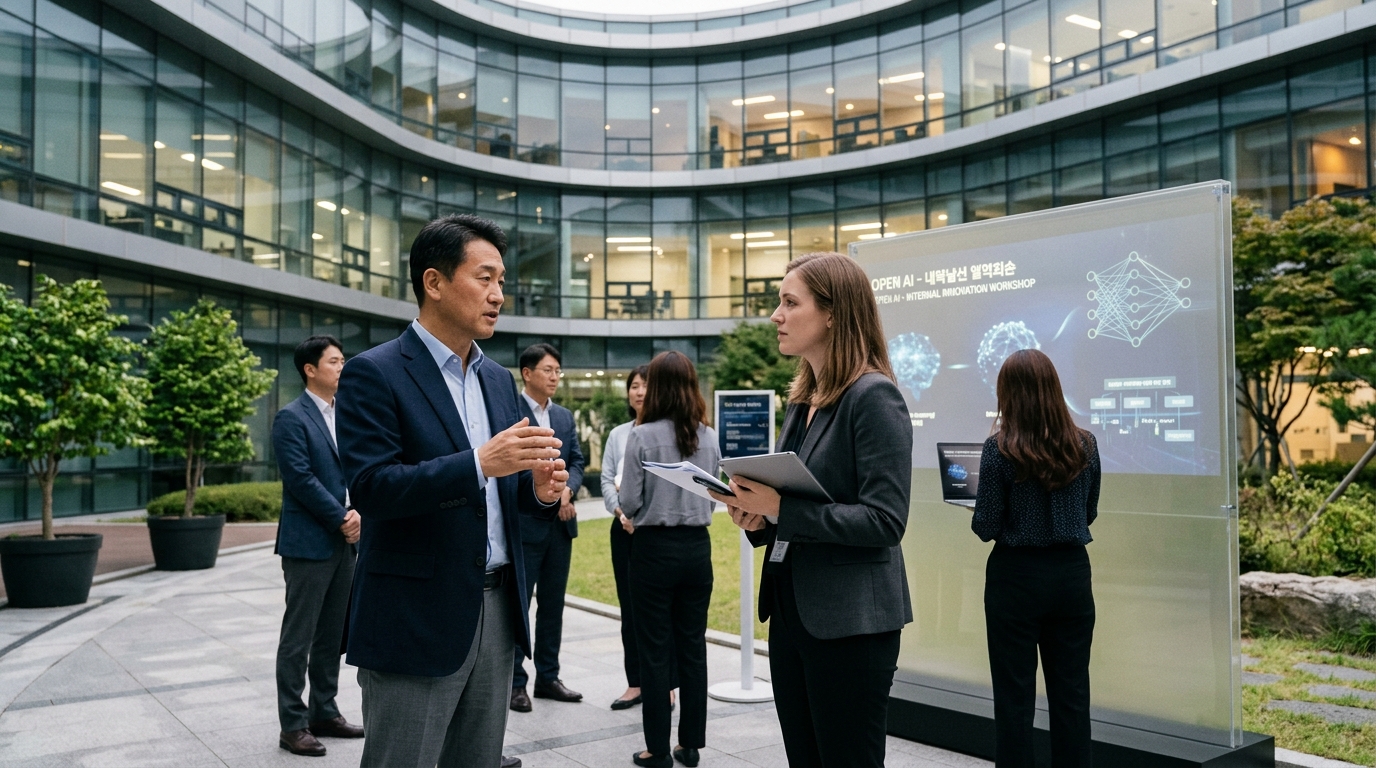
The news that Samsung Electronics is proceeding with a large-scale integration of OpenAI tools into its workforce marks a milestone in the company's history and a clear indication of where the global tech industry is headed. This move, coming after a period of intense caution and a total ban on Generative AI tools within the organization, underscores the inescapable need for modernizing corporate processes.
From Security Fears to Strategic Necessity
To understand the significance of this decision, we must look back to 2023, when Samsung found itself at the center of publicity due to a significant data leak. At that time, company employees had used ChatGPT to check source code and summarize meeting minutes, resulting in sensitive information ending up in OpenAI's databases. Samsung's response was immediate and strict: a complete ban on the use of external AI tools.
However, 2026 finds the Korean giant in a different reality. Isolation from AI developments began to cost in terms of productivity. Competitors, from Apple with Apple Intelligence to Microsoft with Copilot, were integrating AI at every level. Samsung realized that the solution is not prohibition, but controlled and secure adoption. The current partnership with OpenAI involves the Enterprise version, which offers data protection guarantees, ensuring that Samsung's information will not be used to train OpenAI's future models.
Enterprise AI as a Competitiveness Tool
The adoption of OpenAI tools is not just about writing emails. Samsung is targeting three main pillars:
- Software Development: Using tools like GitHub Copilot (based on OpenAI technology) allows Samsung developers to write code faster and with fewer errors.
- Data Analysis: The ability of GPT-4o models to analyze vast amounts of market data allows Samsung to make faster decisions for the Galaxy series and semiconductors.
- Internal Communication: Automated meeting summaries and real-time translation facilitate collaboration between the company's global offices.
"Artificial intelligence is no longer an option, but a core infrastructure for every modern business," say sources close to Samsung's management in Seoul.
Challenges and the Issue of Digital Sovereignty
Despite the benefits, this move raises serious questions about the dependence of Asian giants on American technology. Samsung, a company that traditionally invests billions in research and development (R&D), is forced to rely on an external platform for its internal operations. This highlights the gap that still exists today between companies that own the foundational AI models and those that simply apply them.
Furthermore, there is the issue of culture. Employees in South Korea are accustomed to strictly hierarchical environments and high security. The introduction of tools that promote a more "open" and automated approach will require time to adjust. Samsung is already running retraining programs for thousands of its employees to ensure that AI will act as an assistant rather than a replacement.
The Future of the Partnership
This move by Samsung is expected to trigger a domino effect in Asia. Already, SK Hynix and LG are considering similar moves, fearing they will fall behind in the efficiency race. For OpenAI, this deal represents a massive win in the Enterprise sector, proving that even the most conservative and security-sensitive companies can be convinced of the value of its technology.
In conclusion, Samsung is not just choosing new software. It is choosing to actively participate in the AI revolution, recognizing that the risk of remaining stagnant is much greater than the risk of adopting a new, albeit complex, technology.