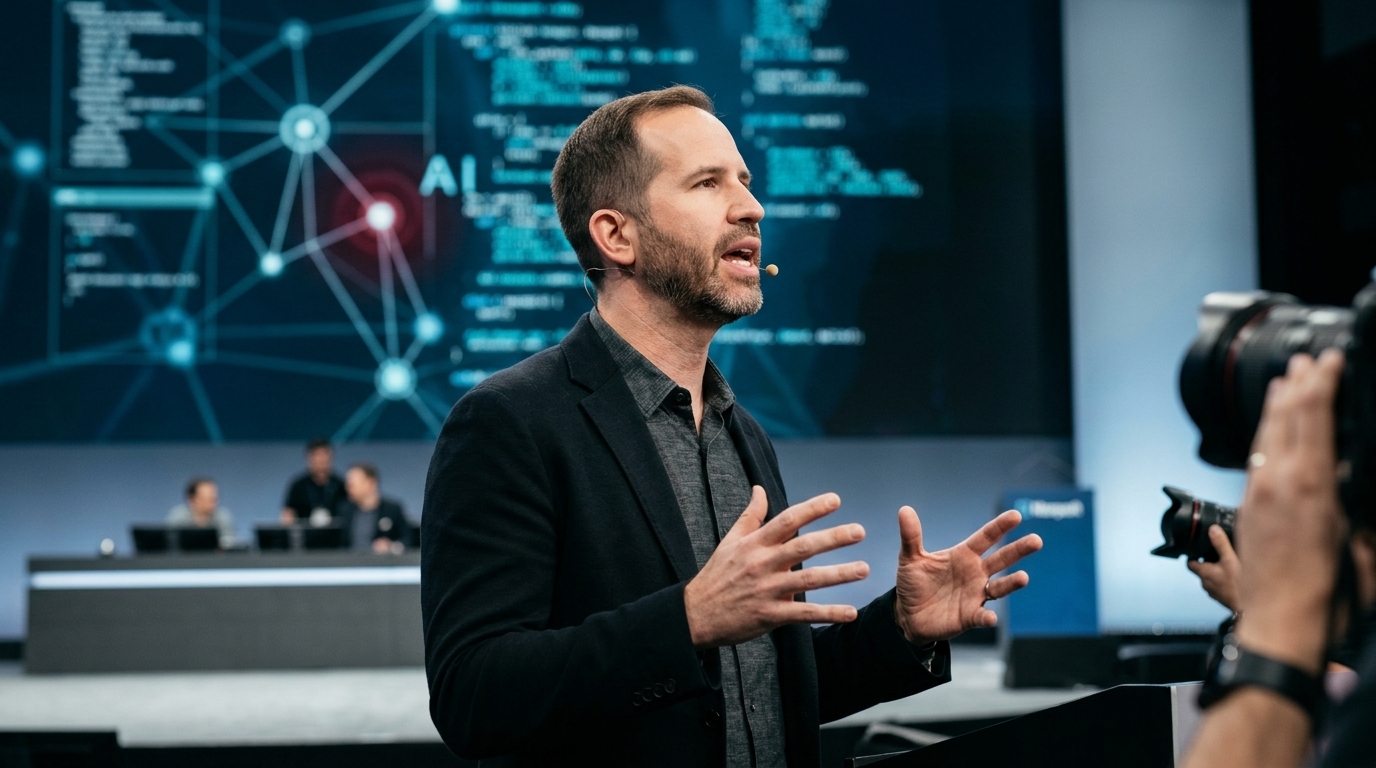
In the rapidly shifting landscape of artificial intelligence, 2026 is emerging as the year of the "actionable" model. The recent news that Parallel Web Systems has secured $100 million in funding for its agentic AI efforts is more than just another venture capital success story in Silicon Valley. It represents the consolidation of a new technological paradigm: the transition from AI as a conversationalist to AI as an autonomous operator. This funding round underscores a growing belief that the next frontier of computing lies in systems that don't just generate text, but navigate the digital world on behalf of human users.
From Chatbots to Autonomous Agents
For the past few years, the public's primary interaction with AI has been through chat interfaces. While Large Language Models (LLMs) have proven remarkably adept at synthesizing information and generating creative content, they have largely remained passive tools—waiting for a prompt and responding within the confines of a text box. Parallel Web Systems aims to dismantle these boundaries. Agentic AI refers to systems capable of setting goals, planning multi-step sequences, and executing actions within complex digital environments.
The $100 million investment is earmarked for building the infrastructure that allows these agents to perceive and interact with the web much like a human does. This involves more than just simple automation; it requires the ability to overcome dynamic obstacles such as CAPTCHAs, complex authentication flows, and the ever-changing layouts of modern websites. Parallel Web Systems isn't just building a better chatbot; they are building a digital workforce capable of handling everything from procurement to intricate data research autonomously.
The Architecture of Agency and Real-Time Interaction
What sets Parallel Web Systems apart in a crowded field of AI startups? The answer lies in their fundamental approach to web interaction. Most current AI attempts to use the web involve "scraping" or using APIs, which are often limited or restricted. Parallel Web Systems is developing what it calls a "web-native intelligence"—a model that interprets the visual and structural elements of a browser in real-time.
By utilizing advanced computer vision and reinforcement learning, their agents can "see" a webpage, understand the semantic importance of a "Submit" button versus a "Cancel" button, and adapt when a site's interface is updated. This resilience is the holy grail of agentic AI. If an agent breaks every time a website moves a menu item, it is useless for enterprise applications. Parallel's focus on building a robust, adaptive "agentic operating system" is what has attracted such significant capital during a period of increased investor scrutiny.
Economic Implications and the Battle for the Interface
The timing of this $100 million round is strategic. Tech giants like Google, Microsoft, and OpenAI are all racing to release their own versions of AI agents. Microsoft’s "AutoDev" and OpenAI’s rumored "Operator" project suggest that the industry recognizes a fundamental truth: the entity that controls the agent controls the user’s gateway to the internet. If users begin to rely on agents to book travel, manage finances, and conduct shopping, the traditional search engine model—and the advertising revenue that supports it—could face an existential threat.
From a market perspective, Parallel Web Systems is positioning itself as a platform-agnostic alternative. By remaining independent of the major cloud providers, they aim to become the universal layer through which various AI models interact with the web. This "middle-layer" strategy could be immensely lucrative, as it places Parallel at the center of the burgeoning "Agent Economy," where the primary unit of value is the successful completion of a task rather than the delivery of an impression or a click.
Challenges: Security, Ethics, and the Autonomous Web
Despite the optimistic valuation, the path forward is fraught with technical and ethical hurdles. Security is the most pressing concern. An autonomous agent with access to a user’s browser, cookies, and payment methods is a high-value target for cybercriminals. The risk of "indirect prompt injection"—where a malicious website tricks an AI agent into performing unauthorized actions—is a problem that has yet to be fully solved.
Furthermore, there are broader societal questions about the "Dead Internet Theory" becoming a reality. If the web becomes a playground where agents talk to other agents, what happens to human-centric content? Parallel Web Systems will need to navigate these concerns carefully, ensuring that their agents act as a bridge to human productivity rather than a barrier to human agency. As they deploy their $100 million war chest, the company stands at the forefront of a revolution that could redefine our relationship with the digital world, turning the internet from a place we visit into a place where we send our representatives to work.