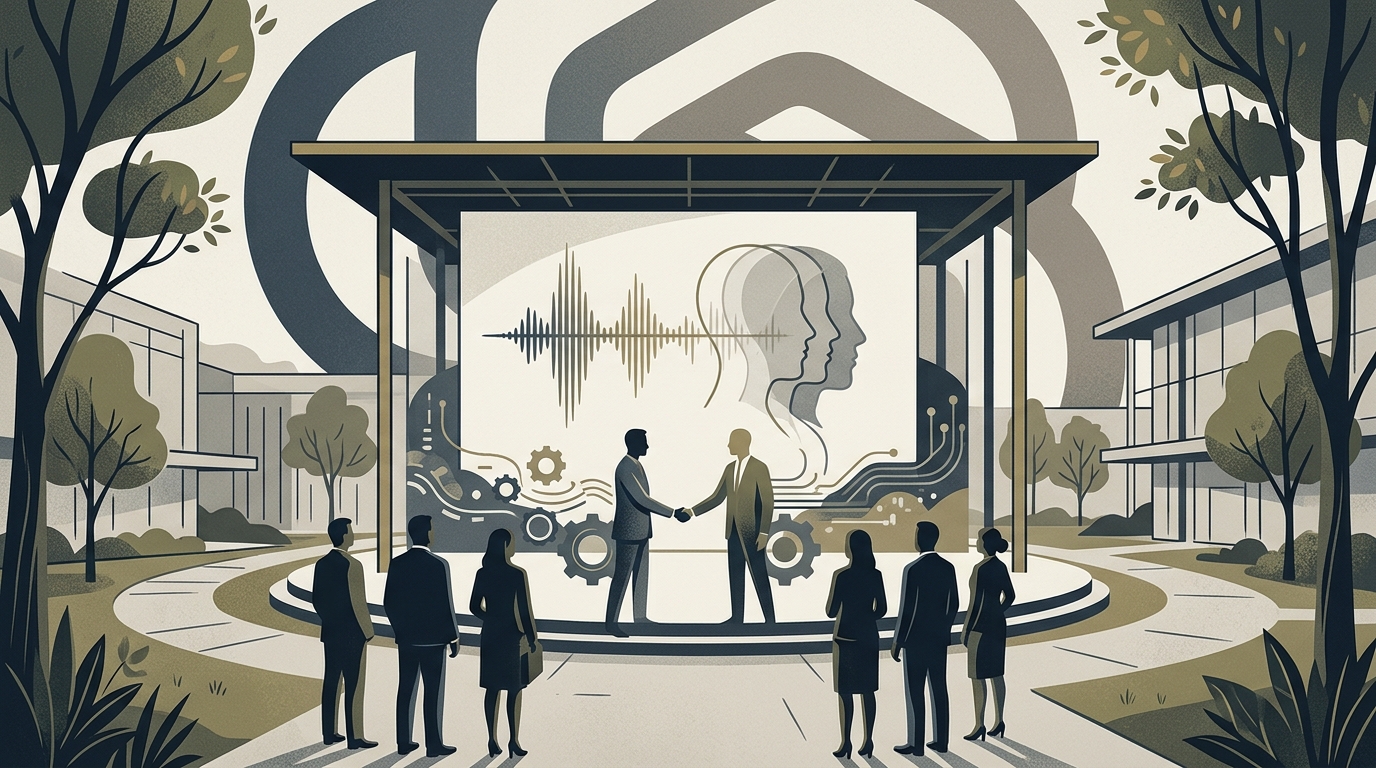
In a move that underscores its strategic pivot toward multimodal artificial intelligence, OpenAI has moved to acquire a specialized startup developing voice cloning tools. The news, broken by The New York Times, reveals the tech giant's intent to dominate not just text and image, but the most personal aspect of human communication: the voice. This acquisition comes at a critical juncture, shortly after the unveiling of GPT-4o, a model that both dazzled and unsettled the public with its eerily realistic vocal capabilities.
The Strategic Imperative of Audio
For OpenAI, voice is not merely a peripheral feature; it is the next great frontier in human-computer interaction. This acquisition is as much about talent and data as it is about the underlying technology. By integrating advanced cloning algorithms, OpenAI aims to drastically reduce the latency and the amount of data required to create a faithful digital twin of a voice—a process that now requires only a few seconds of audio sampling.
The synthetic audio market is projected to explode in the coming years, with applications ranging from automated film dubbing and content creation to hyper-personalized customer service and assistive technologies for the speech-impaired. However, the concentration of such power within a single corporate entity raises significant concerns about a potential monopoly over "digital identity."
Ethical Quagmires and the Ghost of Scarlett Johansson
This acquisition unfolds under the shadow of the recent controversy involving actress Scarlett Johansson, who accused OpenAI of deploying a voice ("Sky") that bore an uncanny resemblance to her own without her consent. The incident highlighted a glaring legal vacuum regarding the protection of the voice as a proprietary asset. Voice cloning carries inherent risks of deepfakes, fraud, and misinformation, particularly in a year marked by high-stakes global elections.
OpenAI maintains that it prioritizes safety, implementing watermarking techniques and strict verification protocols to determine who is authorized to clone a voice. Nevertheless, the history of technology suggests that once the genie is out of the bottle, containment becomes a Herculean task. The ability for anyone to sound like anyone else threatens to undermine the fundamental trust we place in auditory communication.
Market Competition and the Future of Work
This move places OpenAI on a direct collision course with companies like ElevenLabs, currently the frontrunner in the AI audio space. Simultaneously, it sends tremors through the industry of professional voice actors and narrators. If AI can produce emotionally resonant, natural speech at a fraction of the cost, the traditional voice-over market faces an existential threat.
In conclusion, this acquisition is more than a mere business transaction. It is a bid for dominance in a domain that touches the core of human identity. The challenge for OpenAI will be to strike a delicate balance between innovation and accountability, ensuring that the voice of the future serves as a tool for creative empowerment rather than a weapon of manipulation.
- Cloning speed has been reduced to requiring only seconds-long samples.
- Legal frameworks for voice protection remain inadequate globally.
- Cybersecurity risks are escalating through sophisticated voice deepfakes.
- OpenAI is pursuing vertical integration in AI-driven content production.