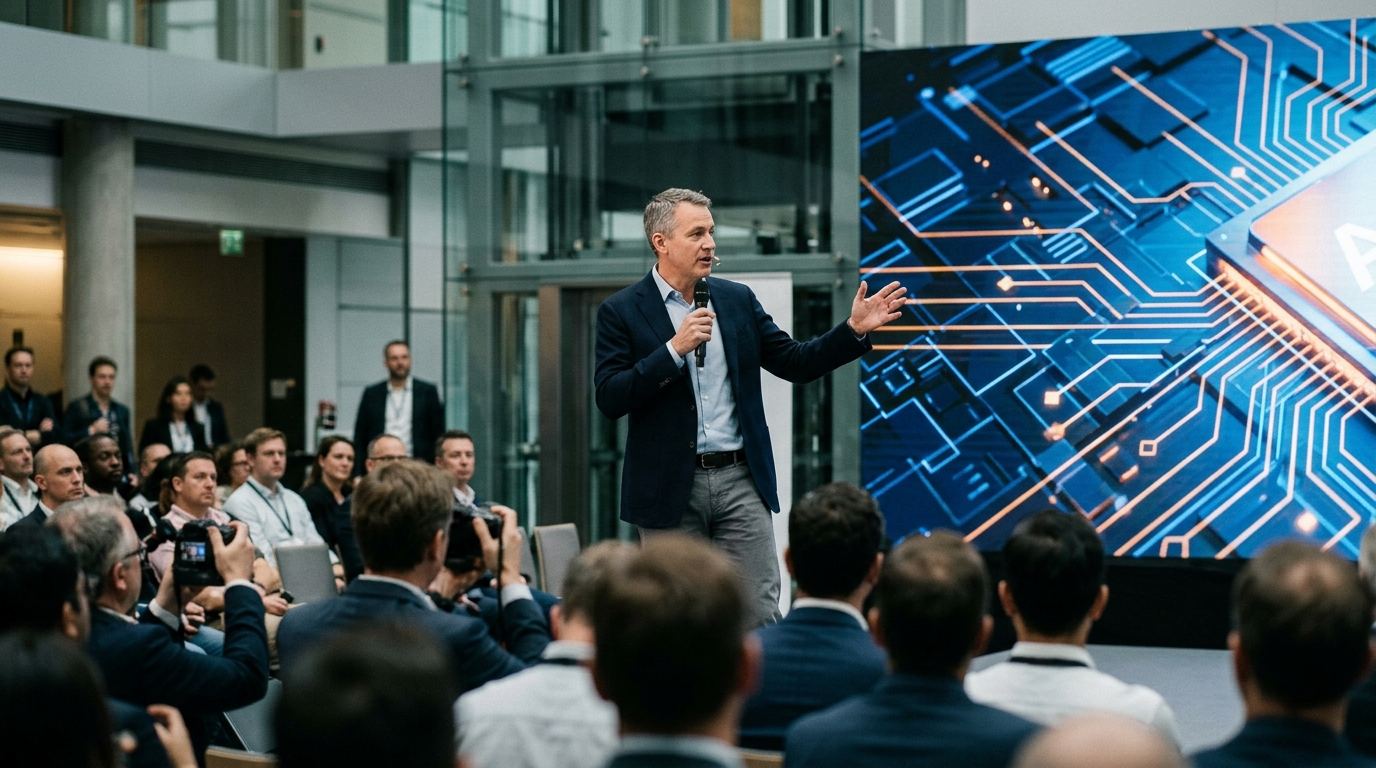
In a move that many analysts anticipated but few expected to be executed with such aggression, Nvidia announced today at the Computex trade show in Taipei its formal entry into the PC central processor market. The RTX Spark Superchip is not just another graphics card; it is a fully integrated System-on-Chip (SoC) combining CPU, GPU, and a formidable Neural Processing Unit (NPU), aiming to displace Intel and AMD from their decades-long dominance.
The End of the x86 Monopoly?
For nearly forty years, the PC world has relied on the x86 architecture. However, Apple’s success with its M-series processors proved that Arm architecture can deliver superior performance-per-watt. Nvidia, leveraging its expertise from Grace Hopper supercomputers, is now bringing this technology to the consumer. The RTX Spark promises to deliver the power of a high-end desktop gaming PC in a thin laptop form factor, with battery life exceeding 20 hours.
Jensen Huang’s strategic choice to unveil the chip in Taipei is no coincidence. Taiwan remains the heart of global semiconductor manufacturing, and the partnership with TSMC for the 2nm production process is what enables Nvidia to achieve such performance levels. The RTX Spark features over 100 TOPS (Trillions of Operations Per Second) dedicated solely to AI tasks, making it the most powerful silicon for 'AI PCs' on the market.
Alliances with Giants: Dell and Lenovo
Nvidia is not walking this path alone. Already, the world’s two largest PC manufacturers, Dell and Lenovo, have confirmed they will launch product lines based on the RTX Spark this fall. This means the Windows on Arm ecosystem finally has the hardware it needs to compete head-to-head with macOS. Users will no longer have to choose between portability and raw graphical processing power.
- Integrated Blackwell architecture for next-generation graphics.
- 'Neoverse' CPU cores optimized for Windows 12 performance.
- Full support for local execution of Large Language Models (LLMs).
- Zero-latency performance in generative AI creative applications.
Geopolitics and Market Dynamics
Nvidia’s move reshuffles the technological geopolitical landscape. With Intel struggling to regain its manufacturing lead and AMD focusing heavily on data centers, Nvidia is seizing the high-end computing vacuum. However, the reliance on TSMC and escalating US-China tensions remain the 'elephant in the room.' Any disruption in the Taiwanese supply chain could jeopardize the company’s ambitious plans.
"We are not just building a chip; we are redefining what a personal computer means in the age of Artificial Intelligence," Jensen Huang stated during his keynote.
In conclusion, the RTX Spark Superchip represents the pinnacle of Nvidia’s strategy: to become the company behind every calculation, from the cloud to our desktops. The battle for the desktop has just begun, and for the first time in years, the traditional incumbents seem to be reacting to the news rather than making it.