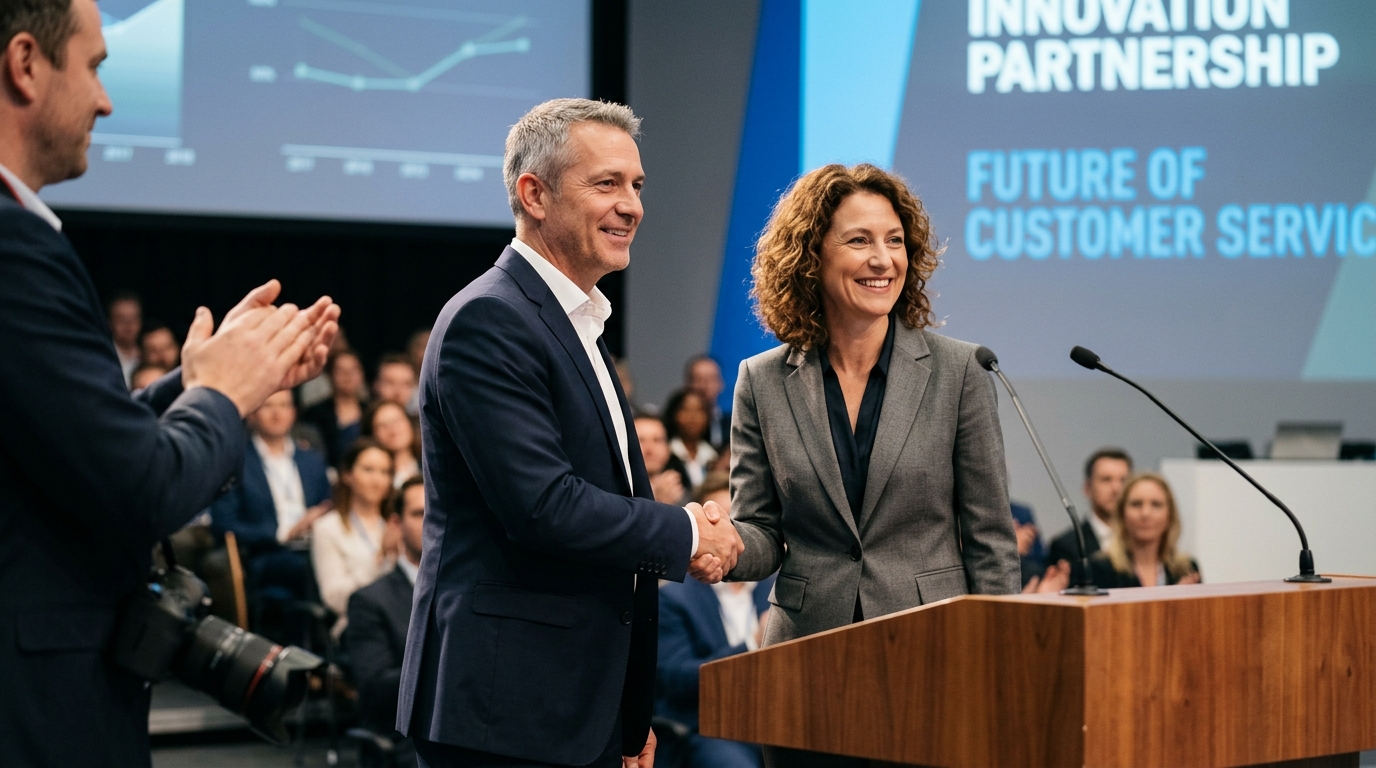
In an era where Artificial Intelligence is transitioning from an experimental novelty to a foundational pillar of corporate operations, San Francisco-based Netomi has announced a significant $110 million funding round. Led by Accenture Ventures with participation from Adobe Ventures, this Series C round highlights a critical market shift: large enterprises are no longer satisfied with simple chatbots; they are demanding comprehensive systems for autonomous problem resolution.
This investment arrives at a time when the global customer service industry is under immense strain. Consumers expect instantaneous, 24/7 responses, while corporations are desperate to slash operational costs without compromising customer satisfaction scores (CSAT). Netomi promises to bridge this gap by leveraging Generative AI that understands context, integrates with backend systems, and completes complex tasks—ranging from flight cancellations to billing disputes—without human intervention.
The Strategic Alliance: Why Accenture and Adobe?
The involvement of Accenture and Adobe is highly strategic. Accenture, the world's largest consulting firm, views Netomi as the engine that will allow its global clients to automate between 70% and 80% of support interactions. For Adobe, a dominant force in customer experience software, integrating Netomi’s capabilities into its ecosystem makes AI a central component of its digital experience strategy.
"We aren't just building a chat tool. We are building the operating system for customer experience in the AI era," said Puneet Mehta, founder and CEO of Netomi.
The significance of this funding lies in Netomi's architectural approach. Unlike many startups that simply wrap around OpenAI's GPT-4, Netomi has developed its proprietary "Mind" technology. This allows enterprises to train AI models on their own siloed data with high security and precision, effectively eliminating the "hallucinations" that often plague generalized LLMs in sensitive business contexts.
From Reactive to Proactive: The Future of Support
Traditional customer service has always been reactive: a customer encounters a problem, reaches out, and waits. Netomi’s approach flips this paradigm. By integrating deeply with CRM and ERP systems, the AI can predict when a customer might face an issue and offer solutions before the first ticket is even opened. For instance, if a shipment is flagged as delayed, the AI can proactively notify the customer and offer a discount or an alternative solution.
- Autonomous Resolution: The ability to execute actions in real-time, not just provide information.
- Omnichannel Presence: A unified experience across email, chat, social media, and voice support.
- Data Sovereignty: Compliance with the strictest privacy standards, essential for banking and healthcare providers.
The challenge remains, however, in maintaining the human element. While Netomi can handle the bulk of routine tasks, the transition to a human agent for emotionally charged or highly nuanced issues remains vital. Netomi’s technology promises a "seamless handoff," where the human representative receives the full context of the AI interaction along with suggested resolutions, ensuring the customer never has to repeat themselves.
Economic Implications and the Labor Market
This $110 million investment is also a resounding vote of confidence in the economic viability of AI within the service sector. With the AI-driven customer service market projected to exceed $20 billion by 2028, competition is fierce. Established players like Zendesk and Salesforce are investing billions, but Netomi is gaining traction due to its specialized focus and agility in enterprise deployments.
Yet, the rise of such systems raises profound questions about the future of entry-level jobs, particularly in developing economies that rely heavily on the BPO (Business Process Outsourcing) sector. If an AI can perform the work of thousands of agents at a fraction of the cost, the pressure for workforce reskilling will become an urgent political and social issue. Netomi argues that its AI "augments" humans by freeing them from repetitive drudgery, but market dynamics often suggest a more disruptive displacement.
In conclusion, Netomi’s funding from Accenture and Adobe is more than just a business milestone. It is a confirmation that customer service, as we have known it for decades, is coming to an end. In its place, a hybrid reality is emerging—one where AI serves as the first line of defense and humans act as the ultimate orchestrators of the customer journey.