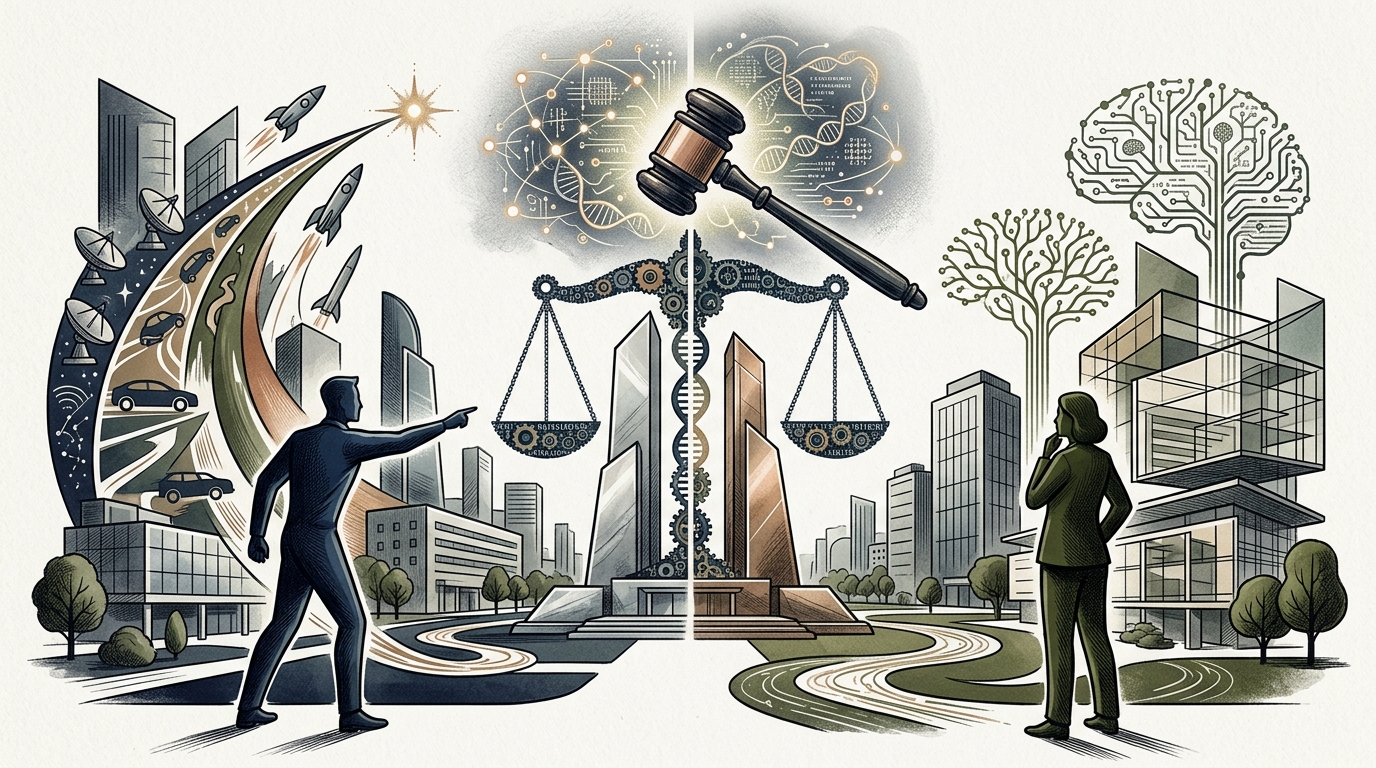
The legal battle between Elon Musk and OpenAI is not just another corporate feud in Silicon Valley. It is a head-on collision of two different worldviews regarding the future of human civilization. When Musk filed his lawsuit, alleging that the company he helped found in 2015 has betrayed its original mission, he opened a Pandora's box regarding how "open" technology is defined and who will ultimately control the most powerful force humanity has ever created.
The Chronicle of a Foretold Rupture
The story begins in 2015, during a dinner in Menlo Park, where Musk, Sam Altman, and Greg Brockman agreed to create a non-profit research lab. The goal was clear: to develop Artificial General Intelligence (AGI) in a way that benefits humanity, far from the pressures of shareholders and profits. Musk, fearing Google's dominance at the time, invested tens of millions of dollars, believing that OpenAI would serve as a counterweight to the closed-source models of tech giants.
However, the trajectory changed dramatically in 2019 with the creation of a "capped-profit" arm. OpenAI argued that the immense computing power required to train models like GPT-4 could never be funded solely by donations. This shift led to a close partnership with Microsoft, which has invested over $13 billion, effectively gaining exclusive commercial rights to the company's technologies.
The Thorny Issue of AGI
The central point of Musk's lawsuit focuses on whether GPT-4 already constitutes a form of AGI. According to OpenAI's charter, Microsoft's license applies only to pre-AGI technologies. Once the system reaches human-level intelligence, the technology must return to the public domain. Musk claims that OpenAI and Microsoft are "hiding" progress toward AGI to maintain their monopoly and profits, turning OpenAI into a de facto subsidiary of Microsoft.
- The legal validity of the "Founding Agreement," which OpenAI claims never existed in a formal, binding sense.
- Algorithmic transparency and public access to the source code.
- The ethical responsibility of researchers regarding the risks of uncontrolled AI.
OpenAI's Strategy and the Counter-argument
For its part, OpenAI did not stand idly by. It published past emails from Musk showing that he himself had proposed a full merger of OpenAI with Tesla or total control over it when he realized the non-profit path could not compete with Google. The company's defense line is that Musk is not acting as a "savior of humanity," but as a disgruntled competitor trying to promote his own AI company, xAI, by undermining the success of his former partners.
"Our mission remains the same, but the road to get there requires resources that only the market can provide," a company executive stated during the hearing.
Implications for the Global Ecosystem
This trial will determine the future of Open Source in artificial intelligence. If Musk prevails, it could force OpenAI to open-source its models, which would shift the balance of power in the global market. If OpenAI wins, the model of "closed" and commercially controlled development will be solidified, where a few companies hold the keys to digital evolution. For the average user, the stake is whether the tools of tomorrow will be accessible to all or part of a subscription service controlled by a handful of billionaires.