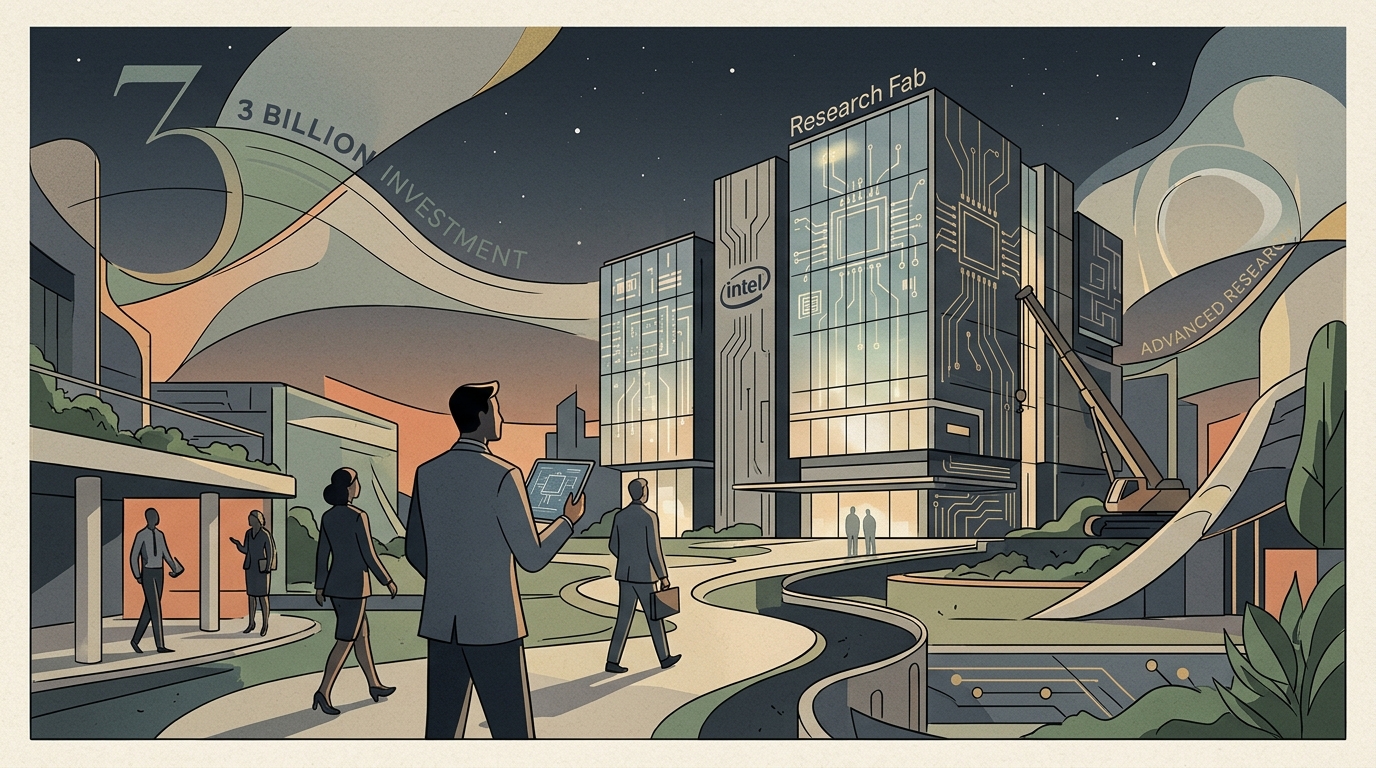
In a move set to redefine the global technological landscape, Elon Musk has announced that Tesla Inc. will invest $3 billion to establish a state-of-the-art "research fab" in Austin, Texas. This project is more than just an expansion of manufacturing capacity; it represents a strategic pivot toward total hardware sovereignty, leveraging Intel’s cutting-edge fabrication technology to secure Tesla’s future in AI and robotics.
The Intel Alliance: A Strategic Marriage of Necessity
The partnership with Intel is perhaps the most significant aspect of this announcement. Under CEO Pat Gelsinger, Intel has poured billions into its Intel Foundry Services (IFS), aiming to challenge TSMC’s dominance in contract chip manufacturing. Musk’s decision to tap Intel, rather than traditional Asian foundry partners, signals a shift toward domestic supply chain security and a bet on Intel’s turnaround strategy.
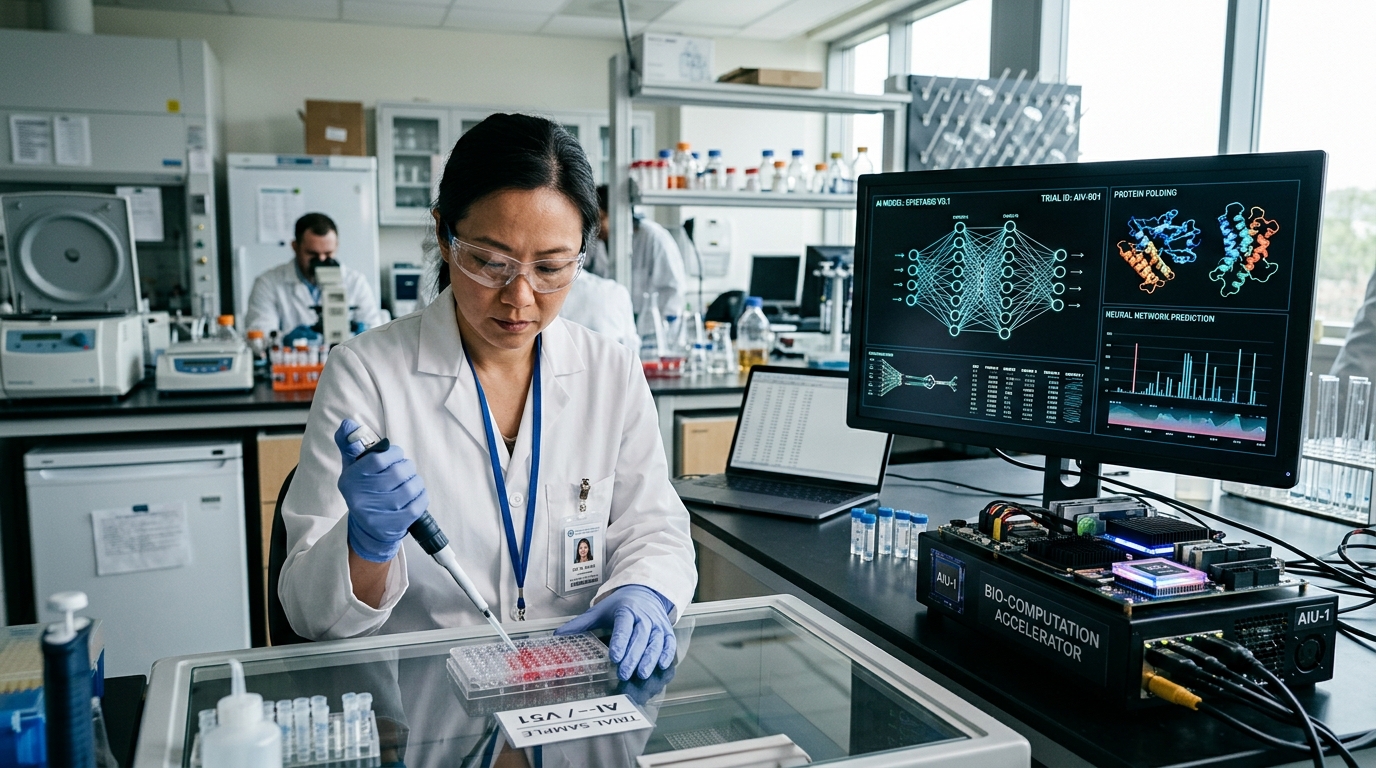
The new facility will focus on the research and prototyping of next-generation semiconductors designed to power Tesla’s Full Self-Driving (FSD) computer and the Optimus humanoid robot. By utilizing Intel’s 18A (1.8nm-class) process technology, Tesla aims to achieve unprecedented levels of computational efficiency—a critical factor for mobile AI applications where power consumption is as vital as processing speed.
Vertical Integration and the AI Arms Race
For years, the tech industry has been beholden to Nvidia for the high-end GPUs required to train and run complex AI models. Musk has been vocal about the bottlenecks caused by this dependency. By building its own research fab, Tesla is doubling down on the "Apple model": designing custom silicon that is perfectly optimized for its proprietary software stack.
- Cost Control: In the long run, in-house production can drastically reduce the per-unit cost of specialized chips.
- Innovation Velocity: Having research and fabrication in close proximity allows for faster iteration cycles.
- Tailored Architecture: Unlike off-the-shelf chips, Tesla’s silicon can be architected specifically for neural network inference.
Geopolitics and the Rise of the 'Silicon Hills'
This investment further cements Texas’s status as a burgeoning tech hub, often referred to as the "Silicon Hills." Following the relocation of Tesla’s headquarters to Austin, the addition of a high-tech fab is a logical progression. Furthermore, this move aligns with U.S. national interests and the goals of the CHIPS Act, which seeks to bring semiconductor manufacturing back to American soil to mitigate geopolitical risks associated with Taiwan.
"We cannot rely on a supply chain that spans oceans for the most critical components of our future products," Musk stated during the announcement.
Risks, Yields, and the Road Ahead
Despite the grand vision, semiconductor manufacturing is notoriously difficult. Intel has historically struggled with transition delays to smaller nodes, and Tesla is famous for its "production hell" phases. A research fab is a controlled environment, but scaling to high-volume manufacturing is a multi-billion dollar endeavor that requires a level of precision and expertise that few companies possess.
The success of this venture depends on whether Intel can deliver on its process roadmap and whether Tesla can attract the rare talent needed to run a world-class fab. If successful, however, Tesla will not just be an automaker or an AI company; it will be a vertically integrated titan capable of controlling its destiny from the raw silicon to the finished autonomous machine.
In conclusion, the $3 billion investment is a clear signal that the era of software companies being separate from hardware companies is ending. In the age of AI, the winner is the one who owns the silicon.