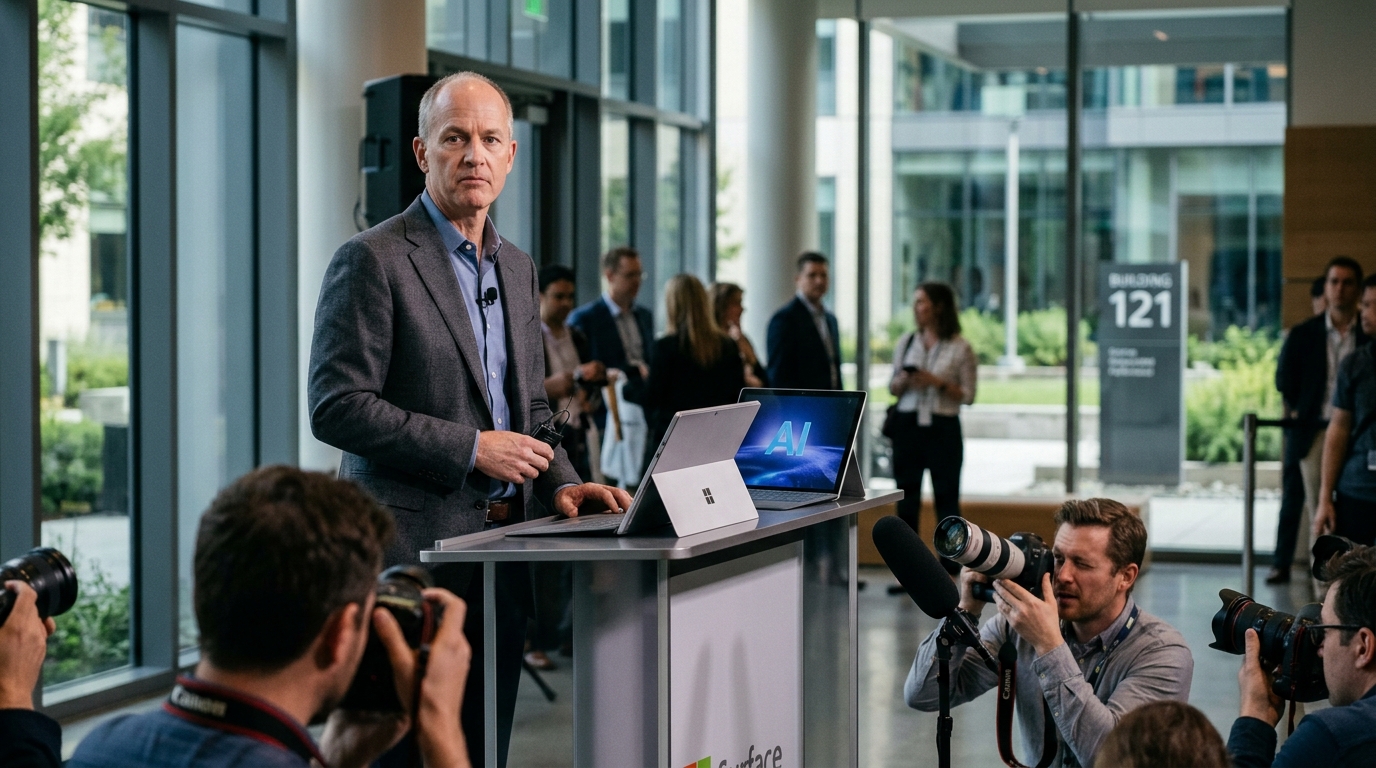
The history of technology is punctuated by moments where innovation collides head-on with economic reality. Microsoft's recent unveiling of its new Surface lineup, ushering in the era of 'Copilot+ PCs,' represents the latest chapter in this ongoing struggle. While the tech giant promises a new paradigm of personal computing integrated with generative AI, the market is reacting not to the silicon, but to the sticker shock. Microsoft appears to be borrowing a page from Apple’s playbook, attempting to establish a premium tier, but Windows users—historically accustomed to a broader range of price points—seem unwilling to follow quietly into this expensive new world.
The Copilot+ Strategy and the $1,000 Barrier
Microsoft introduced the new Surface Pro and Surface Laptop powered by Qualcomm’s Snapdragon X Elite and Plus processors. These ARM-based chips aren't just fast; they feature a dedicated Neural Processing Unit (NPU) capable of over 40 trillion operations per second (TOPS). This localized power is essential for running Windows 11’s new AI features, such as the controversial 'Recall,' live captions with translation, and advanced image generation, directly on the device rather than in the cloud.
However, the starting price of $999 is merely the entry point to a much deeper financial commitment. Critics point out that for a truly functional professional experience, the costs escalate rapidly. For instance, the Surface Pro continues to be sold without its essential keyboard cover. The new 'Surface Pro Flex Keyboard' alone retails for approximately $450, pushing the total cost of a complete system into the territory of high-end MacBook Pros. This is a gamble, considering Microsoft has yet to prove that its software ecosystem can transition to ARM as seamlessly as Apple did with its M-series chips.
The ARM Transition and the Apple Comparison
Microsoft’s pivot to ARM architecture is a clear attempt to replicate the efficiency and performance gains of Apple Silicon. The promise is enticing: multi-day battery life, fanless operation, and peak performance that doesn't throttle when unplugged. Yet, Microsoft faces a hurdle that Apple navigated with vertical integration: app compatibility. While the new 'Prism' emulation layer promises to run legacy Windows apps on ARM, the performance for niche professional software remains a question mark for many potential buyers.
"Microsoft is asking users to pay a premium for technology that is essentially in a public beta phase," market analysts observe. "You aren't just buying a laptop; you are subsidizing Microsoft's strategic shift to a new architecture."
Public frustration is compounded by the perception that many 'exclusive' AI features could theoretically run on existing high-end GPUs from NVIDIA. Microsoft’s decision to gate these features behind a 40+ TOPS NPU requirement is seen by some as an artificial push for hardware obsolescence, forcing upgrades in a market already weary of rapid replacement cycles.
Privacy Concerns and the AI Value Proposition
Beyond the financial aspects, Microsoft is also defending the actual value of its AI offerings. The 'Recall' feature, which takes snapshots of a user’s screen every few seconds to create a searchable photographic memory of their activity, ignited a firestorm of security and privacy concerns. Although Microsoft was forced to make it an opt-in feature, the reputational damage to the Copilot+ brand was immediate.
Consumers are asking: Is it worth paying a $500 premium for a device that 'surveils' me just to help me find a document? In an era of global inflation and economic tightening, the 'AI tax' feels like a burden many are not ready to shoulder. The Surface brand, once the beacon of Windows innovation, risks being perceived as a luxury label disconnected from the practical needs of the average consumer.
- Base models now starting at 16GB RAM increase manufacturing costs, but also the entry price for consumers.
- The omission of peripherals like the keyboard and pen from the base price remains the biggest point of contention.
- Imminent competition from Dell, HP, and Lenovo with similar AI silicon may force Microsoft into aggressive discounting.
In conclusion, Microsoft stands at a crossroads. Artificial Intelligence is undoubtedly the future of computing, but forcing its adoption through high hardware barriers may stifle its growth. If the company cannot find a way to make Copilot+ PCs more accessible or demonstrate an undeniable leap in daily utility, the Surface line may retreat into a niche professional corner, leaving the mass market to more price-conscious competitors.