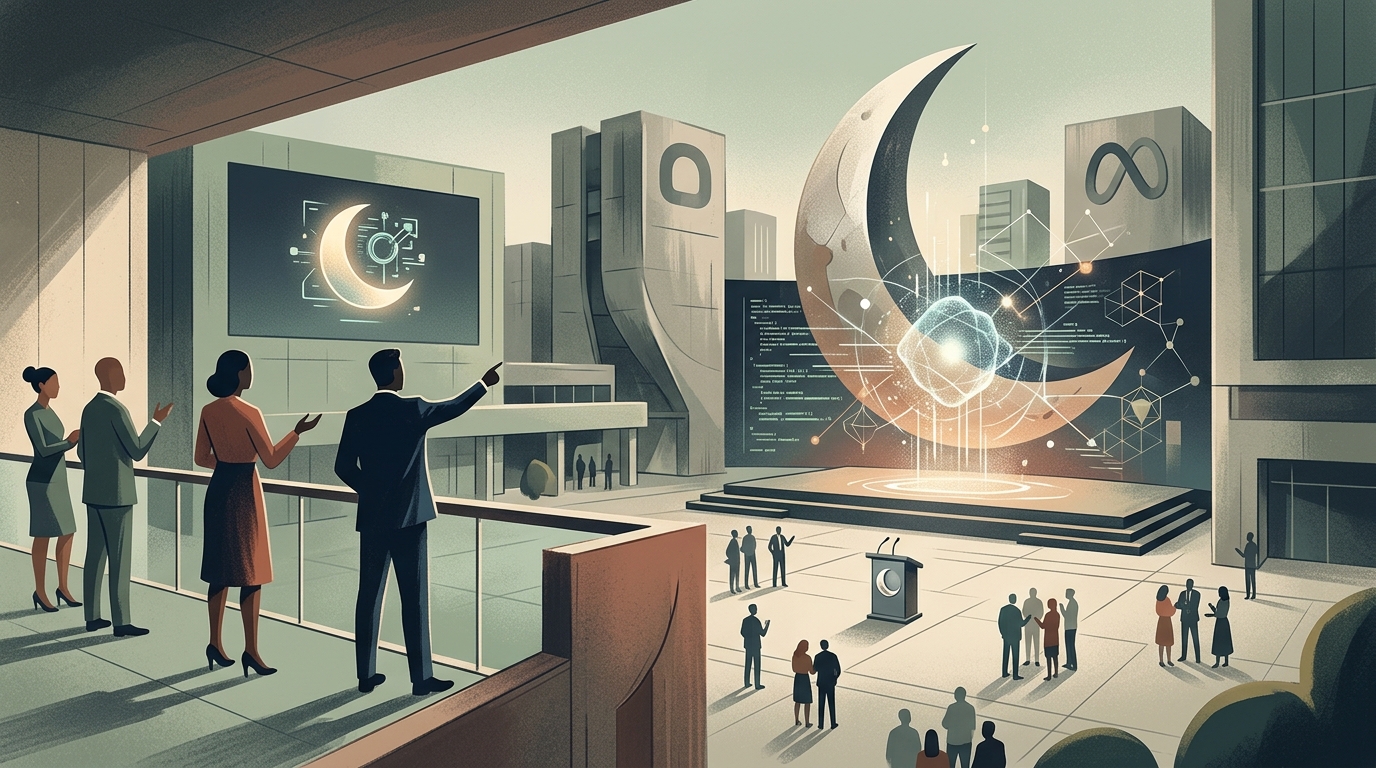
The history of technology often oscillates between centralized power and decentralized application. At the dawn of the Artificial Intelligence revolution, the world was stunned by the emergence of Large Language Models (LLMs) — those monolithic "digital brains" capable of writing poetry or solving complex code. However, as the dust from the initial excitement settles, the tech giant from Redmond, Microsoft, is making a strategic observation that is expected to reshape the industry landscape: The future does not belong to the "best model," but to the most effective system.
The company's recent announcement regarding the introduction of over 100 autonomous agents into the Dynamics 365 and Copilot Studio ecosystem signals the end of the "one-model-fits-all" era. According to Microsoft executives, the focus is shifting from how many parameters a model possesses to how that model interacts with data, tools, and other agents to achieve a specific business objective.
From Chatbots to Autonomous Agents
To understand this transition, we must distinguish between a traditional AI chatbot and an AI agent. While a chatbot waits for a prompt from the user to respond, an agent has the ability to act autonomously within a predefined context. It can monitor emails, recognize sales patterns, update databases, and initiate supply chain processes without constant human guidance.
Microsoft argues that real value arises when these agents function as a "system." Imagine a customer service department where one agent analyzes the sentiment of a call, a second retrieves purchase history, and a third suggests a personalized discount, all in real-time. This orchestration requires more than just a smart model; it requires an infrastructure that connects the model to corporate data (the Graph) and business applications.
"We aren't just building AI; we are building a new platform for work, where agents are the new applications," a company executive recently stated, highlighting the gravity of this shift.
The Strategy of Orchestration vs. Brute Force
Why is Microsoft choosing this path? The answer lies in the limits of scaling. As the cost of training increasingly larger models rises exponentially, the return on investment (ROI) begins to diminish. Conversely, using smaller, specialized models that collaborate offers greater flexibility, lower operational costs, and, crucially, fewer hallucinations.
- Specialization: Instead of one model that knows everything mediocrely, ten models are used that know one thing perfectly.
- Security: Agents operate within the security boundaries of Azure, ensuring that corporate data does not leak.
- Speed: Executing specialized tasks with smaller systems is faster than processing every request through a giant LLM.
This approach puts Microsoft in direct competition with Salesforce and its Agentforce platform. The battle is no longer about who has the closest partnership with OpenAI, but about who possesses the best "operating system" for Artificial Intelligence.
The Human Factor and the New Work Reality
The transition to agentic systems inevitably raises questions about the future of work. If 100 agents can handle marketing, sales, and support, what is the role of the employee? Microsoft's position is that the human is transformed from an "executor" to an "orchestrator." The worker will no longer write the report but will oversee the agents composing it, ensuring quality and ethical alignment.
However, the challenge of adoption remains. Businesses must reorganize their digital infrastructures to accommodate these systems. It is not enough to buy a subscription; you must train the system on your own data and define clear governance rules. "Shadow AI," where employees use unauthorized agents, represents a new cybersecurity risk that organizations must address immediately.
Conclusion: The Maturation of AI
We are at a turning point. The era of impressive demonstrations of individual models is giving way to the era of applied systemic intelligence. Microsoft, with its massive installed base of Office and Windows users, has the advantage of integrating these agents into the daily lives of billions. Whether the future will be a harmonious human-system collaboration or chaotic automation will depend on how well these "systems" are designed over the next two years.