When you tap the post button on Instagram or ask an AI assistant to write a poem, the action doesn't happen in a vacuum. It occurs within massive, industrial-scale buildings spanning hundreds of thousands of square feet, filled with rows of humming servers. These are data centers—the physical manifestation of what we call "the cloud." In its recent update, Meta opened the doors to these digital fortresses, revealing the complexity and technological prowess required to keep one-third of the planet connected.
The Anatomy of a Hyperscale Data Center
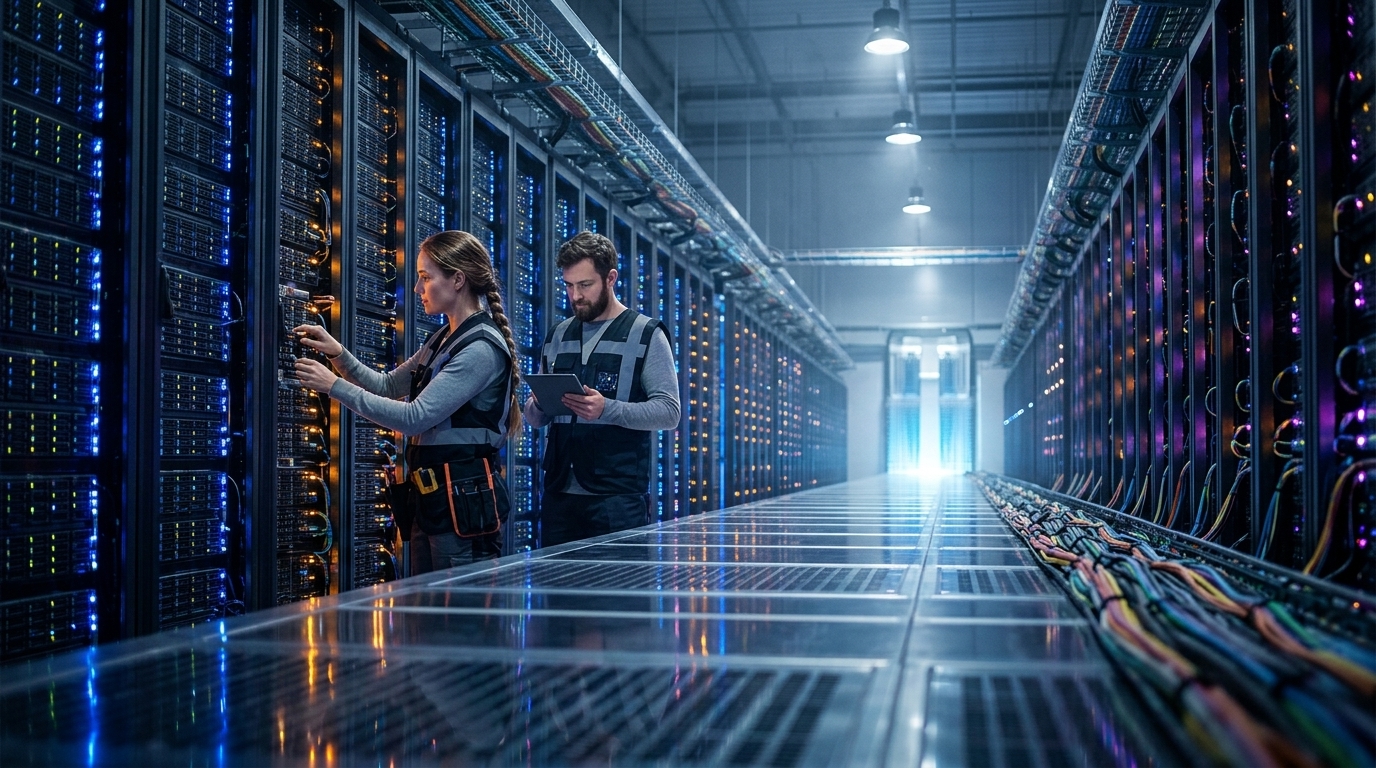
Meta's data centers are not mere computer warehouses; they are "hyperscale" facilities designed to handle volumes of data that defy human imagination. At their heart are racks—the metal frames that house the servers. Each server includes processors (CPUs), graphics cards (GPUs), and memory units. With the rise of Generative AI, the architecture of these systems has shifted radically. Meta is now integrating its own custom silicon, the MTIA (Meta Training and Inference Accelerator), which is optimized specifically for its social network algorithms, reducing reliance on external vendors and increasing efficiency.
Networking is the next critical element. Thousands of miles of fiber optics run through the facilities, connecting servers at speeds that allow for instantaneous 4K video processing and the training of Large Language Models (LLMs). Without this internal "neurology," AI would be impossible to operate in real-time.
The Heat of Innovation: From Air to Liquid
One of the biggest challenges Meta faces in 2026 is heat management. New AI processors, such as Nvidia's Blackwell and subsequent generations of MTIA, produce amounts of heat that traditional air cooling (fans) fails to manage effectively. The solution being widely adopted is liquid cooling. Closed-loop systems carry coolant directly over the chips, absorbing heat far more efficiently than air.
This transition is not just technical but structural. Meta's new data centers are designed from the ground up to support heavy liquid cooling infrastructure, changing how building floors and piping are constructed. Sustainability also plays a pivotal role: the company claims to use 100% renewable energy, investing in wind and solar farms near its facilities, while even repurposing waste heat to warm local communities in certain European regions.
Economic Footprint and Geopolitical Significance
Constructing such a center costs billions of dollars and requires years of planning. For local economies, a data center means hundreds of jobs during construction and dozens of permanent positions for specialized engineers. However, their presence is not without controversy. Water consumption for cooling and the massive demand for electricity put pressure on local grids, often sparking backlash from environmental groups.
Furthermore, the location of these centers carries geopolitical weight. With data sovereignty laws becoming stricter in the European Union and Asia, Meta is forced to build infrastructure within specific borders to ensure user data does not "travel" to jurisdictions with looser privacy protections. Data centers are now the new frontiers of the digital empire.
Conclusion: The Invisible Backbone
At the end of the day, data centers are a reminder that the digital world is deeply rooted in the physical one. Every emoji, every live stream, and every response from Meta AI relies on tons of steel, miles of copper, and the constant flow of electrons. As we move deeper into the age of AI, these buildings will become increasingly critical, serving as the engine of the global economy and social interaction. Understanding how they work is the first step in understanding the future of our civilization itself.