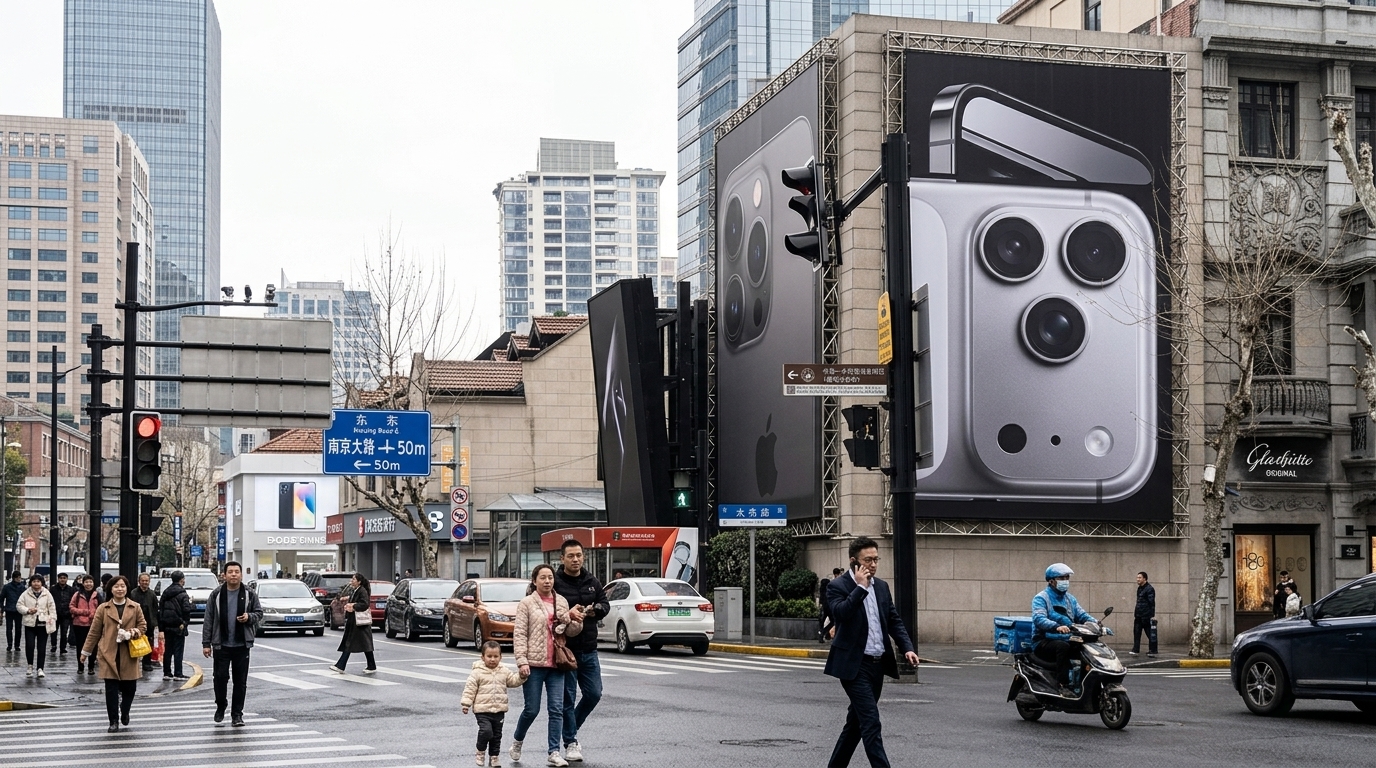
The succession at the top of Apple is never a simple affair, but for John Ternus, the man who took the reins from Tim Cook in the spring of 2026, the challenge seems almost Herculean. As Cook steps down after transforming Apple into a $3 trillion behemoth, Ternus inherits an empire at a critical crossroads, particularly regarding its relationship with the world's second-largest economy. China is no longer just Apple's factory; it is its most vital market and, simultaneously, its greatest geopolitical trap.
The Fragile Rebound in the Chinese Market
Recent data indicates that iPhone sales in China have begun to rebound after a period of intense pressure. However, this recovery is fragile. Ternus takes over at a time when Chinese nationalism is at its zenith, and consumers in mainland China are showing an increasing preference for domestic players like Huawei and Xiaomi. Huawei's resurgence with its HarmonyOS operating system and its own advanced processors has created a wave of "patriotic consumption" that Apple struggles to counter with brand prestige alone.
The new CEO must convince Chinese users that the iPhone remains the premier choice at a time when hardware innovation seems to have plateaued. Ternus, with his background in engineering, is expected to place a greater emphasis on radical design changes, hoping that a "revolutionary" iPhone 18 can win back the hearts of discerning consumers in Shanghai and Beijing.
The AI Conundrum and Regulatory Hurdles
Perhaps the biggest headache for Ternus is the implementation of Apple Intelligence in China. While in the rest of the world Apple works closely with OpenAI and develops its own AI models, China's strict cybersecurity laws prohibit the use of foreign AI models that have not been approved by the Party. This forces Apple to seek local partners, such as Baidu or Alibaba, to offer AI features to Chinese users.
- Reliance on Chinese AI models may undermine Apple's promise of absolute privacy.
- Differences in capabilities between the "Western" and "Chinese" versions of Apple Intelligence could create a two-tier user experience.
- Ternus is called to negotiate with Chinese authorities without appearing to compromise the company's core values.
This need for the "localization" of technology represents a massive departure from Tim Cook's strategy, which believed in a unified, global ecosystem. Ternus will have to prove he can maintain the integrity of iOS while adapting it to the whims of an authoritarian regime.
The Geopolitical Chessboard and Protectionism
Beyond the market, there is politics. Washington continues to push for "decoupling" from China, imposing tariffs and restrictions on technology exports. Ternus inherits a supply chain that still depends heavily on Chinese factories, despite efforts to move production to India and Vietnam.
"John Ternus is not just a tech CEO; he is now a de facto diplomat who must navigate the Taiwan Strait without causing a storm," says a Wall Street analyst.
If Beijing decides to retaliate against US tariffs by targeting Apple, Ternus will find himself in the line of fire. His ability to maintain the balance Cook so carefully built will determine the company's profitability for the next decade. The new CEO has no margin for error. Every move is closely watched by both the Politburo in Beijing and Congress in Washington.
Conclusion: A New Era for Apple
The Ternus era begins with a sense of urgency. The rebound in China is an opportunity, but the "headaches" accompanying it are existential for the company. Apple must reinvent itself as a firm that can thrive in a multipolar world where technology is no longer neutral but a tool of geopolitical power. Ternus has the technical background; it remains to be seen if he possesses the political acumen to steer the ship into safe waters.