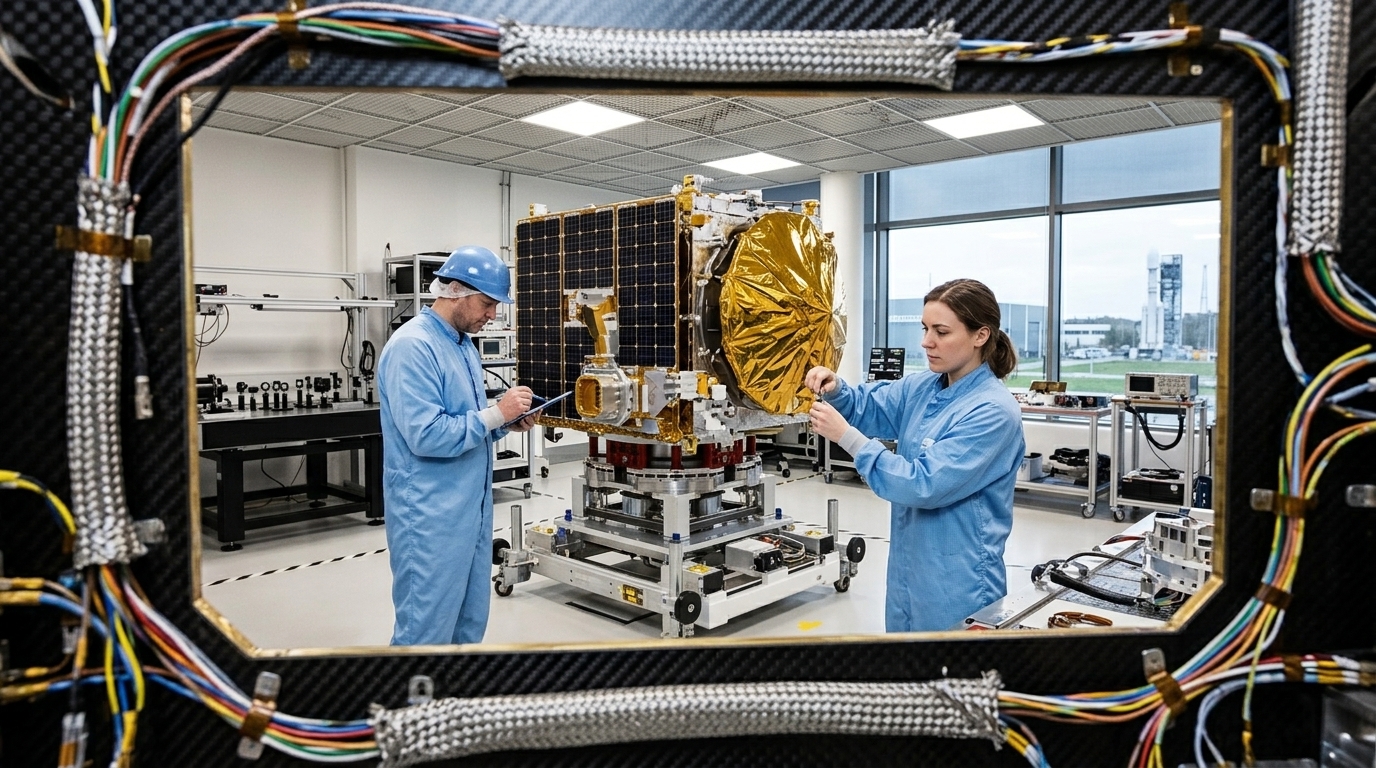
In a move that highlights the growing maturity of the "New Space" economy, Finnish company ICEYE, a global leader in Synthetic Aperture Radar (SAR) technology, has announced the securing of a €300 million revolving credit facility. This financing, backed by leading global banking institutions, is not merely an injection of liquidity; it is a vote of confidence in the viability of satellite services as critical infrastructure for the 21st century.
ICEYE has successfully disrupted Earth observation by offering capabilities previously deemed impossible for commercial entities. With a fleet of microsatellites utilizing SAR technology, the company can "see" through clouds, smoke, and total darkness, providing high-resolution imagery in real-time. This capability has made ICEYE an indispensable partner for governments, insurance companies, and disaster management organizations worldwide.
The Significance of Bank Financing vs. Venture Capital
The transition from Venture Capital (VC) funding to banking credit lines is a milestone for any tech company, especially one operating in the demanding space sector. While venture capital seeks explosive growth with high risk, banks demand stable cash flows, predictable revenues, and a proven business model. This shift marks a paradigm change for the entire space industry.
Securing €300 million suggests that ICEYE has crossed the threshold of profitability or sustainable growth. The use of a revolving credit facility allows the company to manage its working capital with greater flexibility, supporting the execution of large international contracts that often require significant upfront investments in hardware and infrastructure. This is particularly crucial as the company expands its operations in the United States and Asia, where competition for government contracts is fierce and requires robust financial backing.
Geopolitical Volatility and the Demand for Real-Time Intelligence
It is no coincidence that this financing comes during a period of heightened geopolitical tensions. The conflict in Ukraine highlighted the strategic importance of commercial satellite data. ICEYE, having provided critical intelligence to Ukrainian forces through its partnership with the Serhiy Prytula Charity Foundation, proved that microsatellites can offer a tactical advantage on the battlefield. This real-world validation has accelerated the adoption of SAR technology across the defense sector.
The increasing demand for defense infrastructure and border surveillance is driving many NATO countries and allies to invest in their own satellite constellations or long-term data subscription services. ICEYE positions itself as the primary provider of these solutions, offering "Satellite-as-a-Service," allowing nations to control their data without the massive cost of developing their own technology from scratch.
- Infrastructure Resilience: SAR technology allows for the monitoring of critical infrastructure (bridges, dams, pipelines) for micro-movements indicating structural instability.
- Climate Change: Monitoring floods and ice melt is performed with centimeter-level precision, regardless of weather conditions.
- Security: Surveillance of maritime routes for illegal fishing or smuggling is significantly enhanced by persistent orbital monitoring.
Strategic Expansion and the Role of Europe
ICEYE stands as one of the brightest examples of European technological sovereignty. In an industry often dominated by American giants like SpaceX or Maxar, the Finnish firm has managed to maintain its lead in SAR technology. The new funding will be directed toward the further development of the next generation of satellites, which promise even higher resolution and faster revisit times over the same target.
For Europe, ICEYE's success is vital for the continent's "strategic autonomy." The ability to have independent access to high-precision space data reduces reliance on foreign powers and strengthens the European defense industry. Furthermore, the company is looking to broaden its ecosystem of partners, which could create opportunities for aerospace and data analysis firms across the continent, including the growing Greek space sector.
"Access to capital of this magnitude from the traditional banking system confirms that space is no longer a field of experimentation, but a pillar of the global economy," market analysts noted.
In conclusion, ICEYE is not just building satellites; it is building the planet's digital nervous system. With €300 million as its fuel, the company is ready to scale its production and consolidate its dominance in a market expected to skyrocket in the coming years. The challenge is no longer technological but operational: effectively managing rapid growth in a volatile global environment.