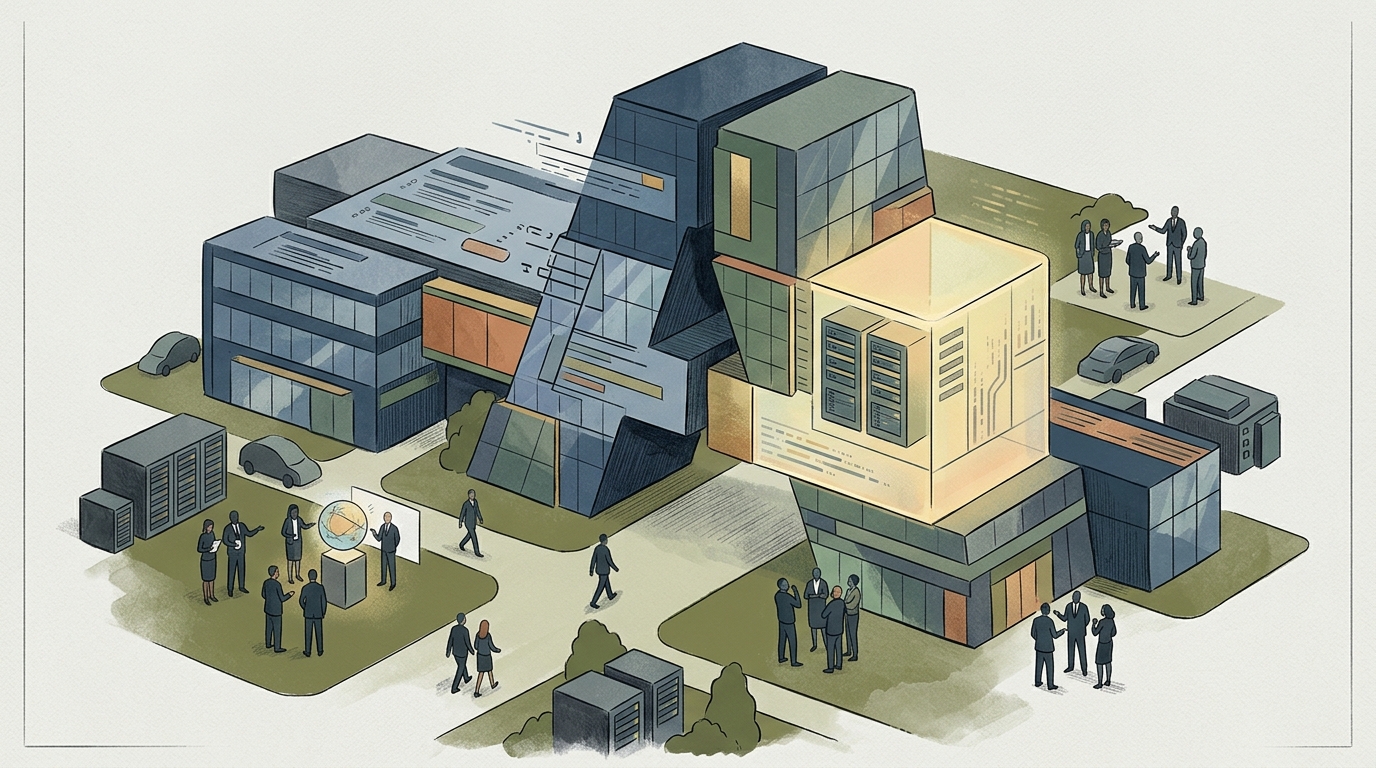
For over two decades, the word "Google" has been synonymous with searching for information. Alphabet's business empire was built on a powerful algorithm that converted human curiosity into billions of dollars in advertising revenue. However, the latest financial results from April 2026 reveal a tectonic shift: Google Cloud now accounts for 18% of the group's total revenue. This milestone is not just a number on a balance sheet; it is proof that the Mountain View giant is transforming from an "internet gateway" company into an AI infrastructure provider.
The Rise of the New Pillar
The explosive growth of Google Cloud is no accident. As businesses worldwide rush to integrate Generative AI into their operations, the demand for computing power and specialized models has skyrocketed. Google, having invested billions in its own chips (TPUs) and the Gemini ecosystem, has managed to attract top-tier customers looking for more than just simple data storage.
- AI Infrastructure: Google's ability to offer vertical solutions, from hardware to AI software, gives it a clear edge over the competition.
- Revenue Diversification: For the first time, the reliance on the advertising pie—which is vulnerable to economic downturns—is beginning to be balanced by stable, subscription-based cloud revenue.
- Enterprise Adoption: 70% of AI "unicorns" (startups valued over $1 billion) now use Google Cloud infrastructure.
This development comes at a time when traditional search is under pressure. The rise of AI chatbots and alternative ways of finding information has raised questions about whether Google can maintain its monopoly. The company's response seems to be a leap forward: if the world stops "Googling" in the traditional way, Google will be the one powering the systems that replace search.
Clash of the Giants and the Future of Search
The battle for cloud dominance is not taking place in a vacuum. Microsoft with Azure and Amazon with AWS remain formidable opponents. However, Google Cloud has managed to grow at a faster pace over the last year, leveraging its internal expertise in big data processing. The question now is whether Google's "search identity" is a burden or a springboard.
"We are no longer a search company that has a cloud, but an AI company that offers services at every level of the digital economy," said an Alphabet executive during the earnings presentation.
This statement reflects the new reality. Traditional Google Search, while remaining the primary source of profitability, is no longer the group's only "star." The transition to 18% shows that Google Cloud has gained its own momentum, capable of supporting the company should advertising revenues decline due to antitrust scrutiny in the US and Europe.
Regulatory Challenges and Geopolitics
The shift toward cloud also offers a strategic exit from the ongoing legal battles over the search monopoly. By diversifying its revenue streams, Alphabet can claim that it operates in a highly competitive market (cloud computing) where it does not hold a dominant position. This may become its strongest argument against regulators threatening to break up the company.
On a geopolitical level, dominance in cloud infrastructure translates into control over the digital sovereignty of nations. Google Cloud is expanding its data centers in Europe and Asia, investing in "sovereign cloud" solutions that comply with local data laws. This move makes it an essential partner for governments looking to develop national AI strategies without depending solely on a monolithic search service.
Conclusion: A New Era
2026 will go down in history as the year Google ceased to be "just search." The rise of Cloud to 18% is the beginning of a new era where Alphabet functions as the "utility company" of artificial intelligence. While search will remain at its core for years to come, the direction is clear: the future belongs to infrastructure, data, and the ability to provide the intelligence that will drive tomorrow's world. The challenge for Sundar Pichai's leadership will be to maintain the company's culture of innovation while managing the transition to a B2B model that requires different skills and strategic approaches.