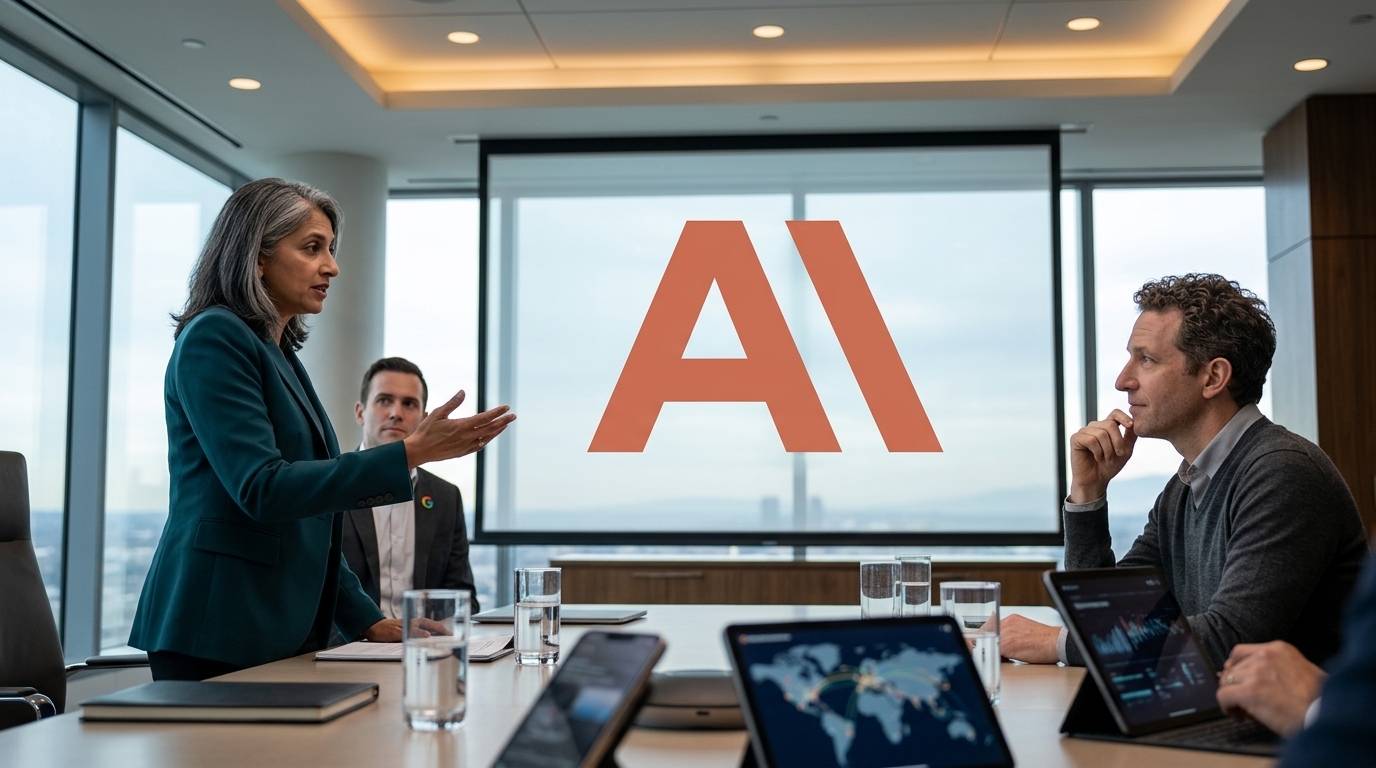
In the heart of Silicon Valley, where ambition meets limitless capital, Google has made a move that shifts the balance of power in the Artificial Intelligence (AI) sector. The tech giant's decision to invest billions of dollars in Anthropic—a company founded by former OpenAI executives—is not merely a financial transaction; it is a declaration of dominance in a world rapidly being transformed by Large Language Models (LLMs). This investment, which could reach a staggering total valuation, places Google in a unique position: it is simultaneously the creator of its own model (Gemini) and a major financier of its most significant competitor.
The Strategy of 'Double Hedging'
Why would Google, a company with some of the world's leading AI scientists, choose to fund a direct rival? The answer lies in the concept of hedging. In the volatile world of technology, betting on a single horse is a risky proposition. Anthropic, with its Claude model, has gained market trust due to its approach to 'Constitutional AI'—a method that makes systems safer and more aligned with human values.
By investing in Anthropic, Google ensures that regardless of which model prevails in the enterprise market, it will have a share of the profits. Furthermore, the deal involves the use of Google's cloud infrastructure. This means that a large portion of the money Google 'invests' actually returns to its coffers through Google Cloud services, as Anthropic requires massive computing power to train its models. It is a closed loop of capital that strengthens Google's ecosystem on multiple levels.
The Cloud Wars and the Amazon Alliance
Google's move did not occur in a vacuum. Anthropic is the 'apple of discord' between the world's two largest cloud providers: Google and Amazon. Amazon has already committed billions to Anthropic, making it its primary partner for AWS (Amazon Web Services). Google's entry on such aggressive terms demonstrates an effort to prevent Amazon from monopolizing access to secure, high-quality AI models.
This competition highlights a new reality: AI is the new 'oil' for cloud services. Businesses are no longer looking for mere storage; they seek intelligent infrastructure that can analyze data, write code, and automate processes. Anthropic serves as the ideal 'supplier' of these capabilities, and cloud giants are fighting over who will keep it closest.
The Regulatory Microscope and Challenges
However, these investments do not go unnoticed by regulators in the US and Europe. The Federal Trade Commission (FTC) has already launched inquiries into whether these 'partnerships' are, in fact, disguised acquisitions that harm free competition. The concern is that a handful of companies (Microsoft, Google, Amazon) will control the entire AI value chain: from chips and cloud to the models and applications themselves.
Furthermore, there is the ethical and technical question of independence. Can Anthropic remain true to its mission of 'safe AI' when accepting billions from corporations pushing for rapid growth and profitability? Anthropic's founders insist that their company structure protects their autonomy, but in the history of capitalism, the financier often has the final word.
Conclusion: The New World Order in Tech
Google's investment in Anthropic marks the end of the 'romantic' AI startup era. Today, to compete at the highest level, one needs access to capital and computing power that only Big Tech possesses. Google isn't just buying a company; it's buying time, security, and a front-row seat in the next industrial revolution. Whether this leads to an era of unprecedented innovation or a stifling oligopoly remains to be seen.