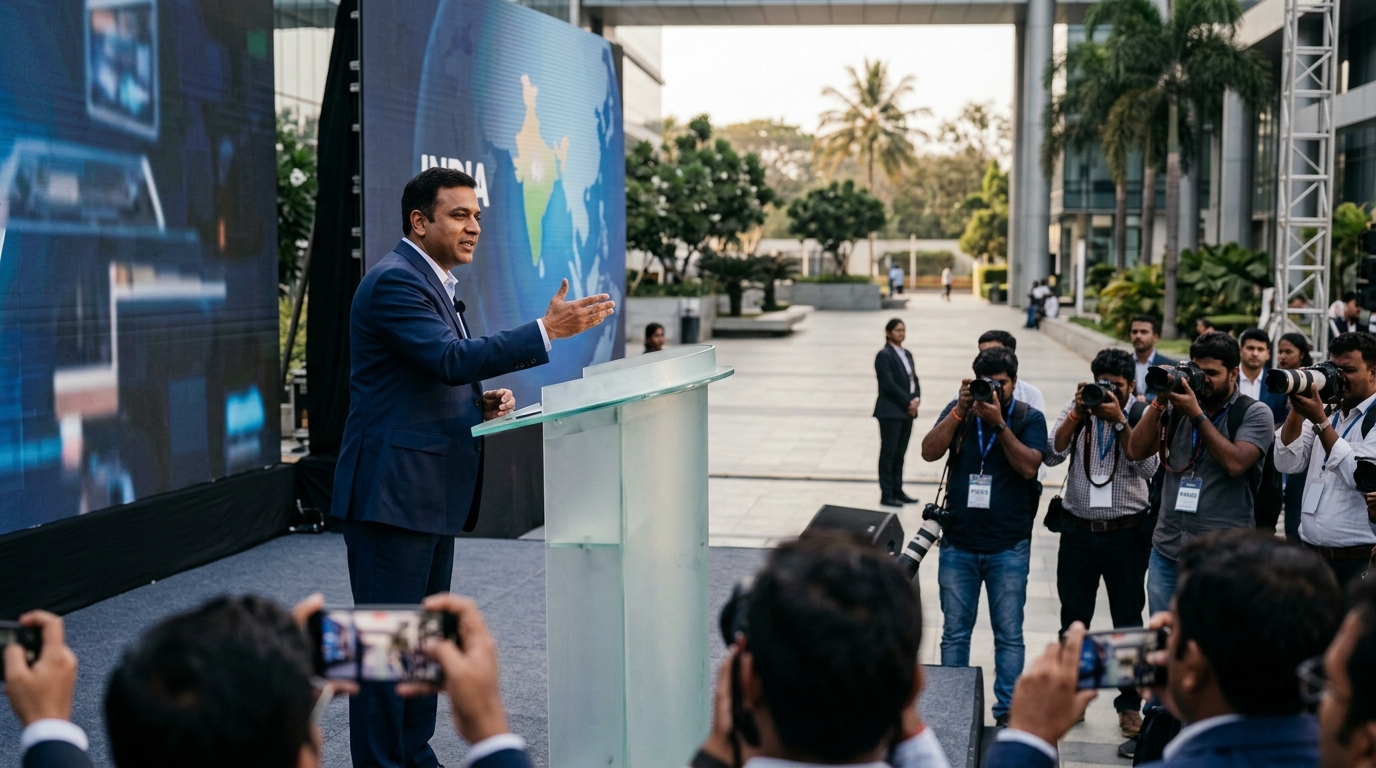
Google’s announcement regarding the commencement of construction on a massive Artificial Intelligence (AI) center in India is not merely a business update; it is a profound geopolitical statement. At a time when Silicon Valley is desperately seeking alternatives to the Chinese sphere of influence, India is emerging as the ultimate destination for the next phase of the digital revolution. This new hub, expected to be one of Alphabet’s largest innovation centers globally, marks a transition from the era of software outsourcing to an era of co-creating cutting-edge technology.
The Strategic Importance of the Indian Subcontinent
This investment is part of the broader "Google for India Digitization Fund," a $10 billion vehicle announced a few years ago. However, the specific pivot toward Artificial Intelligence changes the stakes. India possesses what the West increasingly lacks: a massive, youthful population that is "digitally native" and a government that aggressively promotes digitalization through initiatives like "Digital India."
The center will not be limited to housing servers. Reports suggest it will focus on developing specialized AI models tailored to the needs of emerging markets. This includes natural language processing (NLP) for India’s dozens of official languages, optimizing agricultural yields through predictive modeling, and providing digital healthcare services to remote regions. As a company executive recently noted, "If AI can solve India’s problems, it can solve the world’s problems."
Competition and the Geopolitical Chessboard
Google’s move comes during a period of intense rivalry with Microsoft and OpenAI. While Microsoft has already made significant inroads into Indian cloud infrastructure, Google is betting on vertical integration: from the Android operating system that dominates the Indian mobile market to the AI infrastructure that will power tomorrow's applications. Furthermore, establishing this center in India serves as a hedge against the supply chain risks posed by escalating US-China tensions.
- Boosting the local economy with thousands of high-skill technical jobs.
- Developing AI models that understand local dialects and cultural nuances.
- Close collaboration with the Indian government on data security and ethical AI frameworks.
- Creating a vibrant startup ecosystem centered around the new facility.
"India is no longer just a market for us; it is the laboratory where we are building the future of global technology," sources close to Google management stated.
Challenges and Ethical Dilemmas
Despite the optimism, the construction of such a behemoth is not without its hurdles. The energy consumption of AI data centers is notorious. In a country grappling with the effects of climate change and periodic power shortages, Google will have to prove that its investment is sustainable. The company has committed to using renewable energy sources, but the sheer scale of the project will test the limits of local infrastructure.
Furthermore, the issue of data sovereignty looms large. The Indian government has become increasingly stringent regarding regulations that mandate data storage within national borders. This new AI center will allow Google to comply with these requirements, but it simultaneously raises questions about the extent of state surveillance and control over citizen data through partnerships with Big Tech.
Conclusion: A New Era of Intelligence
The groundbreaking of the AI center in India marks the milestone of a new epoch. For Google, it is a move for survival and dominance in the 21st century. For India, it is a validation of its status as a global technological superpower. The stakes are immense: if successful, this model will serve as the blueprint for how AI can be integrated into developing economies, fundamentally transforming the lives of billions.