At the dawn of 2026, the global map of technological power is being redrawn with Artificial Intelligence (AI) at its epicenter. China, faced with an increasingly tight noose of US sanctions and export restrictions on high-end semiconductors, has not chosen to retreat. Instead, it has launched a strategic counteroffensive built on ingenuity and state-led coordination. The recent emergence of models like DeepSeek and the nationwide rollout of the "AI Plus" initiative mark a new phase in the digital Cold War, where raw compute power is being supplemented—and sometimes replaced—by algorithmic elegance and specialized industrial application.
DeepSeek and the Efficiency Paradigm Shift
For years, the prevailing narrative suggested that China would inevitably lag behind the United States due to its lack of access to Nvidia’s flagship H100 and B200 processors. However, the rise of DeepSeek has shattered this assumption. Rather than attempting to match OpenAI or Google by consuming vast quantities of energy and hardware, the Chinese research community pivoted toward optimization. DeepSeek-V3, and its subsequent iterations, demonstrated that Mixture-of-Experts (MoE) architectures could deliver GPT-4 level performance at a fraction of the training cost.
This development is foundational. It proves that China has mastered the art of "doing more with less." While Washington attempts to choke Beijing’s access to 3nm and 5nm chips, Chinese engineers are developing software that runs efficiently on older hardware generations or domestic alternatives, such as Huawei’s Ascend AI chips. This strategy is not merely about survival; it is about dominance through affordability. By making high-performance AI more cost-effective, China is positioning itself as the primary provider of intelligence for the Global South, thereby expanding its geopolitical soft power.
The "AI Plus" Strategy: Industrializing Intelligence
In contrast to the West, where AI development has largely gravitated toward consumer-facing applications, chatbots, and entertainment, the Chinese government has prioritized the "AI Plus" initiative. This is a comprehensive national strategy aimed at integrating AI into the country’s actual productive fabric: from the smart factories of Shenzhen to the autonomous ports of Shanghai and the management of the national power grid.
- Industrial Automation: Leveraging AI to optimize supply chains and provide real-time predictive maintenance for heavy industry.
- Smart Infrastructure: Massive investment in 6G networks and green-energy data centers to support an AI-driven economy.
- Data Sovereignty: Strengthening legal frameworks to ensure that the "national treasure" of domestic data remains within borders to train sovereign models.
This focus on industrial AI provides China with a distinct advantage in the real economy. While American firms are preoccupied with maximizing ad revenue through AI, China is using the technology to slash the manufacturing costs of its exports, making them even more competitive globally. It is a structural counterattack aimed at the heart of global manufacturing leadership.
Breaking the Silicon Siege: Domestic Hardware and Workarounds
Beijing has funneled billions of dollars into the "Big Fund" to bolster its domestic semiconductor industry. Despite significant hurdles, companies like SMIC have made leaps in chip fabrication, achieving performance levels that many Western analysts deemed impossible without ASML’s EUV lithography machines. Furthermore, China has effectively utilized "gray market" supply chains and deepened technological partnerships with Southeast Asian nations to secure critical components.
"Technological sovereignty is no longer a matter of free markets; it is a matter of national security and the survival of our civilizational model," a senior official from China’s Ministry of Industry and Information Technology recently stated.
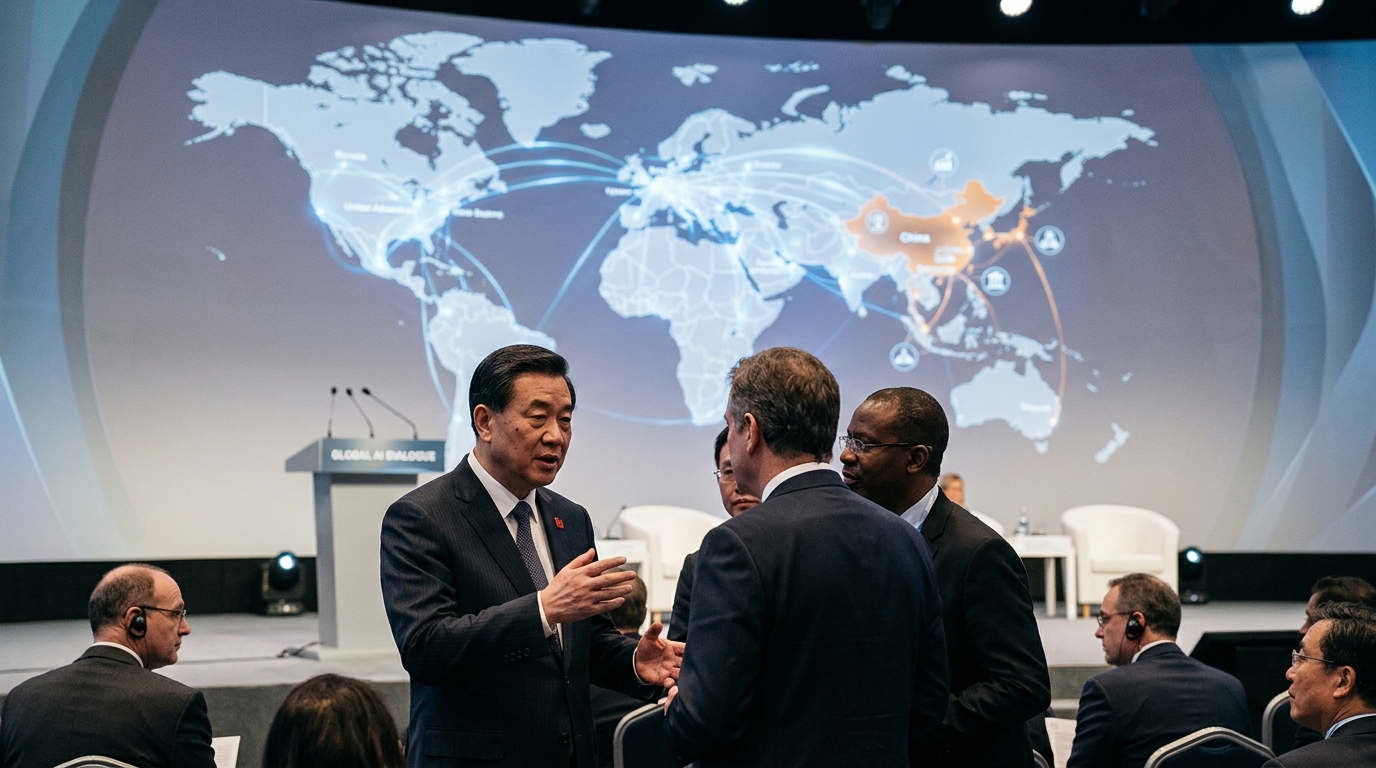
China’s strategy also involves creating an alternative ecosystem of technical standards. Through the "Digital Silk Road," Beijing is exporting surveillance technology, e-commerce platforms, and AI infrastructure to dozens of nations, creating a sphere of influence that is technically incompatible with Western standards. This fragmentation—often called the "Splinternet"—is now a concrete reality that global corporations and governments must navigate.
Geopolitical Implications: A Bipolar AI World
The success of the Chinese counteroffensive has profound implications for international stability. If China achieves technological self-sufficiency, the West’s primary lever of influence—sanctions—will lose its potency. Moreover, the Chinese approach to AI ethics, which prioritizes social stability and state oversight over individual liberties, offers an attractive model for autocratic regimes worldwide.
In conclusion, the race for AI supremacy is not a sprint, but a marathon of endurance and strategic flexibility. China has proven it can transform constraints into catalysts for innovation. The West, for its part, must decide whether to continue its policy of containment or seek a new framework for coexistence in a world where technological unipolarity is a relic of the past. As of April 2026, Beijing is more prepared than ever to claim the mantle of the digital era.