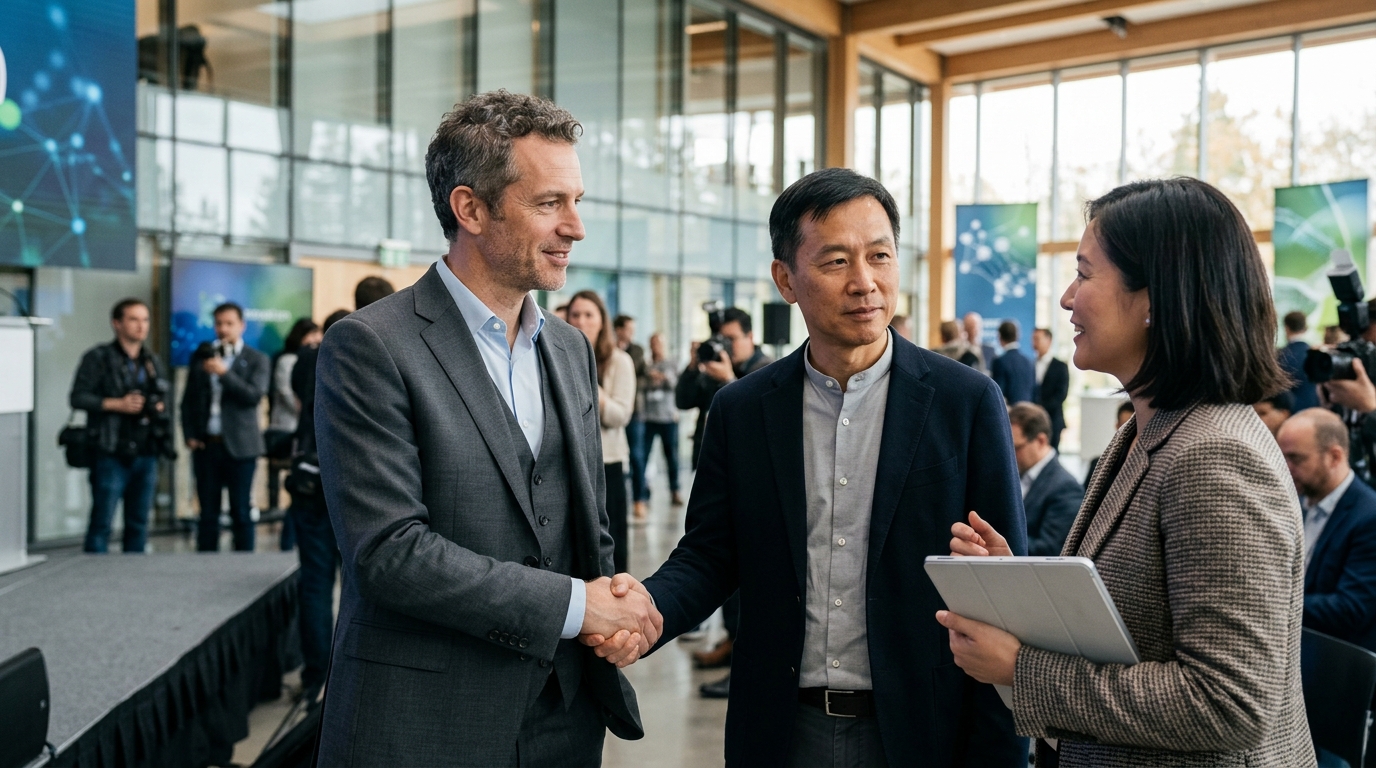
In a move that highlights the rapid emergence of Southeast Asia as a global hub for technological innovation, FPT Corporation, Vietnam's largest IT services provider, has announced the appointment of Dr. Phong Nguyen as Chief AI Officer (CAIO). This move is not merely an organizational change; it is accompanied by the launch of an ambitious "AI Transformation Framework," which aims to redefine how businesses integrate generative artificial intelligence into their daily operations.
FPT, which already boasts a presence in over 30 countries, seems to recognize that the era of simple outsourcing is coming to an end. With the rise of AI, the company is shifting from providing labor to providing intelligent solutions, positioning itself as a strategic partner for multinational giants looking to navigate the complexities of the new digital age.
The Role of the Chief AI Officer in an Era of Volatility
Dr. Phong Nguyen, a distinguished scientist with deep expertise in machine learning and natural language processing, takes on a responsibility that goes far beyond technical oversight. His mission is to align FPT AI's research activities with the commercial needs of the global market. In a world where companies struggle to turn experimental AI models into profitable applications, the CAIO acts as the bridge between the laboratory and the boardroom.
According to analysts, this appointment is a clear signal to investors: FPT is not just following trends but investing in leadership capable of producing proprietary intellectual property. Dr. Nguyen is expected to oversee the expansion of FPT.AI, an ecosystem that already serves millions of users worldwide, by integrating Generative AI capabilities that will allow for the automation of complex cognitive tasks.
The AI Transformation Framework: A Holistic Approach
The new framework introduced by FPT is not limited to adopting tools like ChatGPT. Instead, it is built on four central pillars: Data, Infrastructure, People, and Processes. The company argues that AI success does not depend on how powerful the model is, but on how clean and accessible the data it is trained on is.
- Data Strategy: Creating robust data pipelines that ensure information quality and security.
- AI Factory Infrastructure: Leveraging the strategic partnership with NVIDIA, FPT is building AI factories that provide the necessary computing power (GPUs) for training large language models.
- Workforce Retraining: A massive upskilling program for the company's 48,000+ employees to make them "AI-native."
- Operational Integration: Redesigning business processes so that AI is not an add-on feature but the core of the operation.
This holistic approach aims to solve the biggest problem businesses face today: the gap between the promise of AI and the actual return on investment (ROI). FPT promises to reduce the implementation time of AI projects from months to weeks by using pre-trained models tailored to specific industries such as banking, insurance, and supply chain management.
Vietnam as the New Technological Pole
FPT's move must be viewed within the broader geopolitical context. As Western companies seek alternatives beyond China (the "China Plus One" strategy), Vietnam is emerging as an ideal destination. With a young population, high rates of STEM graduates, and a government that actively supports the digital economy, the country is transforming into a "digital dragon."
"Artificial Intelligence is no longer an option; it is the engine of the next industrial revolution. At FPT, we are not just building technology; we are building the future of productivity for the world," said a company executive during the launch.
The partnership with NVIDIA to create a $200 million AI Factory is proof of the seriousness of FPT's intentions. The ability to provide Sovereign AI—the capacity for a country or company to control its own AI data and infrastructure—is the new competitive frontier, and FPT is positioning itself at the forefront.
Conclusions and Outlook
The appointment of Dr. Phong Nguyen and the launch of the transformation framework mark a new era for FPT. The company is no longer competing solely on lower costs but on high technological expertise. The challenge remains retaining talent in a global market hungry for AI specialists and ensuring the ethical use of algorithms in sensitive sectors.
However, with this strategy, FPT is showing the way for how companies from emerging economies can lead on the global stage, turning technological disruption into a unique growth opportunity.