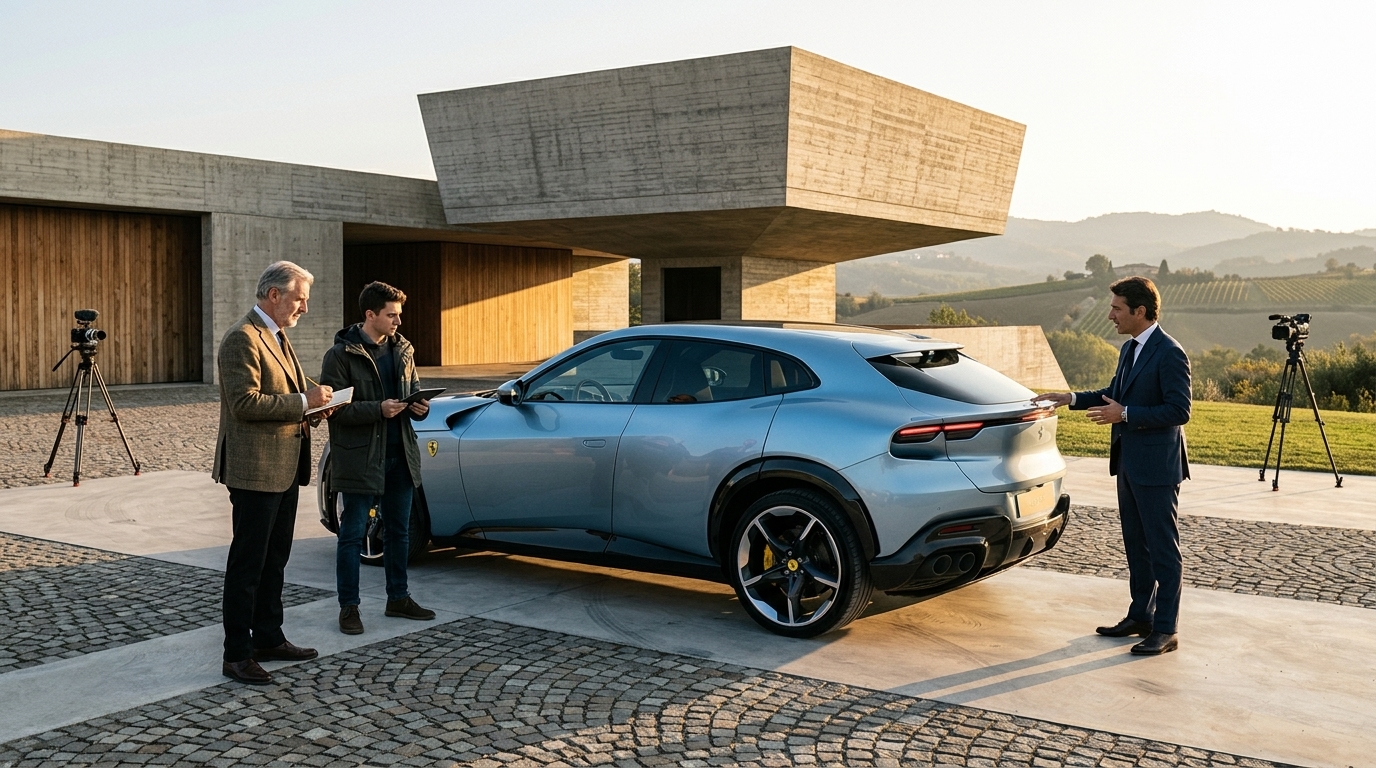
In the hallowed halls of Maranello, the roar of V12 engines was never just noise; it was the soul of Ferrari, the acoustic signature of an empire built on combustion and speed. The unveiling of the Ferrari Luce, the company’s first fully electric vehicle (EV), marked a historic pivot accompanied by an unusual "cold shower" in international markets. The stock price dip immediately following the presentation raised a critical question: Has the Prancing Horse lost its way? Or does the market simply fail to grasp the new business model of ultra-luxury?
The Challenge of Silent Speed
The Ferrari Luce is more than just a car; it is an experiment in consumer psychology. For decades, a Ferrari’s value was rooted in the mechanical complexity of internal combustion engines. With electrification, this complexity shifts toward software and energy management. Critics and traditional enthusiasts (the "Tifosi") have voiced skepticism over whether an electric vehicle can deliver the same emotional resonance without the scream of a petrol engine.
However, Ferrari’s leadership, under CEO Benedetto Vigna, seems well-prepared for this backlash. The Luce integrates what the company calls the "e-building," a new production facility that allows for full vertical integration of electric motor and battery manufacturing. This move isn't just about technology; it’s about maintaining profit margins. If Ferrari controls the battery tech, it controls its financial destiny.
Why Analysts Remain Calm
Despite the initial stock dip, major rating agencies are not sounding the alarm. There are three primary reasons for this optimism:
- Pricing Power: Ferrari does not sell transportation; it sells status. The Luce is expected to retail for over €500,000, placing it in a category where demand is largely inelastic.
- The Scarcity Model: The company continues to limit production to keep resale values astronomical. Even if traditionalists hesitate, a new generation of "tech-wealthy" buyers is emerging, seeking the ultimate electric status symbol.
- Hybrid Transition Success: Ferrari has already proven with the SF90 Stradale that it can blend electric power with high performance. The Luce is the natural evolution of a strategy that has already yielded significant dividends.
Technology Behind the Emotion
One of the biggest gambles with the Luce is its "authentic sound" technology. Ferrari has filed patents for systems that amplify the natural frequencies of electric motors, transforming them into a new form of acoustic experience. This is not a simple recording played through speakers, but an organic connection between electron flow and chassis vibration.
"Ferrari will never be a software company that makes cars. It will always be a car company that uses the best software to evoke awe," a company executive recently stated.
This approach reassures those who fear Ferrari might become a "luxury Tesla." The focus remains on driving dynamics, weight distribution, and steering feel—areas where Ferrari remains peerless.
The Economic Dimension and the Road Ahead
From an investment perspective, the Ferrari Luce represents essential future-proofing. With EU and Chinese regulations becoming increasingly stringent regarding emissions, having a flagship EV is necessary for brand survival. Investors looking beyond the next fiscal quarter understand that short-term stock volatility is the price of long-term dominance.
In conclusion, the "chilly" reception of the Luce may just be the noise before the acceleration. Ferrari has repeatedly proven its ability to manage its mythos. In the world of hypercars, change is often painful, but for Maranello, stagnation would be the true danger. The Luce is not here to replace the past, but to ensure that the Prancing Horse continues to gallop in a post-fossil-fuel world.