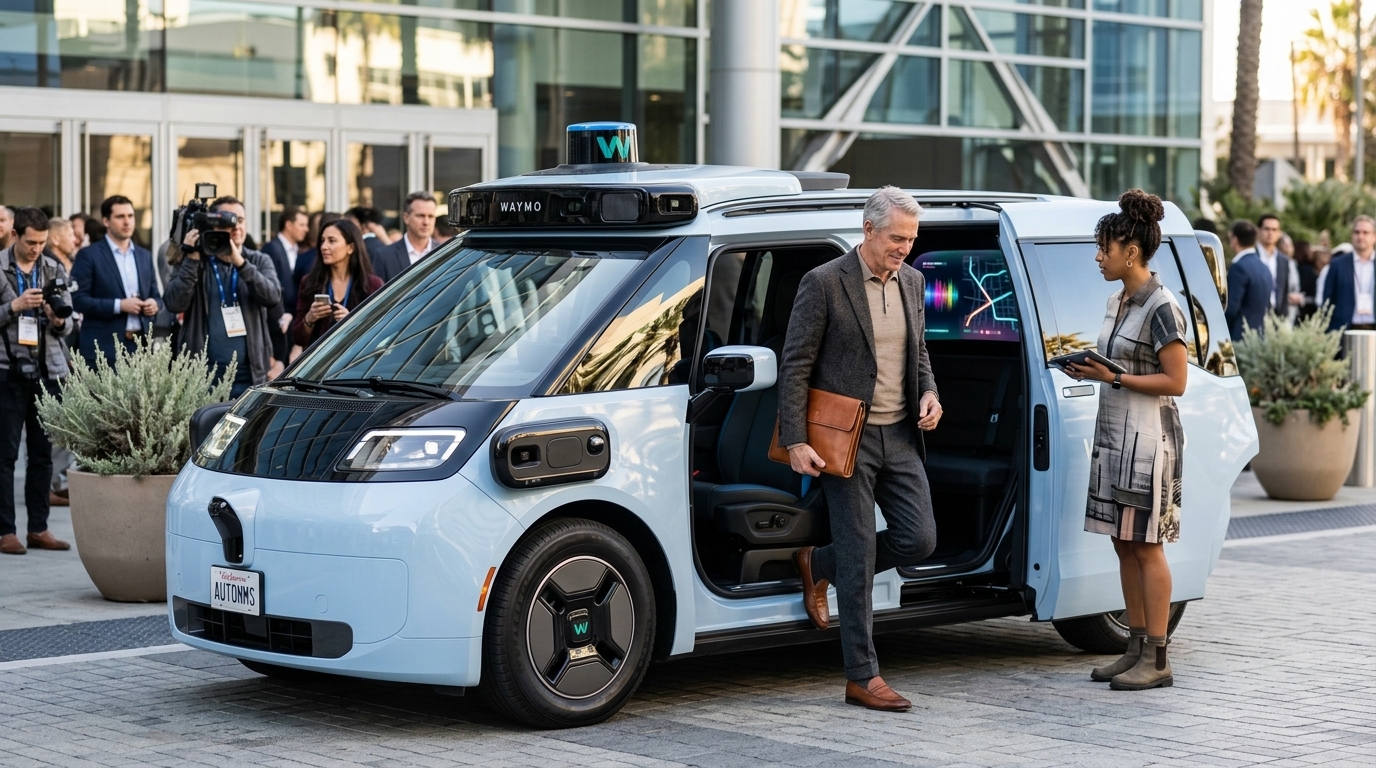
The dawn of full autonomy in urban transportation is taking on a new, pale-blue hue. Waymo, the Alphabet subsidiary leading the autonomous vehicle race, has officially introduced the "Ojai" into its fleet. This sixth-generation vehicle is manufactured in China by Zeekr, a subsidiary of the automotive giant Geely. This move is not merely a technical upgrade; it is a strategic statement at a time when technology, economics, and international politics are on a collision course.
The Technological Anatomy of Ojai
The Ojai represents the pinnacle of machine learning and sensory perception. Unlike the previous Jaguar I-Pace models used by Waymo, which were modified production vehicles, the Ojai was designed from the ground up with autonomous driving in mind. The vehicle boasts an impressive arsenal of sensors: 13 high-definition cameras, 4 LiDAR (Light Detection and Ranging) units, and 6 radar systems. This combination allows the vehicle to "see" in 360 degrees, up to hundreds of meters away, even in adverse weather or low-light conditions.
The interior of the vehicle is equally revolutionary. Featuring a low floor for easy access and the absence of traditional controls like steering wheels and pedals (in future fully-approved versions), the Ojai feels more like a mobile lounge than a car. The focus is on passenger comfort, with ample legroom and digital screens providing real-time trip information. This shift toward a "purpose-built" vehicle is essential for reducing operational costs and improving the user experience—factors that will determine the long-term viability of robotaxis.
Geopolitics on Four Wheels
The choice of Zeekr as a manufacturing partner puts Waymo at the center of a heated political debate in the United States. The Biden administration has imposed 100% tariffs on Chinese-made electric vehicles, citing national security concerns and the protection of domestic industry. The Ojai, being a product of China’s Geely, is directly in the crosshairs of these policies. However, Waymo seems to be betting on the superior manufacturing capacity and lower costs of the Chinese supply chain to gain an edge over its competitors.
There are also concerns regarding data security. Critics argue that vehicles equipped with so many sensors and manufactured in China could theoretically be used for surveillance. Waymo counters that the software—the "brain" of the vehicle—is entirely American and developed in-house, while Zeekr provides only the physical "body" and the drive platform. Nevertheless, political pressure is expected to mount as the Ojai fleet expands across cities like San Francisco, Phoenix, and Los Angeles.
The Economic Chessboard of Autonomy
For Alphabet, Waymo’s parent company, the Ojai is the key to profitability. In previous years, autonomous driving development was a capital-intensive "black hole." With the Ojai, Waymo aims for a more scalable approach. Using a specialized platform significantly reduces the cost per mile, allowing the company to compete directly with traditional ride-hailing services like Uber and Lyft. Furthermore, the reliability of the 6th-generation hardware promises lower maintenance needs and higher uptime on the road.
The robotaxi market is expected to explode in the coming years, with Elon Musk’s Tesla promising its own "Cybercab" and GM’s Cruise attempting to recover from a series of setbacks. Waymo, having already logged millions of autonomous miles, holds the first-mover advantage. The Ojai is not just a new model; it is the tool with which Waymo intends to dominate the global transportation market, making car ownership an obsolete concept for city dwellers.
Social Acceptance and the Road Ahead
Despite technical superiority, the greatest challenge for the Ojai remains human psychology. The sight of a driverless vehicle navigating the busy streets of California still evokes both awe and skepticism. Waymo has invested heavily in educational campaigns and partnerships with local authorities to prove that its vehicles are safer than human drivers, who are often distracted or fatigued. The Ojai, with its friendly, almost futuristic design, aims to win public trust.
In conclusion, the arrival of the Ojai marks a critical turning point. It is the moment when autonomous driving transitions from a laboratory experiment to a mass-produced industrial product. The success or failure of the Ojai will define not only Waymo’s future but also how our cities will look in the coming decades. In a world hungry for efficiency and safety, Waymo’s pale-blue robotaxi might be the answer—provided it can navigate the hurdles of tariffs and geopolitical rivalries.