The atmosphere outside the Oakland federal courthouse feels more like a Hollywood movie premiere than a legal proceeding. Cameras from every corner of the globe, helicopters hovering above, and a diverse group of protesters have flooded the streets. At the center is the most talked-about legal battle of the decade: Elon Musk vs. OpenAI. The case, which began as a dispute over a company's direction, has evolved into an existential clash over who gets to control the Promethean fire of our age.
The Breach of the Founding Agreement
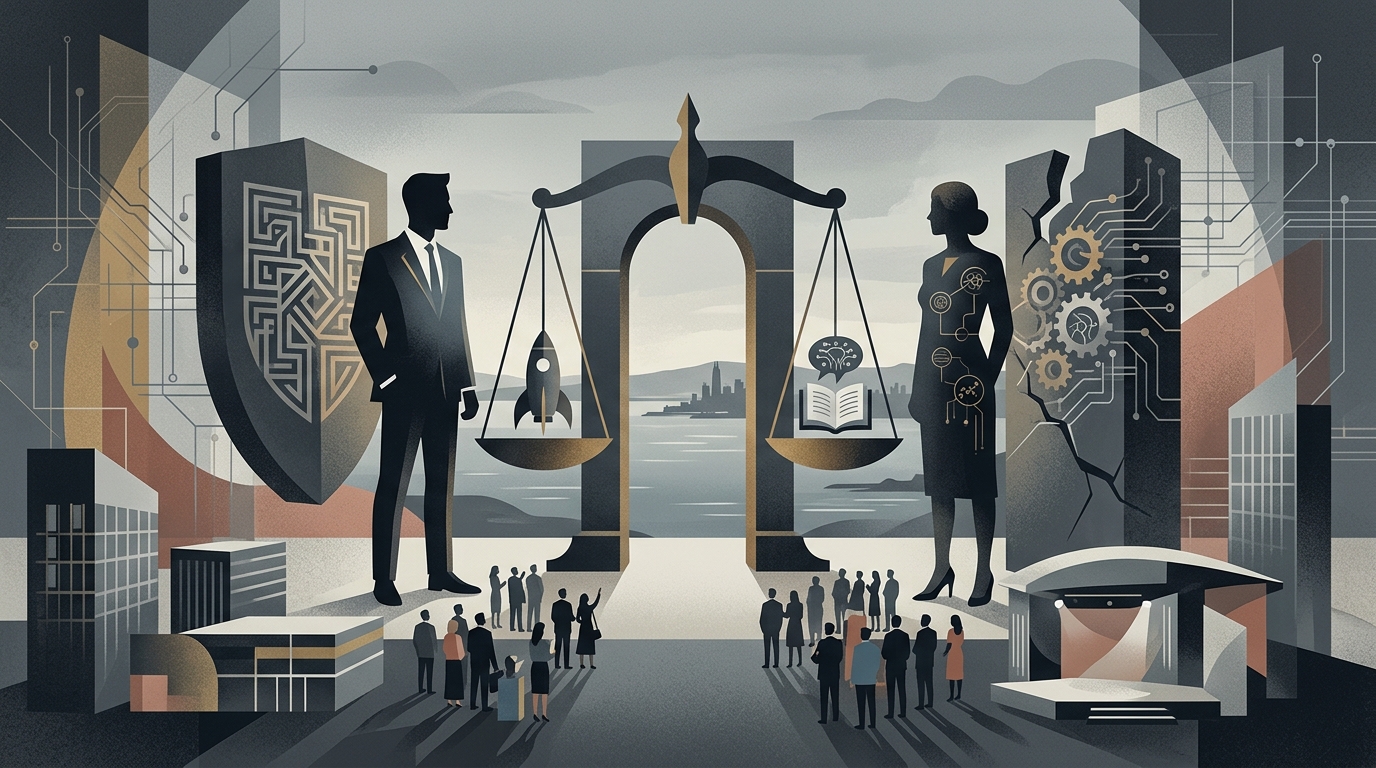
The core of Musk’s lawsuit rests on the allegation that Sam Altman and Greg Brockman betrayed OpenAI’s original mission. When founded in 2015, OpenAI was presented as a non-profit organization that would develop Artificial General Intelligence (AGI) for the benefit of humanity, free from corporate interests. Musk, who was a key financier in the early stages, argues that the company’s close partnership with Microsoft has turned OpenAI into a de facto closed-source subsidiary of the Redmond tech giant.
According to Musk’s legal team, OpenAI has transformed into a "profit-maximizing machine," abandoning its promise of open-source transparency. OpenAI’s defense, on the other hand, maintains that the transition to a "capped-profit" model was necessary to secure the billions of dollars required for computational power. Altman’s lawyers are expected to present evidence showing that Musk himself had previously proposed absorbing OpenAI into Tesla, undermining his argument of "moral purity."
Protests and the Public Voice
Outside the courthouse, the presence of anti-AI activists is palpable. Groups like "Pause AI" and the "Center for AI Safety" have erected banners warning of the dangers of unchecked development. These protesters aren't necessarily pro-Musk; rather, they are using the trial as a platform to demand stricter regulation. "This isn't about which billionaire wins; it's about whether humanity has a say in what's coming next," said one protest organizer.
The choice of Oakland as the trial's venue also carries significance. Historically a center for social struggle, the city offers a sharp contrast to the sterile glamor of neighboring Silicon Valley. Analysts suggest that a jury from the broader Bay Area, who witness the economic inequalities fueled by tech daily, could play a decisive role in the case’s outcome.
Implications for the AI Ecosystem
If Musk prevails, the consequences for OpenAI could be catastrophic. A ruling that mandates a return to a non-profit model or forces the open-sourcing of GPT-4’s architecture would jeopardize the Microsoft partnership and the company's funding. Furthermore, it would set a legal precedent affecting dozens of other startups that began as research labs and transitioned into commercial enterprises.
"This trial is a mirror of the identity crisis Silicon Valley is undergoing. We are trying to balance the utopia of open knowledge with the harsh reality of data capitalism," notes a tech law expert.
Conversely, an OpenAI victory would solidify the current development model, where big tech firms control the most advanced intelligence models under the guise of "safety." The trial is expected to last several weeks, with the testimonies of Altman and Musk being the most anticipated moments. Regardless of the verdict, public trust in the institutions developing AI has already been severely shaken.
Conclusion
The Oakland trial is not merely a legal fight over a breach of contract. It is a public debate on the ethics of innovation. As AI becomes increasingly integrated into our daily lives, the question remains: Who decides our future? An eccentric billionaire, a powerful corporation, or democratic institutions? The answer may begin to take shape within the courtrooms of Oakland.