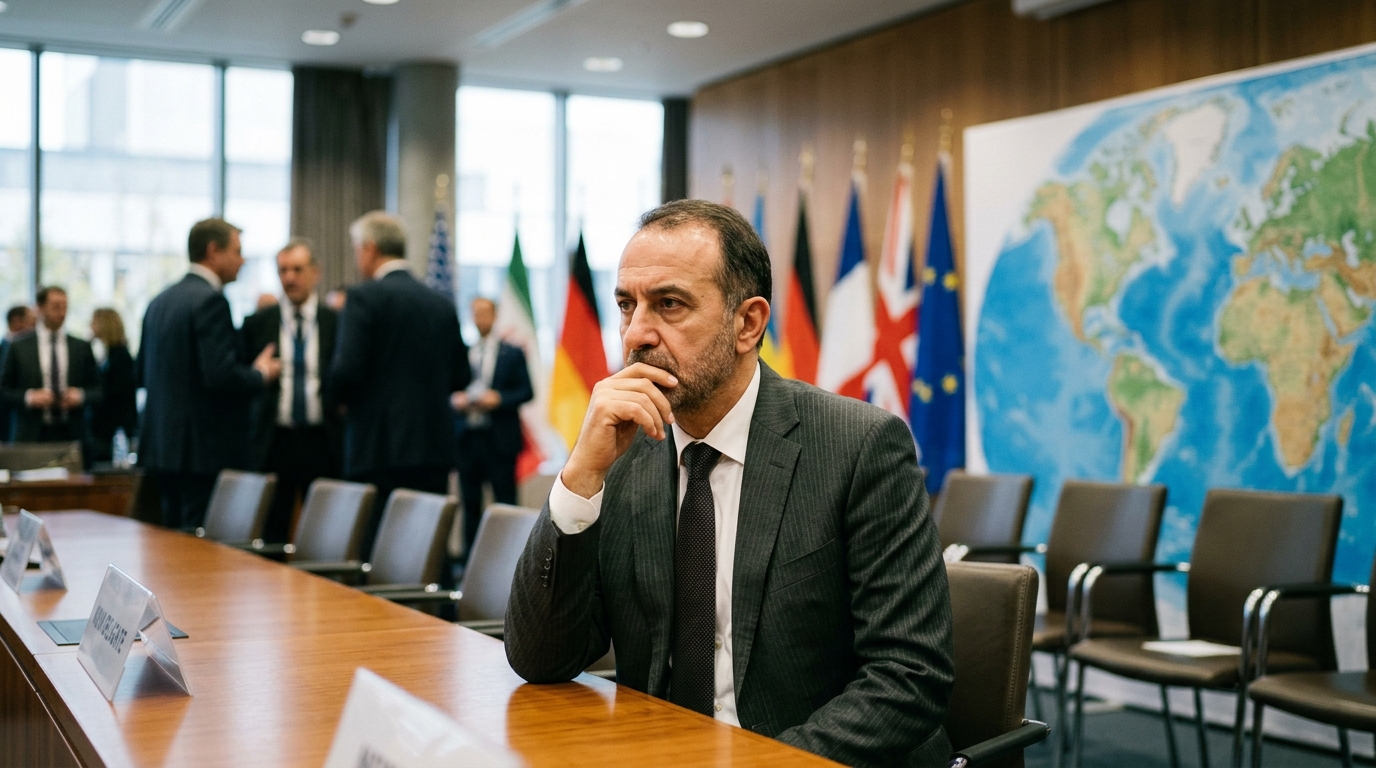
The courtroom transformed into a global epicenter of technological history as Elon Musk, the world's wealthiest individual and co-founder of OpenAI, took the witness stand. This confrontation is not merely about billions of dollars or corporate control; it concerns the fundamental question of who will control Artificial General Intelligence (AGI) and whether promises to benefit humanity can survive the pressures of corporate profit. Musk, visibly charged yet maintaining his characteristic analytical precision, described a trajectory that began with altruism and ended, according to him, as a "closed-source de facto subsidiary" of Microsoft.
The 'Founding Agreement' and the Conflict of Visions
At the heart of Musk's lawsuit lies the alleged breach of a "Founding Agreement." Musk argued that when he invested his initial $38 million into OpenAI in 2015, he did so on the express condition that the organization would remain non-profit and its technology would be open-source. In his testimony, Musk presented emails from 2015 and 2016 in which Sam Altman and Greg Brockman appeared to agree with this vision, serving as a counterweight to Google's dominance.
However, OpenAI's defense struck back hard. The company's lawyers presented other emails in which Musk himself seemed to acknowledge that OpenAI would require massive capital—well beyond what could be raised through donations—to compete with tech giants. OpenAI's strategy is clear: to prove that Musk is not motivated by idealism, but by bitterness because his own proposal to merge OpenAI with Tesla in 2018 was rejected, leading to his departure from the board.
The Shadow of Microsoft and the AGI Question
One of the most critical points of the testimony was OpenAI's relationship with Microsoft. Musk argued that OpenAI has been transformed into a "profit-maximization tool" for the software giant. "The name is OpenAI, but the reality is ClosedAI for the profit of Microsoft," he stated emphatically. Musk's legal team attempted to prove that GPT-4 already constitutes a form of Artificial General Intelligence (AGI), which, under the company's bylaws, should exclude this technology from Microsoft's commercial license.
This technical detail has enormous financial implications. If the court accepts that OpenAI has already achieved AGI, Microsoft could lose access to the company's most advanced models, causing a seismic shift in the stock market. Musk insisted that keeping the architecture of GPT-4 secret was not done for safety reasons, as OpenAI claims, but to protect the commercial interests of shareholders.
Ethics and Geopolitics of Artificial Intelligence
Beyond the legal maneuvers, the trial highlights a deep divide in AI ethics. On one side, Musk represents (at least rhetorically) the old guard of Silicon Valley that fears the existential threat of AI and believes in its democratization through transparency. On the other, Altman and OpenAI's current leadership argue that developing safe AI requires billions of dollars in computing power, something only a for-profit model can secure.
Musk's testimony also revealed the intense personality clashes involved. He described Altman as a "brilliant manipulator" who used Musk's prestige to attract talent and capital, only to change course once he felt secure. OpenAI, in turn, portrayed Musk as a man who wants to control everything, and when he cannot, he attempts to destroy it.
Conclusion and the Road Ahead
The trial is expected to last several weeks, with Sam Altman anticipated to take the stand in the coming days. The outcome of this legal battle will determine the future of AI governance. Will OpenAI remain a hybrid organization balancing philanthropy and capitalism, or will it be forced to return to its open-source roots, radically altering Microsoft's business model? What is certain is that Musk's testimony has opened a "Pandora's box," revealing the inner workings of the most significant technological race of our century.