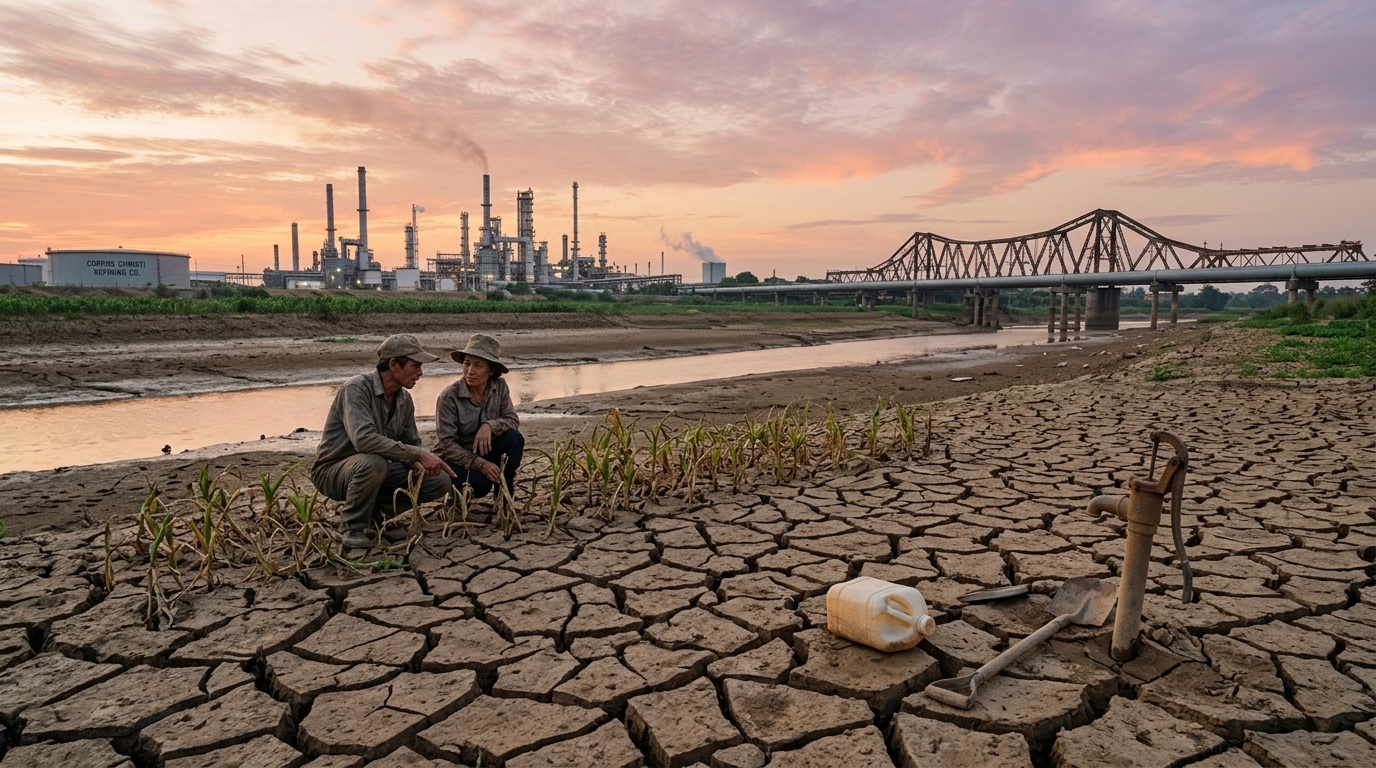
In the heart of Texas, where the industrial skyline meets the Gulf of Mexico, a silent but devastating crisis is reaching its peak. Corpus Christi, the largest energy export port in the United States, is facing a nightmare scenario: running out of potable water within the next 12 to 18 months. This development is not merely the result of a prolonged drought, but a symptom of a deeper conflict between unbridled industrial growth and finite natural resources.
The Perfect Storm: Drought and Industrial Expansion
Corpus Christi traditionally relies on a system of three main water reservoirs: Choke Canyon Reservoir, Lake Corpus Christi, and Lake Texana. According to the latest data, the levels of the first two have receded to alarming levels, reaching approximately 30% of their total capacity. Climate change has made rainfall rare and unpredictable, but the drought is only one side of the coin.
The other side is the region's explosive industrial growth. Over the past decade, Corpus Christi has transformed into a global hub for the oil, gas, and chemical industries. Massive refining facilities and new plastic production units require millions of gallons of water daily for their operations. The city found itself in a trap: to maintain its economic prosperity, it promised water to industrial giants that are now competing with ordinary citizens for every drop.
The Paradox of "Green" Hydrogen
A particularly ironic aspect of the crisis is the shift toward clean energy. Corpus Christi aspires to become a production hub for "green" hydrogen, a technology considered key to decarbonizing the global economy. However, producing hydrogen through electrolysis requires vast amounts of ultra-pure water.
- Producing one kilogram of hydrogen requires approximately 9-10 liters of water.
- Planned facilities in the area could double the water demand within a decade.
- Using drinking water for industrial purposes amidst a drought is sparking intense social backlash.
Residents view promises of new jobs with suspicion when their basic need for water at home is jeopardized. Local government is under pressure to impose strict consumption limits, but these restrictions usually hit residential consumers rather than the large industries that underpin the city's tax base.
Desalination as a "Messiah" and Environmental Risks
The solution proposed by the municipal authority and industrial groups is the construction of large seawater desalination plants. Theoretically, this solution is ideal for a coastal city. In practice, however, the costs are staggering and the environmental impacts are severe. The desalination process produces highly concentrated brine, which, if discharged back into the bay, could destroy the delicate ecosystem and the local fishing industry.
"We cannot drink oil, nor can we live on promises of technological solutions that will arrive in five years when our taps will run dry next year," say local activists.
Furthermore, the construction costs of desalination plants are expected to be passed on to consumer bills, leading to a sharp increase in the cost of living. This creates a climate of economic uncertainty, as low-income families will be forced to pay the price for securing water that, to a large extent, will be consumed by profitable multinational corporations.
A Lesson for the Future
The case of Corpus Christi is not an isolated one. It serves as a warning for many cities worldwide, including Mediterranean regions, where tourism and industrial development often ignore the limits of water reserves. Water management in the 21st century requires a radical reassessment of our priorities. Economic growth cannot be sustainable if it undermines the very foundation of life. Corpus Christi now has very little time to prove whether it can balance profits and survival.