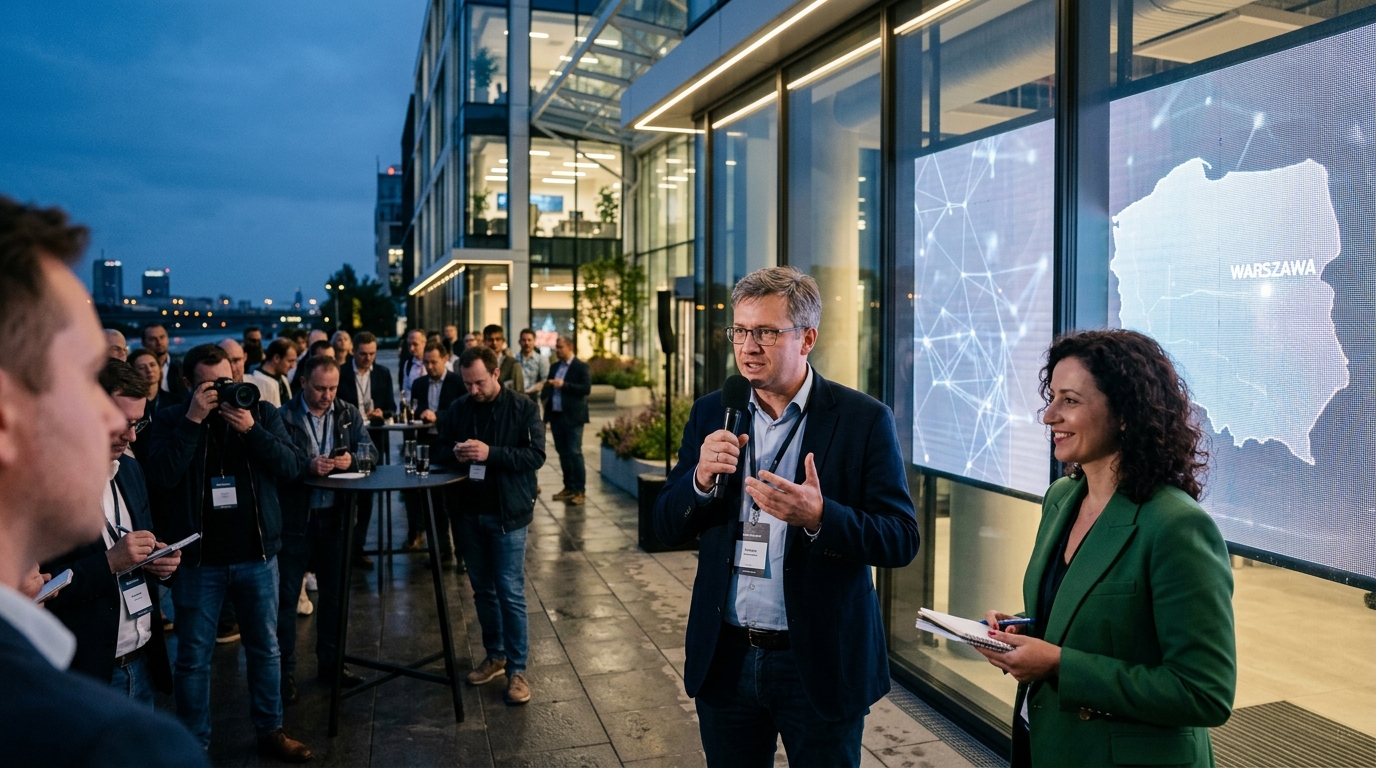
In a move that underscores the rising prominence of Central and Eastern Europe (CEE) on the global tech map, ElevenLabs, the leader in AI-generated synthetic voices, has announced a major expansion of its operations in Warsaw. This decision is more than just a homecoming for its Polish-born founders, Mati Staniszewski and Piotr Dabkowski; it is a calculated strategic pivot aimed at leveraging the region’s exceptional engineering talent and capturing a burgeoning client base seeking high-fidelity localized solutions.
Warsaw: The New Epicenter of AI Innovation
The selection of Warsaw as a central hub for ElevenLabs comes at a time when the Polish capital is transforming into one of Europe's most dynamic technology ecosystems. With a workforce renowned for its proficiency in mathematics and computer science, Warsaw offers ElevenLabs the ability to scale product development at a pace that would be difficult to sustain in London or New York, given the intense competition and soaring costs. The company plans to double its Polish headcount over the next twelve months, focusing specifically on machine learning researchers and systems engineers.
ElevenLabs' strategy is built on the premise that proximity to the CEE market will facilitate a deeper understanding of linguistic nuances. While the company’s models already support dozens of languages, deep optimization for Slavic and other regional tongues represents a critical competitive advantage. This is essential for attracting local media outlets, publishing houses, and game development studios. CEE is no longer just a source of affordable labor; it is a market demanding sophisticated content localization tools.
Competition and the Geopolitics of Tech
This expansion occurs within a fiercely competitive landscape. Giants like OpenAI, with its Voice Engine, and Google, with its integrated ecosystem, threaten to marginalize specialized startups. However, ElevenLabs has managed to maintain its lead through the superior emotional resonance of its voices and the user-friendliness of its platform. Furthermore, a strong European footprint provides a strategic edge regarding compliance with the European Union's AI Act. By having a robust presence within the EU, the company can better navigate strict regulations concerning deepfakes and vocal intellectual property—guarantees that American tech giants often struggle to provide localized versions of immediately.
"Warsaw is the heart of our engineering team. Expanding there isn't just about costs; it's about accessing some of the brightest minds in the world who understand the importance of linguistic diversity," sources close to the management state.
Ethical Challenges and the Future of Synthetic Media
Despite its commercial success, ElevenLabs continues to face scrutiny over the potential misuse of its technology. The ease with which a voice can be cloned has led to instances of disinformation and fraud. The company is investing heavily in detection tools, such as AI speech classifiers and watermarking technologies, but the challenge remains daunting. In the CEE region, where geopolitical tensions are heightened, the risk of political voice deepfakes is particularly concerning. ElevenLabs must prove that its expansion will be accompanied by rigorous security protocols to protect users and the public discourse.
Conclusion
Ultimately, the move to Warsaw marks ElevenLabs' transition from a promising startup to a mature global player. The success of this venture will be judged by the company's ability to balance technological dominance, commercial expansion in emerging markets, and the ethical responsibility that comes with creating tools capable of altering our perception of reality. As the AI voice wars heat up, Warsaw will be the front line for ElevenLabs.