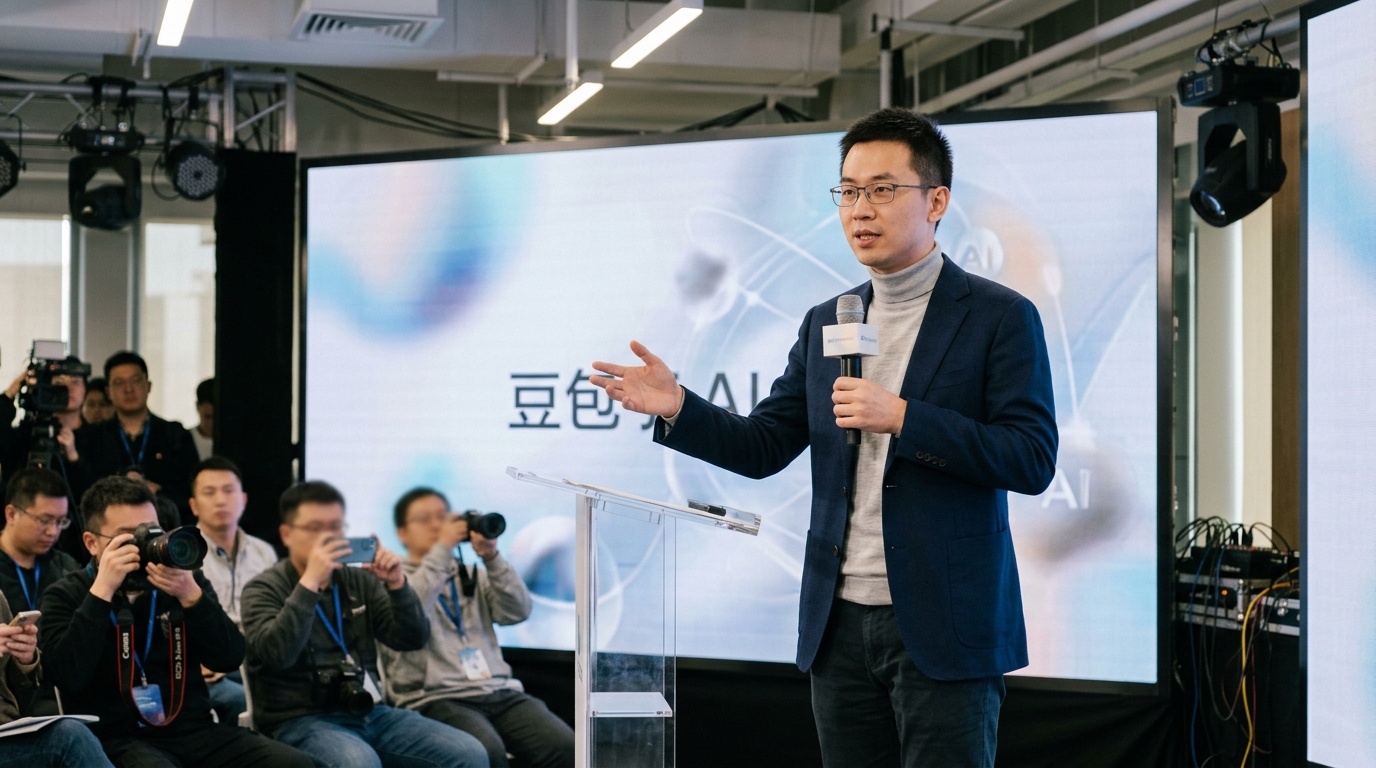
ByteDance, the technological titan behind global phenomenon TikTok and its Chinese counterpart Douyin, is making a pivotal move that signals the end of the "free-for-all" era in Chinese artificial intelligence. According to reports from Caixin Global, the company is finalizing plans to introduce subscription tiers for Doubao, its flagship AI chatbot. This decision marks a significant transition from aggressive user acquisition to a sustainable monetization strategy, reflecting the broader maturation of the AI industry in mainland China.
From Market Disruption to Revenue Generation
For over a year, ByteDance has employed a "scorched earth" policy regarding AI pricing. While domestic rivals like Baidu (Ernie Bot) and Alibaba (Tongyi Qianwen) struggled to balance operational costs with market growth, ByteDance offered Doubao for free and slashed enterprise API prices to levels that many considered predatory. This strategy was undeniably successful: Doubao quickly climbed to the top of download charts, boasting more monthly active users than almost any other generative AI application in China.
However, the sheer cost of maintaining large language models (LLMs) is astronomical. The compute power required to serve millions of daily queries necessitates billions in hardware investment and energy consumption. By pivoting to a "freemium" model, ByteDance is signaling its confidence in Doubao’s utility. The goal is to convert a segment of its massive user base—those who have integrated the AI into their professional workflows—into paying subscribers who value priority access, higher token limits, and more sophisticated multimodal capabilities.
The Competitive Landscape: Following the OpenAI Blueprint
ByteDance’s move closely mirrors the trajectory of OpenAI’s ChatGPT Plus. In the hyper-competitive Chinese market, where dozens of AI startups are vying for dominance, the introduction of a paid tier by the market leader sets a new valuation benchmark for AI services. Analysts suggest that ByteDance is not merely looking for a new revenue stream but is aiming to build a comprehensive AI ecosystem. Doubao is expected to become the connective tissue between ByteDance’s various platforms, from e-commerce to short-form video production.
"ByteDance isn't just selling a chat interface; they are selling productivity in an economy that is rapidly automating," noted a Beijing-based technology consultant.
The primary challenge will be value differentiation. To persuade users in a market traditionally resistant to software subscriptions, ByteDance must offer features that go beyond basic text generation. Integration with Douyin’s creator tools and the ability of Doubao to act as an autonomous agent for digital marketing could be the decisive factors that drive conversion rates among China’s digital-native workforce.
Geopolitical Constraints and Resource Allocation
An underlying factor in this monetization drive is the reality of U.S. chip export restrictions. With high-end GPUs from Nvidia becoming increasingly difficult to procure, computational power has become a finite and precious commodity in China. By introducing a subscription model, ByteDance can effectively manage its resource allocation. Paid tiers allow the company to prioritize high-value users, ensuring that its limited server capacity is utilized by those who contribute to the bottom line rather than casual users generating high-cost, low-value queries.
Furthermore, the regulatory environment in China remains a complex hurdle. The Cyberspace Administration of China (CAC) has implemented strict guidelines regarding AI-generated content, safety, and data privacy. Compliance with these regulations adds a significant layer of operational cost. A subscription model provides the necessary capital to maintain these safety standards while continuing to iterate on the underlying models like the Doubao-Pro, which competes with global benchmarks in reasoning and coding.
Conclusion: ByteDance’s AI-First Future
The monetization of Doubao is the final piece of the puzzle in ByteDance’s transformation into an AI-first organization. It moves the conversation from "how many users can we get?" to "how much value can we create?" If successful, ByteDance will have proven that the Chinese AI market is ready for high-value software-as-a-service (SaaS) models, potentially leading to a wave of IPOs and further investment in the sector. As the AI arms race intensifies, the ability to turn technological prowess into financial sustainability will be the ultimate differentiator between the winners and the losers of this new era.