The release of TIME magazine's list of the 10 most influential AI firms for 2026 marks a watershed moment in the history of technology. For the first time, the balance of power is palpably shifting from Silicon Valley toward the East. The inclusion of ByteDance, Knowledge Atlas, and BABA-W (Alibaba’s AI arm) is not merely an acknowledgment of commercial prowess but a validation of technical superiority in domains once considered the exclusive playground of Western giants.
ByteDance's Metamorphosis: From Social Media to Universal Intelligence
ByteDance, the parent company of TikTok, is no longer viewed through the narrow lens of social media. By 2026, the firm has successfully integrated its 'Creative Intelligence' model across its entire ecosystem, enabling users to generate cinema-grade content via simple voice prompts. ByteDance’s influence stems from its ability to democratize high-end production while maintaining one of the world's most sophisticated recommendation engines, which now functions as a personalized learning and entertainment agent.
Despite persistent geopolitical headwinds and attempts to curb its influence in the United States, ByteDance has proven that innovation transcends borders. Its advancements in natural language processing and computer vision are now regarded as the gold standard for real-time human-machine interaction, forcing Western competitors to play catch-up in the generative video space.
Knowledge Atlas: The New Architect of Reason
The standout entry in this year's list is Knowledge Atlas. Originally a niche initiative focused on structured knowledge graphs, the company has evolved into the premier provider of 'Reasoning AI' infrastructure. Unlike traditional Large Language Models (LLMs) that often struggle with factual consistency and 'hallucinations,' Knowledge Atlas systems are built upon a massive foundation of verified data points, making them indispensable for scientific research, medical diagnostics, and legal analysis.
TIME highlights that Knowledge Atlas has successfully bridged the gap between statistical prediction and conceptual understanding. Its influence permeates government agencies and academic institutions, where its tools are utilized to solve complex multi-variable problems that require deep logical processing rather than simple text generation. It represents a shift from 'chatting' with AI to 'reasoning' with it.
BABA-W: Alibaba’s Cloud AI Revolution
BABA-W, the rebranded and expanded AI division of Alibaba, earned its spot through its dominance in 'AI-as-a-Service' infrastructure. With the rollout of Tongyi Qianwen 5.0, the company offers solutions that are reportedly 40% more energy-efficient than its nearest competitors—a critical advantage in an era defined by climate targets and strained energy grids.
The BABA-W strategy focuses on embedding AI into the global supply chain and e-commerce fabric. From autonomous warehouse management to hyper-personalized customer service across hundreds of dialects, Alibaba has made AI the backbone of the global digital economy. Its influence is particularly potent in emerging markets across Asia and Africa, where its infrastructure serves as the bedrock for the digital transformation of entire nations.
Geopolitical Implications and the Competitive Landscape
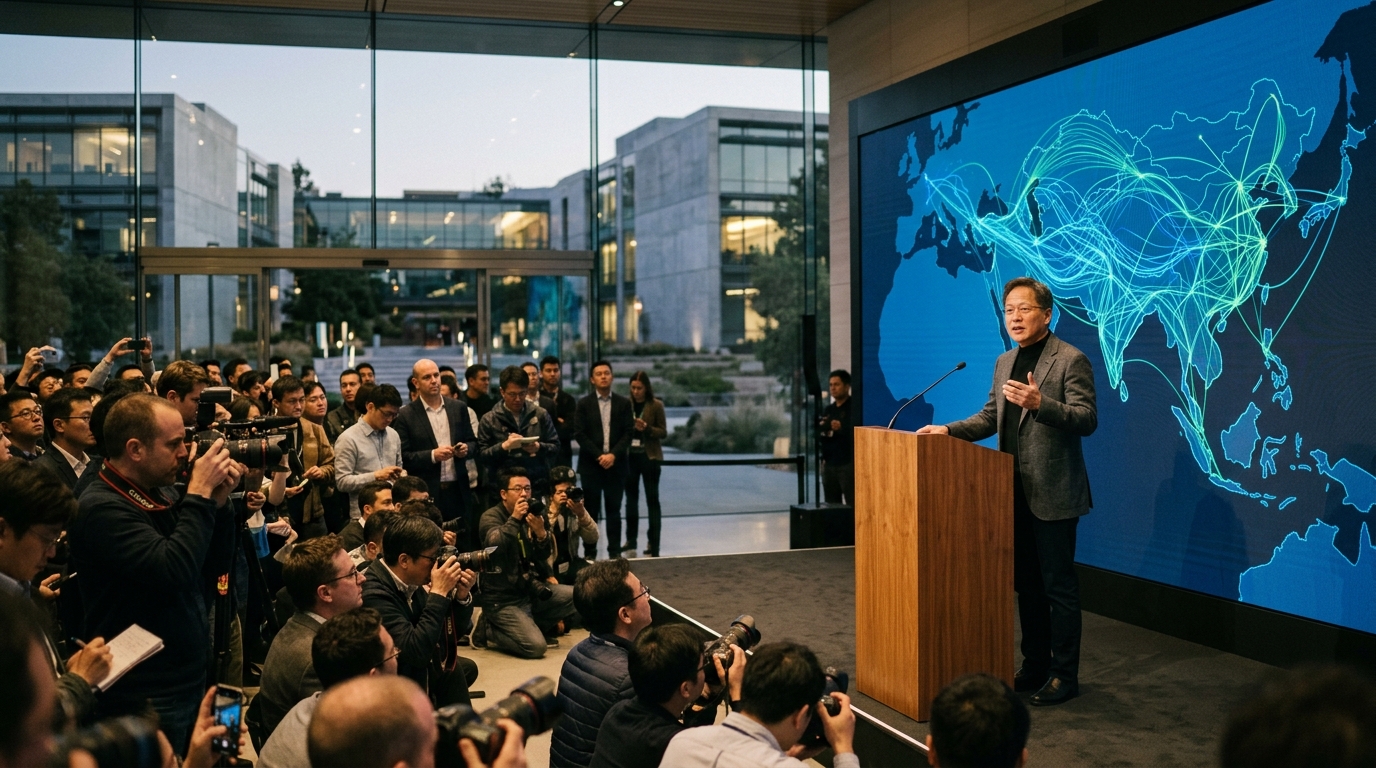
The presence of three major Chinese entities in TIME's top ten has sparked intense debate in Washington and Brussels. It is now evident that China’s long-term strategy for 'AI Supremacy' is yielding significant results, fueled by massive state-backed investment and an unparalleled pool of data. While the West continues to lead in fundamental research—led by the likes of OpenAI and Google—it appears to be losing ground in the practical application of AI at scale and global accessibility.
2026 will be remembered as the year AI ceased to be a Western-centric phenomenon. The challenge for the international community now lies in establishing shared ethical and safety frameworks, as diverging approaches to privacy and data governance threaten to bifurcate the digital world. TIME’s list is more than a ranking; it is a signal that the era of a single technological superpower is over, replaced by a complex, multi-polar AI landscape.