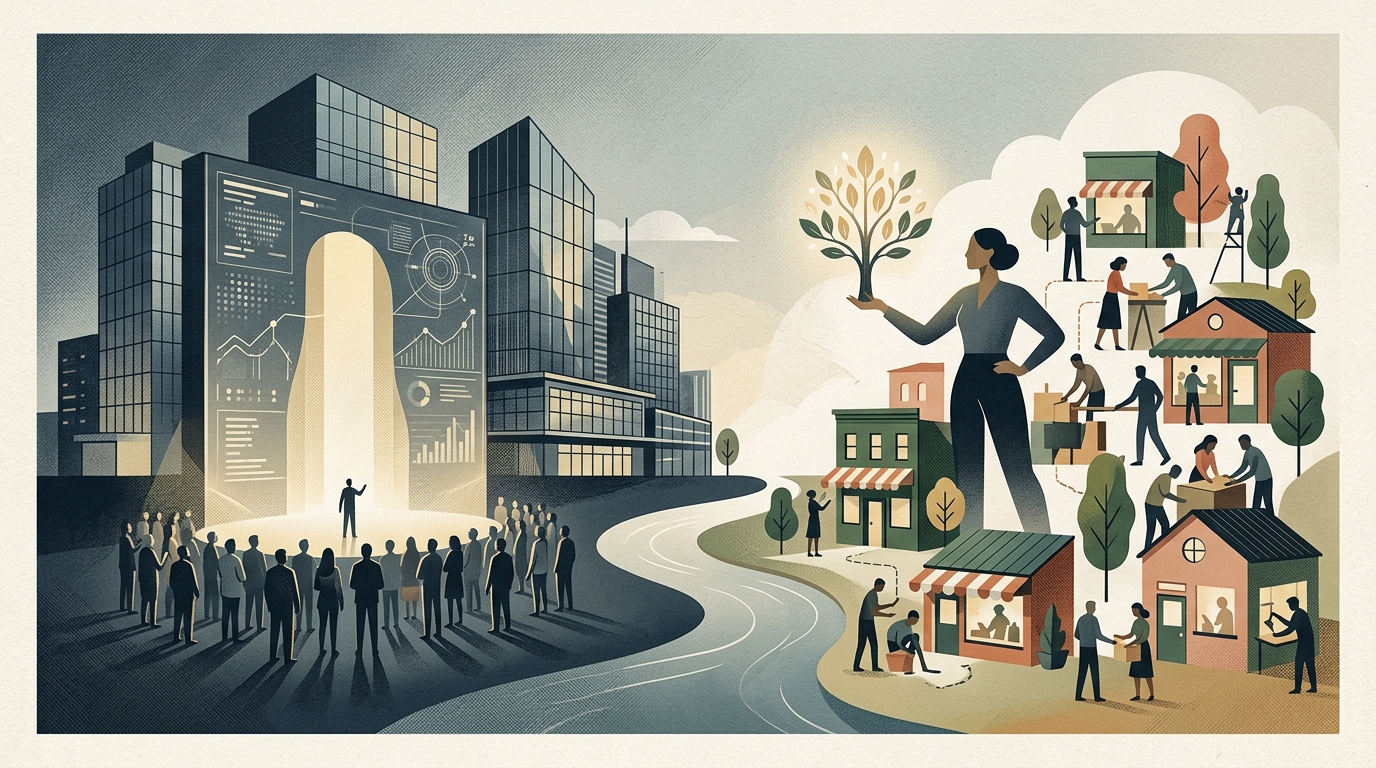
In the high-stakes world of technology, Artificial Intelligence (AI) is often depicted as an ethereal concept residing in the "cloud." However, the recent news of a $5 billion strategic investment by Blackstone to bolster Google's infrastructure serves as a potent reminder that the future of digital intelligence is deeply anchored in the physical world. This move is more than just a financial transaction; it represents a structural shift in how capital markets view technological evolution.
The Physicality of the Digital Revolution
For decades, Silicon Valley's primary focus was software. Today, the gravity has shifted toward hardware and, more importantly, infrastructure. Blackstone, the world's largest alternative asset manager, recognized early on that data centers are the most valuable real estate of the 21st century. The partnership with Google, one of the three global titans of cloud computing, aims to construct the "temples" of AI: massive facilities housing thousands of Nvidia GPUs and consuming enough electricity to power entire cities.
The $5 billion investment will be channeled into building and modernizing data centers specifically tailored for Generative AI requirements. These systems demand significantly higher power density and advanced cooling solutions compared to traditional data centers, making their construction costs prohibitive for all but a handful of "hyperscalers."
Energy: The New Currency of AI
The primary bottleneck for AI expansion is no longer a lack of code, but a shortage of electricity. The Blackstone-Google agreement includes provisions for securing energy resources, often through long-term Power Purchase Agreements (PPAs) with renewable energy providers. While Google has committed to operating on carbon-free energy, the insatiable demand of AI makes this goal increasingly challenging to achieve.
- Data center energy consumption is projected to double by 2030.
- Blackstone is simultaneously investing in power grid infrastructure to support these facilities.
- The geopolitical significance of these locations is rising as nations compete to host the "brains" of the new economy.
"We aren't just building warehouses for servers; we are constructing the nervous system of the global economy," a Blackstone executive noted during the announcement.
Competition and Market Dominance
This move places immense pressure on competitors, notably Microsoft and Amazon (AWS). While Microsoft holds an early lead through its partnership with OpenAI, Google is striking back by investing in its own vertical integration: from its proprietary chips (TPUs) to the infrastructure financed by Blackstone. For Blackstone, this is part of a broader strategy. The firm has already amassed a data center portfolio worth tens of billions, betting that leasing these spaces to tech giants offers stable, inflation-protected returns.
However, the concentration of such power in so few hands is raising red flags for regulators. The European Union and the U.S. are already examining whether control over AI infrastructure by a closed group of corporations creates monopolistic conditions that could stifle innovation from smaller startups.
Conclusion: Toward a New Economic Order
The $5 billion investment is merely the tip of the iceberg. As AI becomes embedded in every facet of human activity, the need for physical infrastructure will continue to grow exponentially. The Blackstone-Google alliance marks the beginning of an era where Wall Street's financial might meets Silicon Valley's technological prowess to create a new global reality. The lingering question is whether our societies are prepared to manage the energy and environmental costs of this digital utopia.