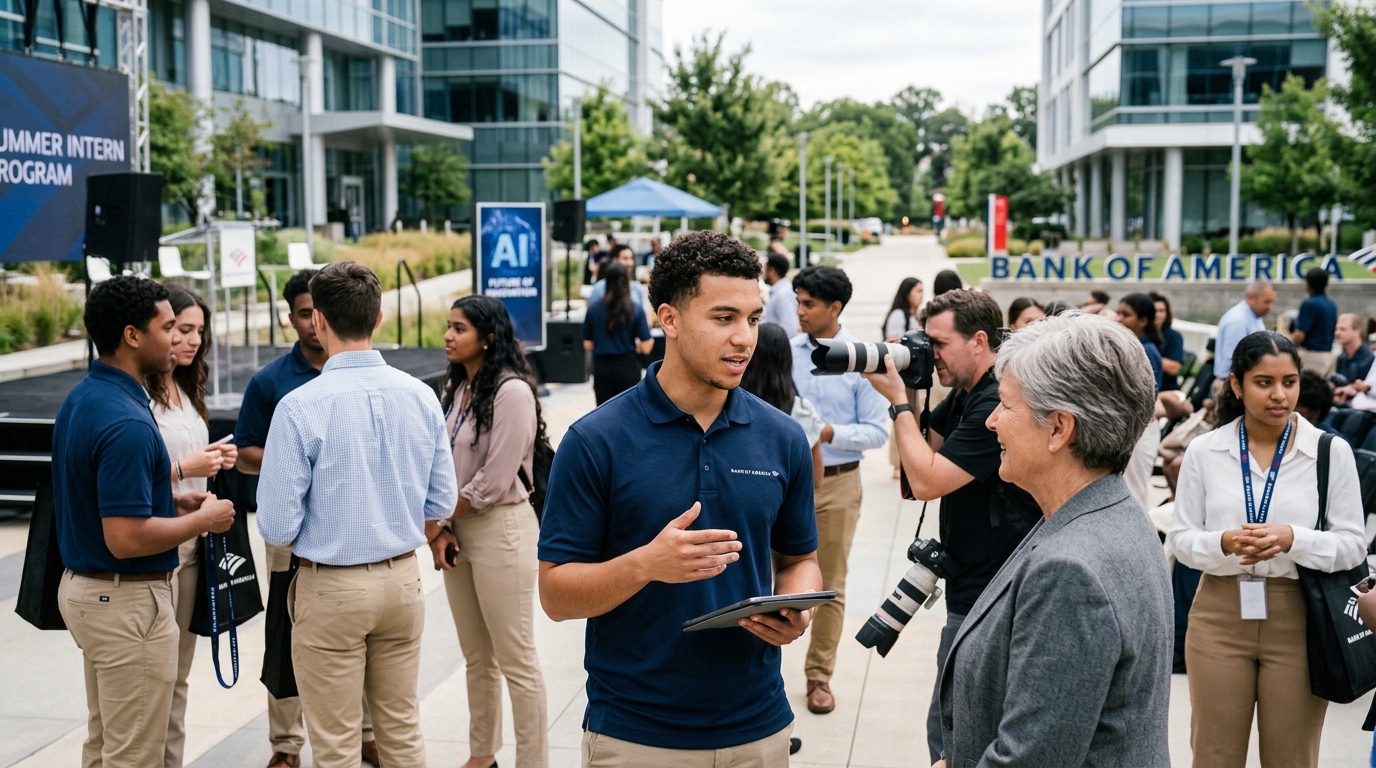
In an era where news headlines are dominated by the displacement of jobs by Artificial Intelligence (AI), Bank of America Corp. (BofA) is making a move that looks like a strategic anachronism but is, in fact, a deeply calculated investment in the future. The announcement of hiring 2,000 summer interns globally for 2026 is not just a recruitment story; it is a declaration regarding the survival of human judgment in high finance.
This move comes at a critical juncture. As Large Language Models (LLMs) and AI agents now handle the bulk of data analysis, report drafting, and basic programming—tasks that traditionally served as the 'baptism by fire' for junior analysts—BofA is choosing to keep the pipeline of human development open. The bank seems to recognize that while AI can crunch numbers, it cannot cultivate relationships of trust with clients or understand the subtle nuances of geopolitical instability.
The Strategy of 'Human Resilience'
Why would one of the world's largest banks invest so much capital in humans when algorithms cost a fraction of the payroll? The answer lies in the concepts of 'institutional memory' and leadership. According to bank executives, fully automating entry-level positions creates a dangerous vacuum: if there are no junior analysts today, where will tomorrow’s CEOs come from?
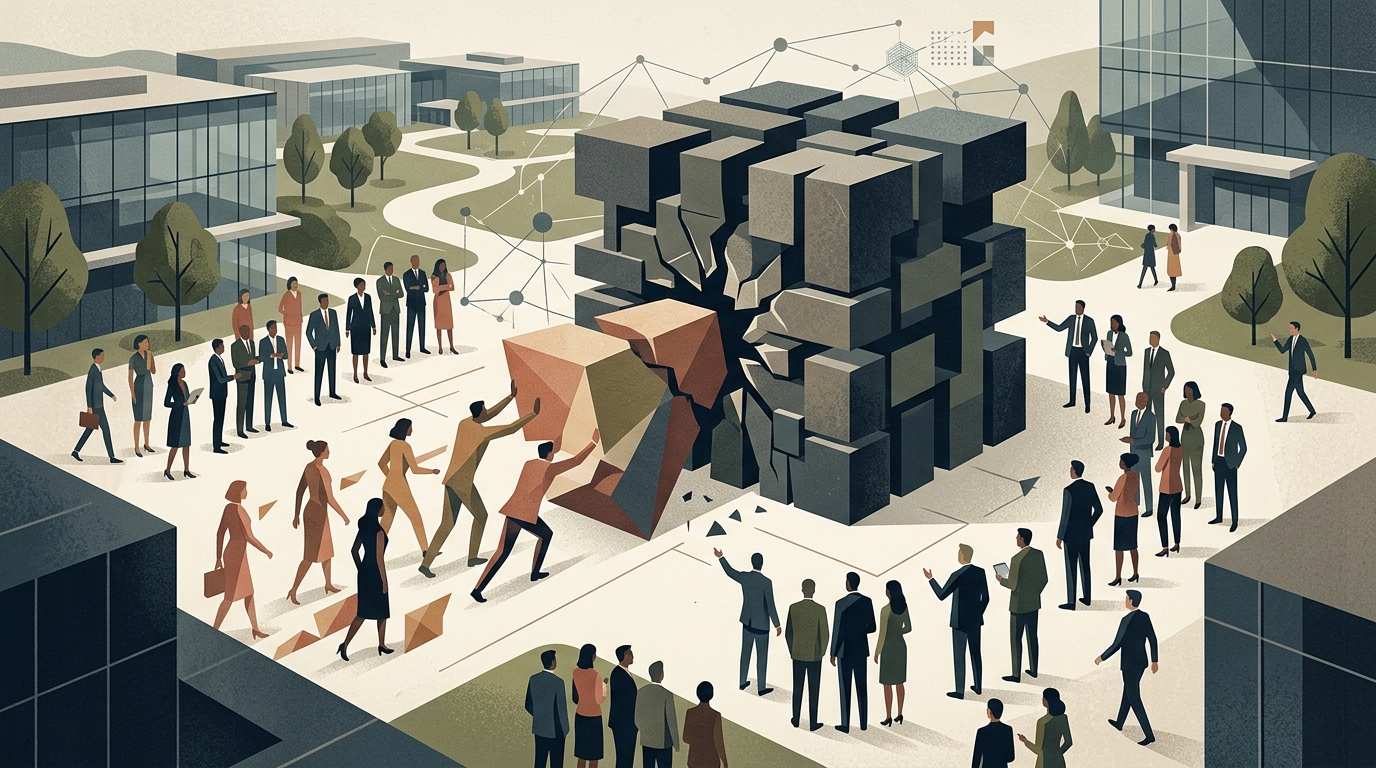
This year's interns will not spend their summer merely building PowerPoint decks. Instead, the program has been redesigned to train young professionals in using AI as a tool for augmentation rather than replacement. BofA is betting that the combination of a bright young mind and the most advanced AI tools will produce exponentially more value than AI alone. This 'Centaur' model—half human, half machine—is the new gold standard on Wall Street.
The End of the Traditional Analyst?
However, the reality for these 2,000 interns will be vastly different from that of their predecessors five years ago. The ability to write Python code or analyze balance sheets in Excel is no longer the ultimate competitive advantage, as AI performs these tasks in seconds. The emphasis has shifted toward 'soft skills': critical thinking, ethical decision-making, and the ability to synthesize information that AI often misinterprets.
The bank is also facing the challenge of talent retention. In a world where technology changes rapidly, young professionals seek employers who offer more than just a good salary; they seek purpose and growth. By offering these positions, BofA sends a message of stability in a labor market trembling at the thought of 'technological unemployment.'
Long-term Investment vs. Short-term Profit
While other banks and tech giants are proceeding with layoffs to satisfy shareholders and fund the purchase of expensive GPUs, Bank of America is opting for the long game. The bank's leadership appears to believe that over-reliance on AI could lead to strategic homogeneity and, ultimately, systemic risks.
In conclusion, the decision for 2,000 hires serves as a reminder that the economy remains a human construct. AI may be the engine, but humans must remain at the steering wheel. For the 2,000 lucky interns, this summer will not just be a line on a resume, but a masterclass in how to remain indispensable in a world trying to replace them.