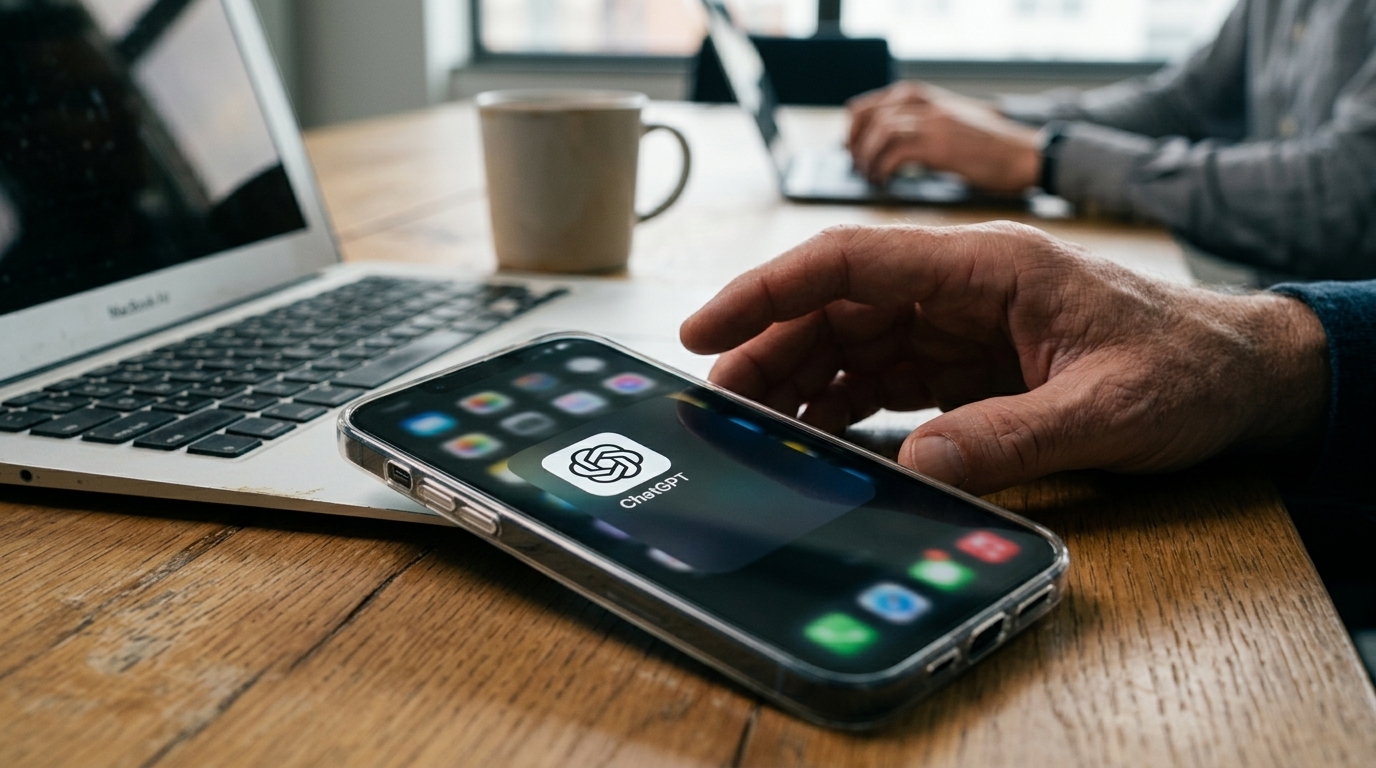
When Tim Cook announced the integration of ChatGPT into the Apple ecosystem during WWDC 2024, the market perceived it as a masterstroke. It was the union of the world's leading hardware with the most advanced artificial intelligence. However, two years later, in May 2026, this image has begun to crack. The partnership once hailed as 'the perfect symbiosis' is evolving into a field of intense confrontation, with OpenAI now openly expressing dissatisfaction with the terms of the deal.
The Economic Gap and the 'Free' Distribution Fallacy
The main point of friction remains the economic model. According to sources close to OpenAI, Sam Altman's company believes Apple is reaping the lion's share of the partnership's value without offering commensurate financial compensation. The original agreement stipulated that Apple would not pay OpenAI for the use of ChatGPT, arguing that 'distribution' to hundreds of millions of iPhones is itself a payment of incalculable value. OpenAI, for its part, hoped this exposure would translate into massive subscriptions to ChatGPT Plus. Data from 2026 shows that the conversion of free users to subscribers via iOS is significantly lower than anticipated.
OpenAI is now facing the massive cost of operating its servers to serve the millions of queries coming from Siri and Apple Intelligence. As OpenAI's investors push for profitability ahead of a potential Initial Public Offering (IPO), providing free services to the world's wealthiest company is beginning to look less like a strategic move and more like a financial hemorrhage.
The Clash of Ecosystems and Privacy Constraints
Beyond economics, there is a fundamental philosophical difference. Apple has built its brand on the absolute protection of user privacy. The integration of OpenAI is done through a 'wall' of protection that anonymizes data and prevents OpenAI from creating detailed user profiles. For OpenAI, data is the 'fuel' for improving its models. Its inability to access the full identity and habits of the iPhone user limits its ability to offer personalized experiences that would make a subscription essential.
- Apple refuses to share telemetry data that would help OpenAI optimize model performance.
- OpenAI feels its brand is being relegated to a mere 'feature' within the Siri environment.
- Regulators in the EU are closely monitoring the deal, fearing the creation of a new digital oligopoly.
The Competition Factor and Apple's Strategic Pivot
Apple, true to its tactic of never being dependent on a single supplier, has already begun opening the door to other players. Recent reports of deeper integration with Google Gemini, as well as the development of its own smaller On-Device models, show that OpenAI is no longer the sole protagonist in Cupertino. This diversification strategy has angered OpenAI's leadership, which sees its 'first-mover' advantage evaporating.
"Apple doesn't have allies; it only has suppliers. OpenAI made the mistake of thinking it was the former," says a Silicon Valley analyst.
As we head toward the end of 2026, this relationship is at a breaking point. If OpenAI decides to limit the features it offers for free via Apple, or if Apple chooses to promote Gemini as the default option, we will see a realignment of forces that will affect the entire tech industry. The question is no longer whether the collision will happen, but who will blink first in this digital game of chess.