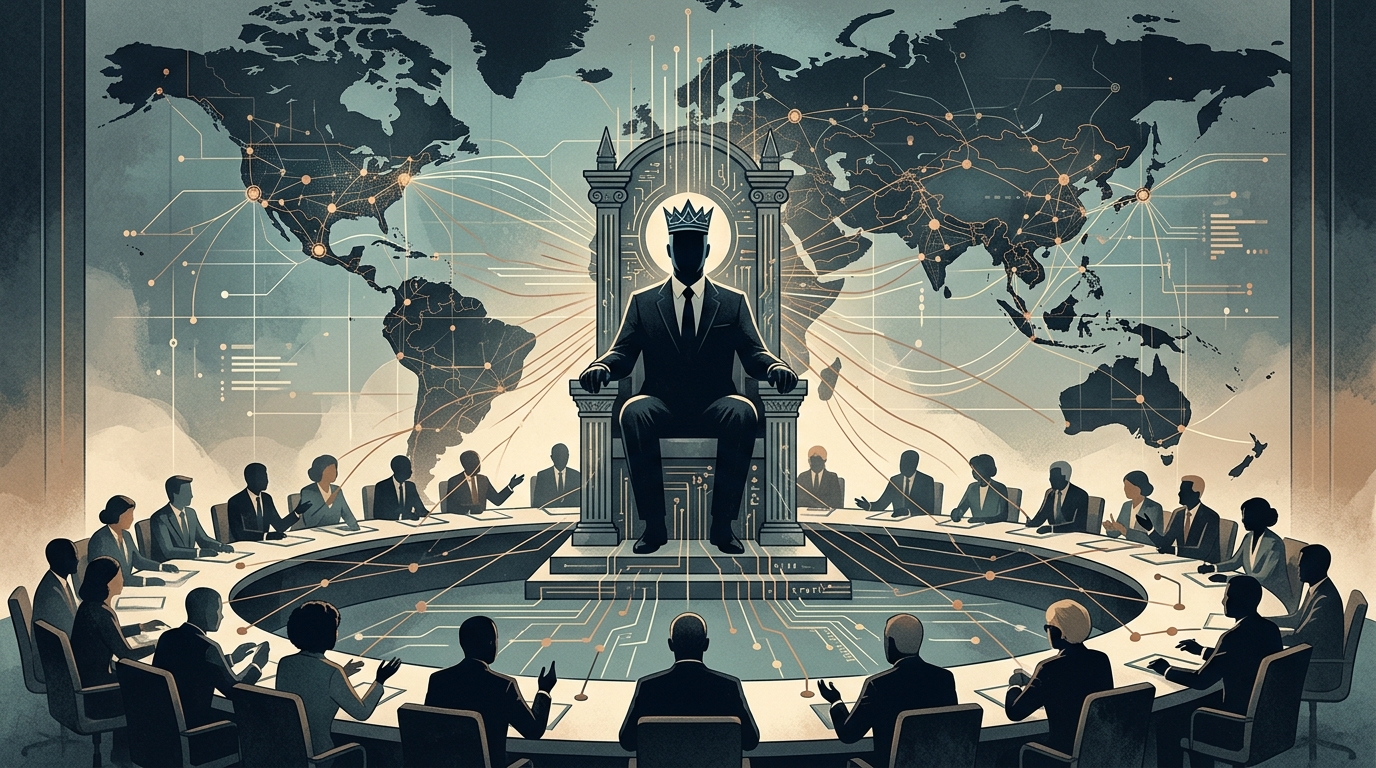
The global geopolitical chessboard is at one of its most critical turning points in modern history. According to recent analyses and warnings from executives at Anthropic, one of the world's leading artificial intelligence companies, China is no longer just a follower of trends but an aggressive contender poised to surpass the United States in technological prowess by 2028. This prediction is not merely a technical estimate; it is a clarion call regarding the redistribution of global power, where algorithms and computing power are replacing traditional weaponry and foreign exchange reserves.
Beijing's 'Total Mobilization' Strategy
China has adopted an approach that the West finds difficult to replicate: the complete convergence of state strategy, private investment, and academic research. While AI development in the US is primarily driven by the private sector and market forces, in China, the Communist Party has established AI as the central pillar of national security and economic survival. Beijing is funneling billions of dollars into 'smart city' infrastructure and data centers, creating an ecosystem where data collection is seamless and the implementation of new models occurs at an unprecedented scale.
Anthropic points out that China has successfully bridged the gap in the quality of research publications. Although the US still holds the lead in foundational breakthroughs (such as the Transformer architecture), China excels in the speed of integration and optimization of these technologies. The ability of Chinese engineers to develop specialized models for industry and state administration offers a 'field advantage' that the West, bogged down in regulatory debates and ethical dilemmas, appears to be losing.
The Semiconductor Paradox and Sanction Circumvention
One of the primary obstacles Washington attempted to impose was restricting China's access to advanced semiconductors, such as NVIDIA's H100 cards. However, reality is proving to be more complex. China has developed its own path, investing in domestic firms like SMIC and Huawei, which, despite sanctions, manage to produce chips sufficient for training large language models. Furthermore, the semiconductor black market and triangular exports through third countries have allowed Beijing to maintain a flow of critical hardware.
'The idea that export controls would stop China was an illusion. It simply forced them to become more creative and autonomous,' market analysts suggest.
Anthropic warns that if China succeeds in solving the problem of mass-producing 3nm or 5nm semiconductors within the next two years, the US advantage will evaporate. China already possesses the world's largest 5G network, which serves as the nervous system for AI, enabling edge computing at speeds the US is still striving to achieve.
Ethics and Safety: Two Different Worlds
The difference in development philosophy is stark. Anthropic, as a company focused on 'AI Safety,' expresses concern that China prioritizes efficiency and control over alignment with human values. In the Chinese approach, AI must serve the state and social stability. This allows for faster development, as the same constraints for privacy protection or bias avoidance that occupy Silicon Valley laboratories do not exist in the same form.
However, this 'unbridled' competition carries risks. Anthropic argues that if China reaches Artificial General Intelligence (AGI) first, the global standard for how technology functions will shift toward an authoritarian model. 2028 is considered 'year zero' because that is when the convergence of computing power and the maturation of currently training algorithms is expected to occur.
Conclusion: A New Cold War Reality
Anthropic's warning should not be taken merely as a plea for more funding, but as an analysis of the new reality. The West is called to decide whether it will continue its fragmented approach or move toward a coordinated industrial policy for artificial intelligence. The battle for 2028 will not be decided only in laboratories, but in the ability of democracies to innovate without sacrificing their values, while the 'Dragon' gallops toward technological hegemony.