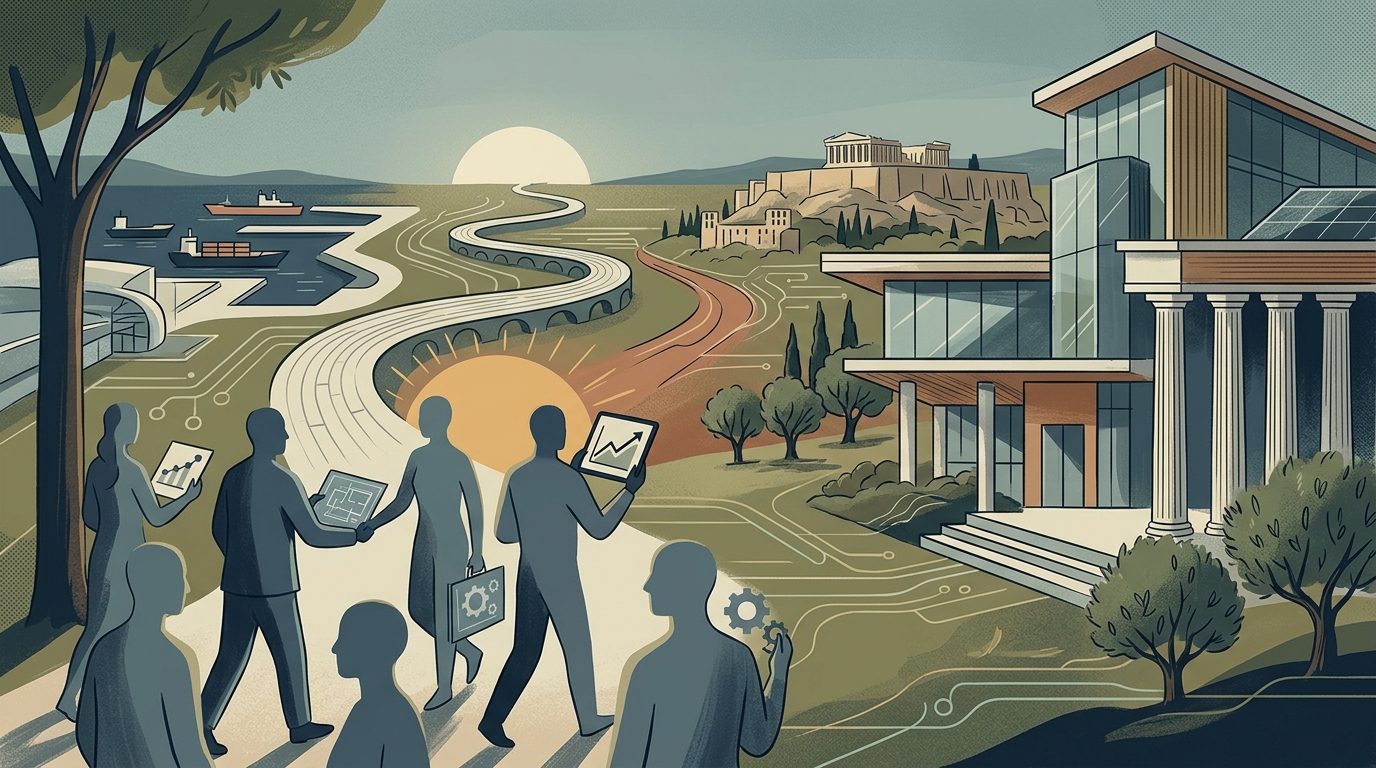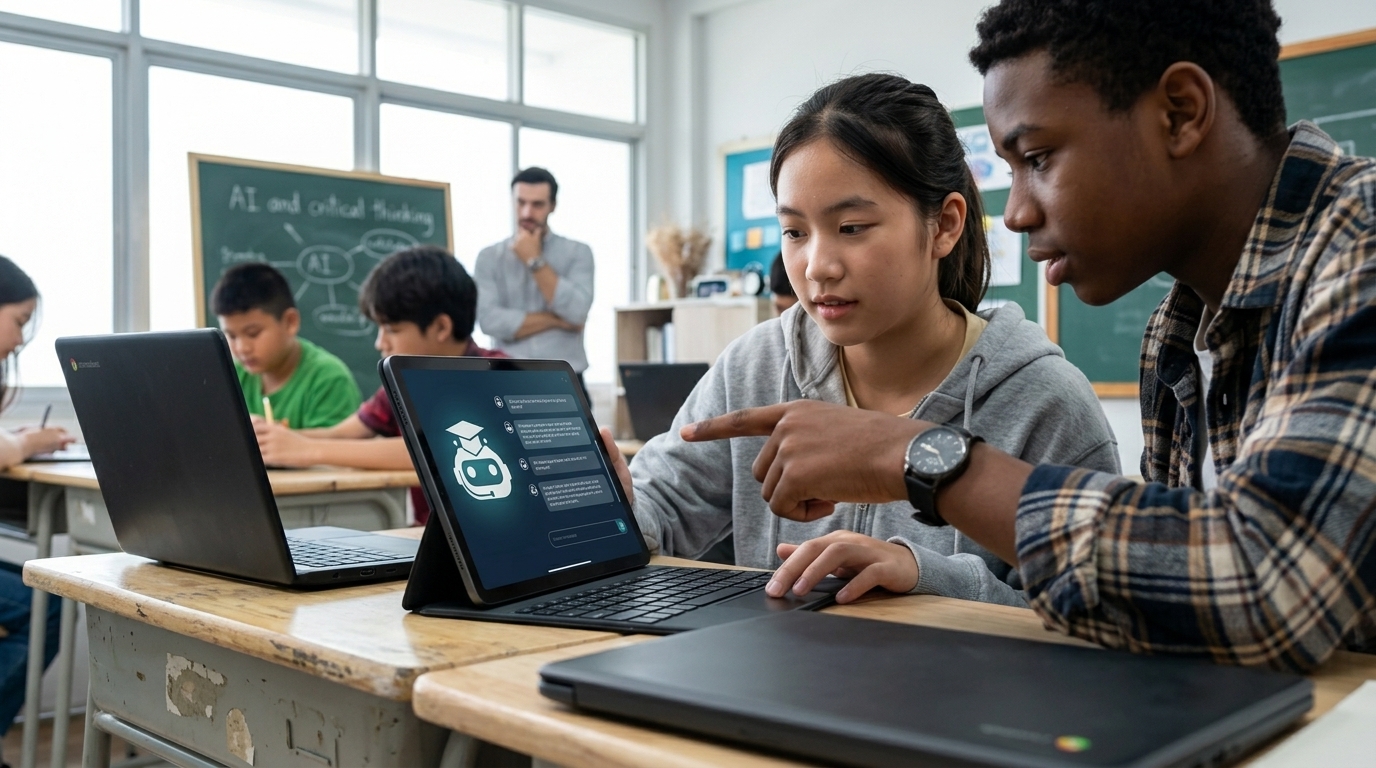
Education is at a historic crossroads. As we navigate through 2026, Artificial Intelligence (AI) is no longer an experimental tool on the fringes of the educational system, but the heart of a radical restructuring of how we learn, teach, and evaluate knowledge. In Greece, the debate is in full swing, with the Ministry of Education promoting the integration of digital assistants and personalized learning platforms, while teachers and parents express serious concerns about the impact on children's cognitive development.
The Greek Perspective: From the Blackboard to the Digital Assistant
In the Greek educational system, the introduction of AI is being attempted through the "Digital School" initiative. This is an ambitious effort that includes the creation of an "AI Tutor" for every student, capable of answering questions in real-time based on the approved curriculum. The promise is enticing: a personal tutor for every child, capable of adapting to their learning pace and identifying gaps that a teacher in a classroom of 25 might never notice.
However, this application hits the reality of infrastructure. While pilot programs show encouraging results, digital inequality remains the "elephant in the room." Students in remote areas or from low-income backgrounds risk being left behind, not due to a lack of ability, but due to a lack of access to high-end AI tools that will constitute the new "competitive advantage" in the future labor market.
"Artificial Intelligence cannot replace the teacher's gaze that understands when a student is struggling, but it can relieve them of the bureaucracy of grading," says a Ministry of Education official.
The Risk of "Cognitive Laziness" and the Loss of Critical Thinking
The greatest concern among educators involves the degradation of the learning process. When a Large Language Model (LLM) can synthesize an essay on the Greek Revolution or solve complex equations in seconds, what is the student's motivation to exert effort? "Cognitive laziness" is not just a threat to grades, but to the formation of neural pathways associated with problem-solving.
- Loss of authenticity: The difficulty of distinguishing a student's work from AI generation.
- Algorithmic bias: The risk of AI tools reproducing stereotypes or misinformation present in their training data.
- Digital dependency: The inability to generate thought without the help of a prompt.
Conversely, AI proponents argue that we are moving from the era of rote memorization to the era of "synthesis." The student no longer needs to be a warehouse of information but an orchestrator of tools. The challenge is to teach children how to ask the right questions (prompt engineering) and how to critically evaluate the answers they receive.
The Teacher's Role: From Authority to Mentor
In this new environment, the teacher's role is undergoing a violent transformation. The educator ceases to be the sole source of knowledge in the classroom. They are becoming a mentor, a facilitator, and, most importantly, an ethical compass. Teaching the ethical use of technology is becoming as important as teaching language or mathematics.
In 2026, a school's success will not be judged by how many tablets it possesses, but by how well it manages to maintain human connection in a world filled with algorithms. AI in education is not a simple software upgrade; it is an upgrade of our social contract regarding what a "learned person" means in the 21st century. Greece, with its rich philosophical tradition, must lead this dialogue, ensuring that technology serves humanity and not the other way around.