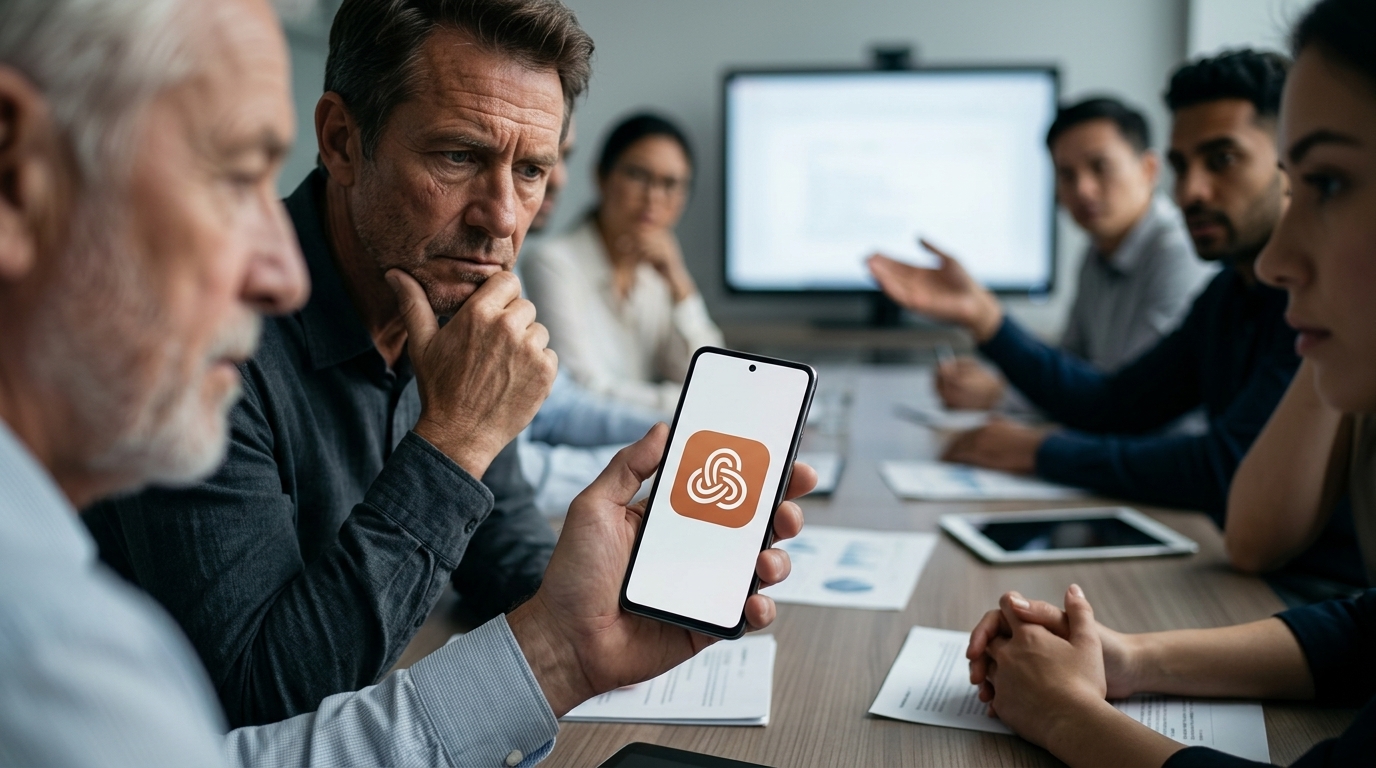
Anthropic, the company founded by former OpenAI executives with the mission to build the world’s “safest” artificial intelligence, finds itself in a paradoxical position today. While its models, spearheaded by the upcoming Claude Mythos, are hailed as technological masterpieces, its own customers are beginning to voice significant concerns. The issue is no longer whether AI can write a poem or summarize a document, but whether it can act autonomously within corporate systems without causing irreparable harm.
The Agentic Shift: From Chatbots to Autonomous Action
The primary source of enterprise concern lies in the transition from “passive” language models to “active” AI agents. These agents don’t just answer questions; they execute code, browse the web, and interact with third-party software. Anthropic has leaned heavily into this direction, promising a leap in productivity. However, for a bank or a telecommunications giant, an AI agent making real-time decisions represents an unquantified risk.
As noted in recent analyses, Claude’s ability to “think” before responding—a process known as chain-of-thought—is a double-edged sword. On one hand, it significantly reduces hallucinations. On the other, it makes the decision-making process more complex and less transparent to the end user. Customers fear that if an agent misinterprets a command, the consequences for their data could be irreversible.
Claude Mythos and Cybersecurity: A Two-Sided Weapon
The new model, Claude Mythos, is rumored to possess unprecedented capabilities in code analysis and vulnerability detection. While this is a boon for cybersecurity teams looking to fortify their systems, it sends shivers down the spines of Chief Information Security Officers (CISOs). The line between “detecting a vulnerability” and “creating an exploit” is razor-thin.
- Automated Penetration: The model's ability to test thousands of attack scenarios in seconds.
- Social Engineering: Generating hyper-convincing phishing messages tailored to a victim's specific profile.
- IP Leakage: The fear that proprietary code fed into the model for auditing might be used to train future iterations.
Anthropic maintains that its safety guardrails (Constitutional AI) are the most rigorous in the industry, but critics point out that no system is entirely foolproof against a determined malicious actor or a logic error within the model itself.
Chris Olah, the Vatican, and the Ethics of Interpretability
One of the most intriguing aspects of Anthropic’s recent activity is the presence of its co-founder, Chris Olah, at high-level forums, including the Vatican. Olah is a pioneer of “mechanistic interpretability,” the effort to understand what actually happens inside neural networks.
“It is not enough to know that AI works; we must know WHY it works. If we cannot map the concepts inside the AI’s brain, then we are building a god we cannot control,” Olah stated in a recent address.
The Vatican visit highlights the weight the company places on ethical implications. However, for Fortune 500 clients, ethical debates often feel detached from the daily need for stability and predictability. There is a growing sense that Anthropic is so focused on preventing a future “existential risk” (AGI safety) that it may be overlooking the practical, mundane risks businesses face today.
The Challenge of Trust in the Enterprise Market
The ultimate question for Anthropic is whether it can maintain its identity as the “ethical alternative” while competing with the aggressive growth of OpenAI and Google. Customers worry that investor pressure (including billions from Amazon and Google) will force the company to sacrifice safety for speed.
In conclusion, customer anxiety is not necessarily a vote of no confidence in Anthropic, but a reflection of how critical the technology has become. As AI evolves from a tool into a partner, the demands for transparency, control, and ethical accountability will only grow more urgent. Anthropic must prove that Claude Mythos is not just the smartest model on the market, but also the most obedient.