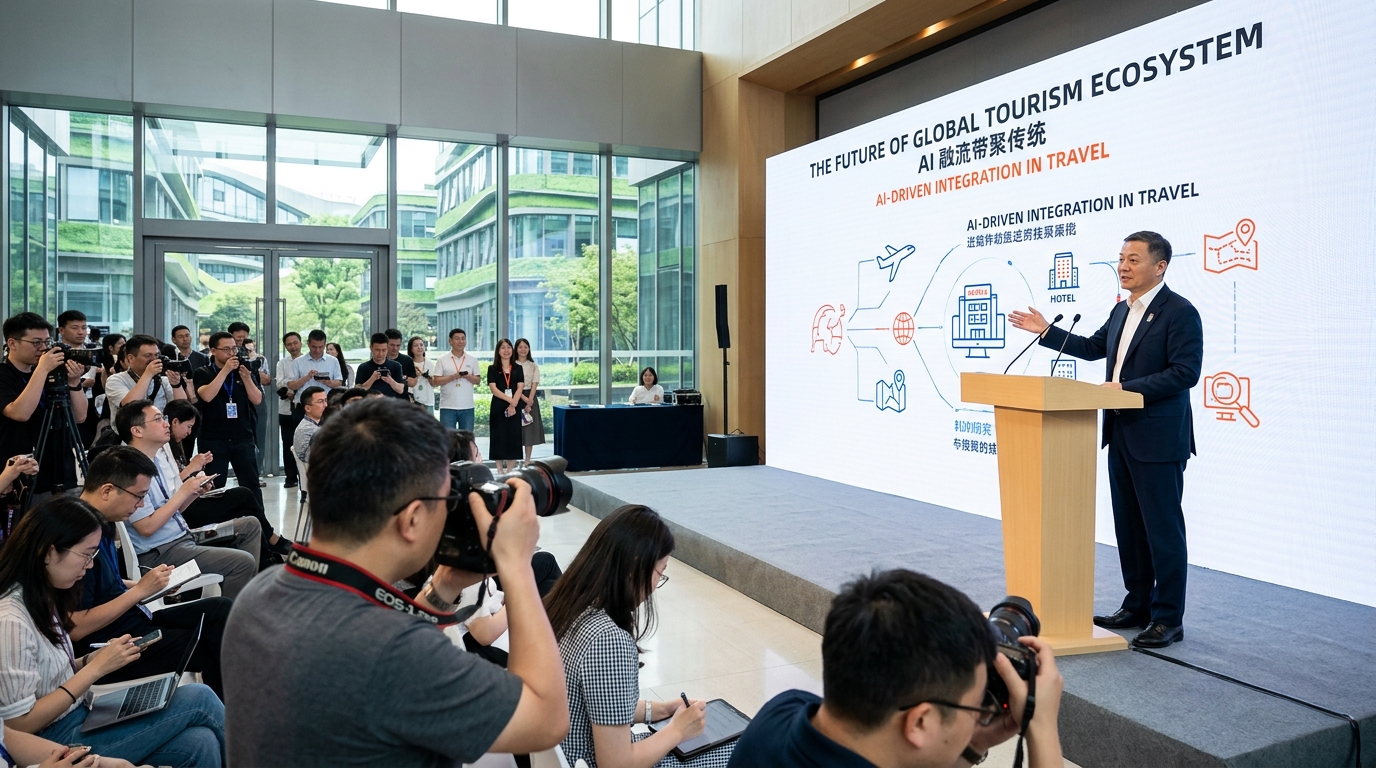
The global tourism industry is on the verge of a structural transformation, and at the heart of this change lies not a traditional travel agent, but a technological titan. Alibaba, the Chinese e-commerce superpower, is accelerating the integration of Generative AI across its entire ecosystem, with a particular focus on the tourism sector via its Fliggy platform. This move is not merely a technical upgrade; it is a strategic repositioning aimed at dominating the "smart" travel experience on a global scale.
The Qwen Model as a Digital Concierge
The driving force behind this revolution is Tongyi Qianwen (or Qwen), Alibaba's proprietary Large Language Model (LLM). Unlike traditional search engines that return a static list of hotels and flights, Alibaba’s AI acts as a sophisticated digital concierge. Through the Fliggy app, users can now converse with the AI to plan entire itineraries, receive personalized recommendations based on past behavior, and resolve issues in real-time.
Big data analytics allow the AI to anticipate a traveler's needs before they are even articulated. For instance, if a user searches for family rooms in Tokyo, the AI doesn't just suggest accommodation; it links the booking with theme park tickets, recommendations for child-friendly restaurants, and transit directions via Amap (Alibaba’s mapping service), creating a seamless "one-click" experience.
Ecosystem Synergy: From Alipay to Amap
What sets Alibaba apart from competitors like Expedia or Booking.com is the deep integration of its services. The travel experience does not begin and end with a booking. Through AI, Alibaba connects Fliggy (travel) with Alipay (payments) and Amap (navigation). This triad allows the traveler to navigate a foreign country with the confidence of a local.
- Personalized Navigation: Amap uses AI to suggest routes not just based on traffic, but also on the user's historical interests and search patterns.
- Automated Payments: Alipay integrates AI translation services and real-time currency conversion, facilitating transactions in foreign markets without friction.
- Support Services: Fliggy’s AI chatbots can handle cancellations or ticket changes in seconds, drastically reducing waiting times in customer service.
Competition and the Geopolitics of Technology
Alibaba’s pivot toward AI in tourism is taking place in an environment of intense competition within China. Baidu with its Ernie model and Tencent with Hunyuan are also vying for a slice of the digital tourism pie. However, Alibaba holds the advantage of a massive database of consumer habits from its e-commerce roots, which feeds the AI with invaluable insights into "who buys what and why."
On an international level, this move sparks both concern and admiration. While Western companies grapple with regulatory frameworks regarding personal data, Chinese giants are moving toward total data integration that offers unprecedented user convenience. The question remains whether European and American travelers will adopt these platforms, yielding access to their data in exchange for a more frictionless travel experience.
"Artificial Intelligence is not just changing how we book tickets; it is changing the very nature of exploration, turning the unknown into a fully controlled and predictable experience," note market analysts in Beijing.
Challenges and the Future of Smart Travel
Despite technological superiority, challenges remain. The accuracy of AI recommendations depends on data quality, and LLM "hallucinations" can lead to incorrect bookings or misleading information about tourist attractions. Furthermore, the increasing reliance on AI might weaken the spontaneity of travel, as algorithms tend to promote popular destinations that maximize platform profit.
Looking ahead, we expect Alibaba to expand these services through partnerships with international hotel chains and airlines, using AI as the "bridge" connecting the Chinese tourist market with the rest of the world. The era where travel was a series of disconnected bookings is ending; the era of AI-driven tourism is already here.