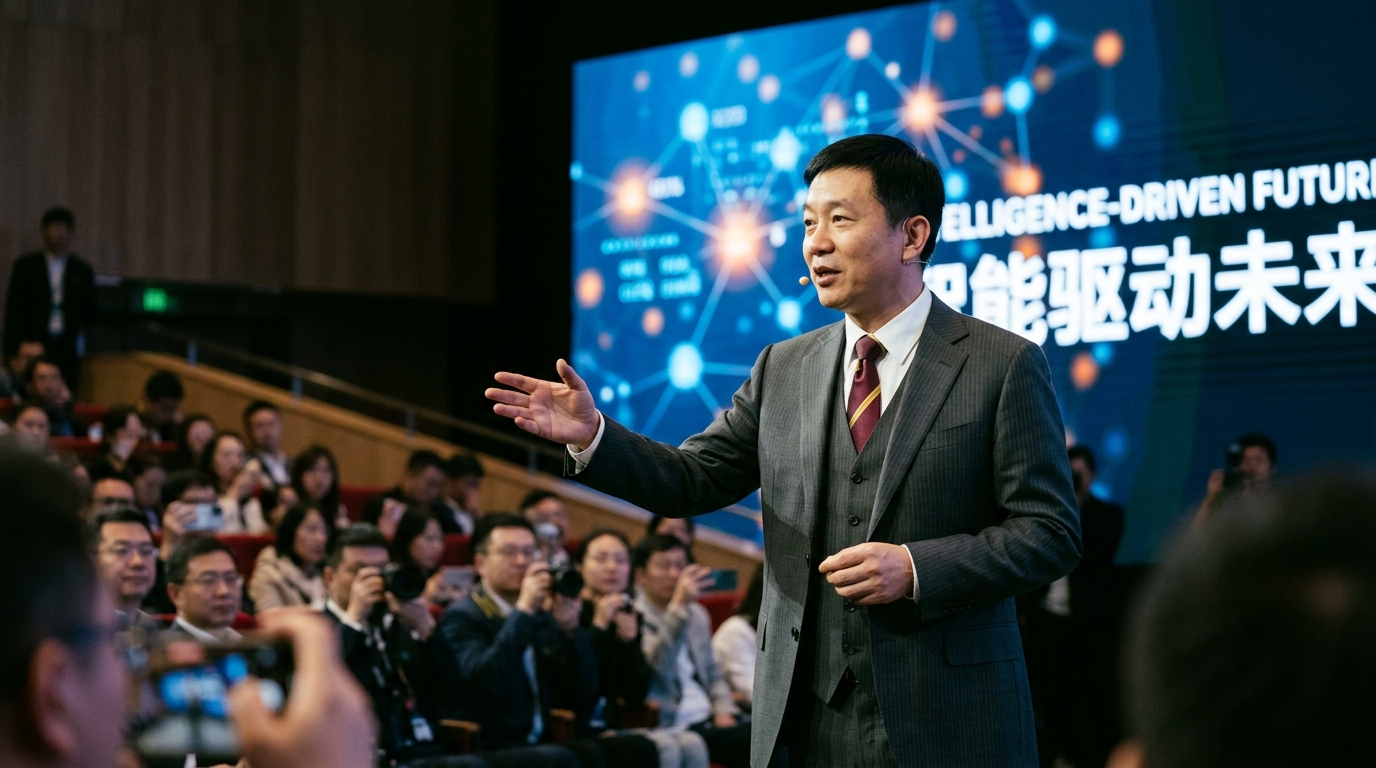
In the ever-shifting landscape of global technology, Alibaba Group Holding Limited is no longer just an e-commerce giant. As of June 2026, the company has solidified its position as one of the most aggressive players in the Artificial Intelligence (AI) arena, leveraging its Cloud Intelligence Group as the primary engine for a new era of profitability. The "AI-first" strategy adopted under the leadership of CEO Eddie Wu appears to be bearing fruit, as the market shifts its focus from retail sales volumes to computational power and Large Language Models (LLMs).
The Strategic Mutation: From Retail Shelf to the Cloud
For decades, Alibaba was synonymous with Taobao and Tmall. However, the cooling of the Chinese economy and the saturation of the domestic retail market forced the group to seek new frontiers. AI is no longer a complementary tool; it is the backbone of its future existence. The integration of the Tongyi Qianwen (Qwen) model across the company's entire ecosystem—from Cainiao's logistics to customer service—represents an effort to radically upgrade productivity.
Alibaba's Cloud Intelligence Group has become the central hub of this effort. By offering AI-as-a-Service (AIaaS), the company attracts thousands of enterprises looking to train their own models without the massive cost of purchasing hardware. This platform model allows Alibaba to capitalize on the entire Chinese industry's need for digital transformation, effectively making it the "utility provider" of the new digital economy.
The Qwen Ecosystem and the Power of Open Source
One of Alibaba's most strategic moves is its commitment to open source. The Qwen series of models has managed to compete with international heavyweights like Meta's Llama, offering high performance across multiple languages and specialized tasks. By making many of its models freely available to the developer community, Alibaba is building a massive ecosystem of users dependent on its architecture, creating a powerful moat against competitors like Baidu and Tencent.
- Specialization: Models optimized for coding, mathematics, and multimodal analysis.
- Accessibility: Lowering the entry cost for startups and developers.
- Integration: Deep connectivity with DingTalk for office automation and productivity.
This approach is not just about technology; it's about geopolitical influence. As Alibaba's models become the standard for businesses in Asia and parts of the Global South, the company gains a strategic position that transcends narrow commercial transactions.
Geopolitical Headwinds and the Semiconductor Challenge
Despite the optimism, the path is not without obstacles. US restrictions on the export of advanced AI chips (such as those from Nvidia) remain the greatest threat to Alibaba's ambitions. The company is forced to walk a tightrope: on one hand, it must develop its own processors, such as the Yitian 710, and on the other, find alternative supply sources within China.
"Mastery of AI requires not just clever algorithms, but raw computational power. Without access to cutting-edge hardware, the pace of innovation risks slowing down," market analysts note.
Furthermore, the regulatory environment in China remains stringent. Alibaba must ensure its AI models comply fully with Beijing's guidelines on content and data security, which often limits the creativity or global reach of its tools compared to Western competitors.
Financial Outlook: AI as the New Revenue Pillar
Investors are closely monitoring the profit margins of the Cloud division. While e-commerce still generates the lion's share of cash flow, growth there is in the single digits. Conversely, AI Cloud services are showing double-digit growth. Alibaba's ability to convert its technological superiority into sustainable profits will determine its stock trajectory in the coming years. The market seems increasingly convinced that Alibaba is no longer an "aging" retail company, but a dynamic infrastructure force that will power the next industrial revolution.