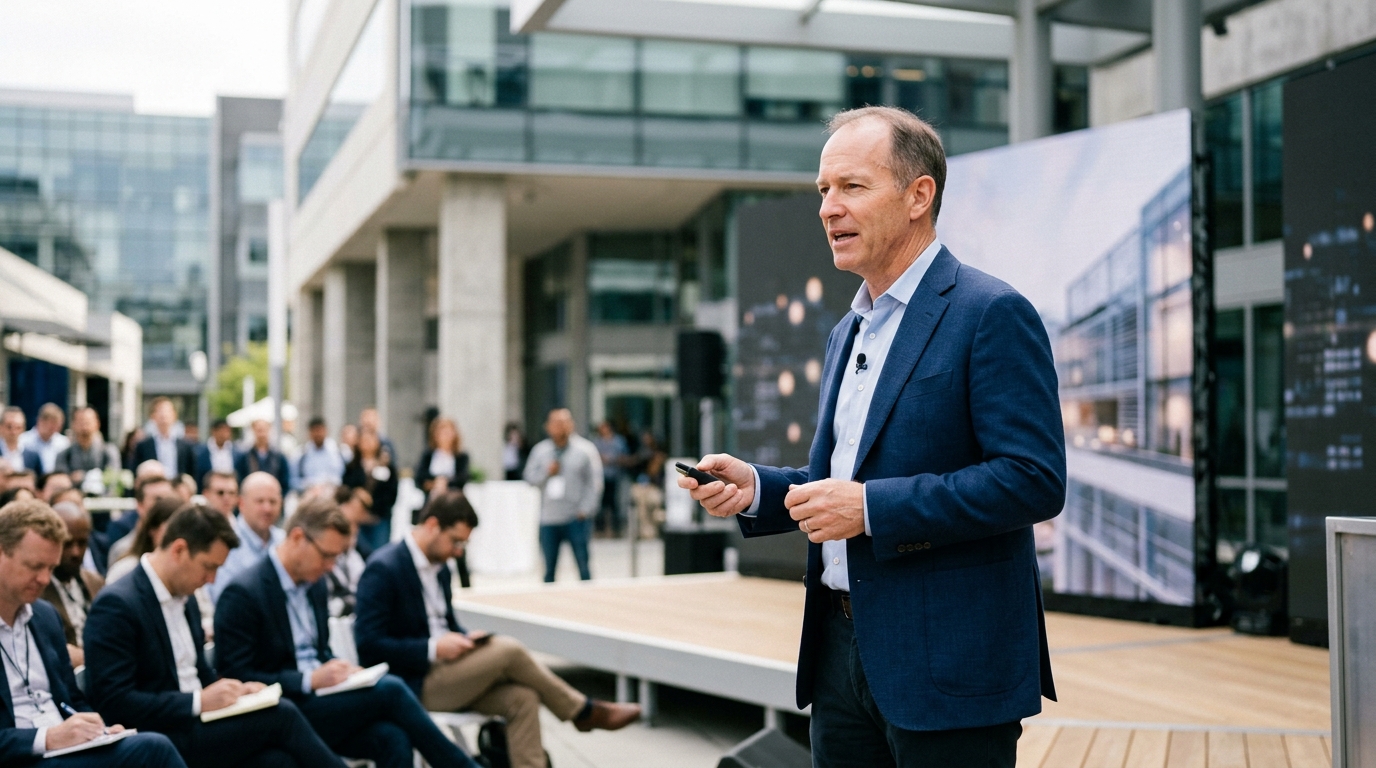
At the 2026 Investor Forum, Affirm, the leading force in the "Buy Now, Pay Later" (BNPL) sector, unveiled a bold vision that goes far beyond simply providing credit at the point of sale. CEO and co-founder Max Levchin, speaking on Bloomberg Tech, outlined a strategy aimed at an annual Gross Merchandise Volume (GMV) of $100 billion, built on two central pillars: global geographic expansion and the emerging technology of "agentic commerce."
The Revolution of AI Agents in Shopping
The most intriguing aspect of Levchin's presentation was the introduction of the term "agentic commerce." As we move through 2026, artificial intelligence is no longer limited to simple customer service chatbots. Affirm is betting on autonomous AI agents that will act on behalf of the consumer. These digital agents won't just find the best product at the best price; they will negotiate payment terms and select the optimal financing plan in real-time.
"The future of commerce isn't about a human scrolling through endless product pages," Levchin explained. "It's about delegating that work to an agent that understands your budget, your needs, and your creditworthiness." For Affirm, this means integrating its financial tools directly into the operating systems of these agents, making it the default payment choice in an economy where machines transact with machines.
The $100 Billion Target and the International Chessboard
The target of $100 billion in annual GMV represents a massive scale-up from previous years. To achieve this, Affirm is looking beyond North American borders. The recent entry into the UK market serves as a bridgehead for a broader European expansion. The company is betting that its model, which avoids compounding interest and hidden fees, will find fertile ground in regulatory environments like the European Union, which are traditionally stricter regarding consumer protection.
The international expansion strategy is accompanied by a significant upgrade of the Affirm Card. The card, which allows users to pay upfront or spread the cost over installments via an app, has become the company's fastest-growing product. According to Levchin, the card transforms Affirm from a tool for large purchases (like furniture or electronics) into an everyday financial habit for coffee or groceries.
Risk Management in an Era of Volatility
Despite the optimism, analysts remain cautious regarding credit quality in an economic environment that remains volatile in 2026. Affirm insists that its proprietary underwriting technology is superior to traditional credit scores (FICO). Using real-time transaction data and machine learning algorithms, the company claims it can approve more borrowers with a lower default rate compared to traditional banks.
"We are not a bank trying to sell debt," Levchin emphasized. "We are a technology company facilitating sales." This distinction is crucial for Affirm's narrative to investors. The company's ability to adjust its interest rates and approvals within milliseconds allows it to shield itself against sharp economic downturns, something traditional credit card issuers struggle to do with the same speed.
Conclusions and Outlook
The Affirm of 2026 is no longer a BNPL startup but a global player in financial services. The focus on "agentic commerce" shows that the company understands the next big shift in technology: the move from "search" to "do." If Affirm manages to become the financial backbone of AI agents, the $100 billion goal might prove to be just the beginning. However, its success will depend on its ability to maintain consumer trust and navigate the complex regulatory waters of Europe and Asia while keeping credit risk losses in check.
- The $100B GMV target marks Affirm's transition to a truly global scale.
- Agentic Commerce will allow AI agents to negotiate and execute payments autonomously.
- International expansion is kicking off in the UK with the rest of Europe in sight.
- The Affirm Card remains the key to penetrating daily consumer spending habits.