
As we navigate the mid-point of 2026, the global business landscape is defined by a stark paradox. On one side, the escalating conflict in the Middle East has triggered what the OECD describes as a 'new shock' to global growth, saddling corporations with an estimated $25 billion bill in disrupted supply chains and energy costs. On the other, the 'Great Yield Gap' in the US tech market reveals a fundamental truth: AI is no longer a speculative luxury but the primary shield against macroeconomic instability.
The Agentic Shift and the IPO Landscape
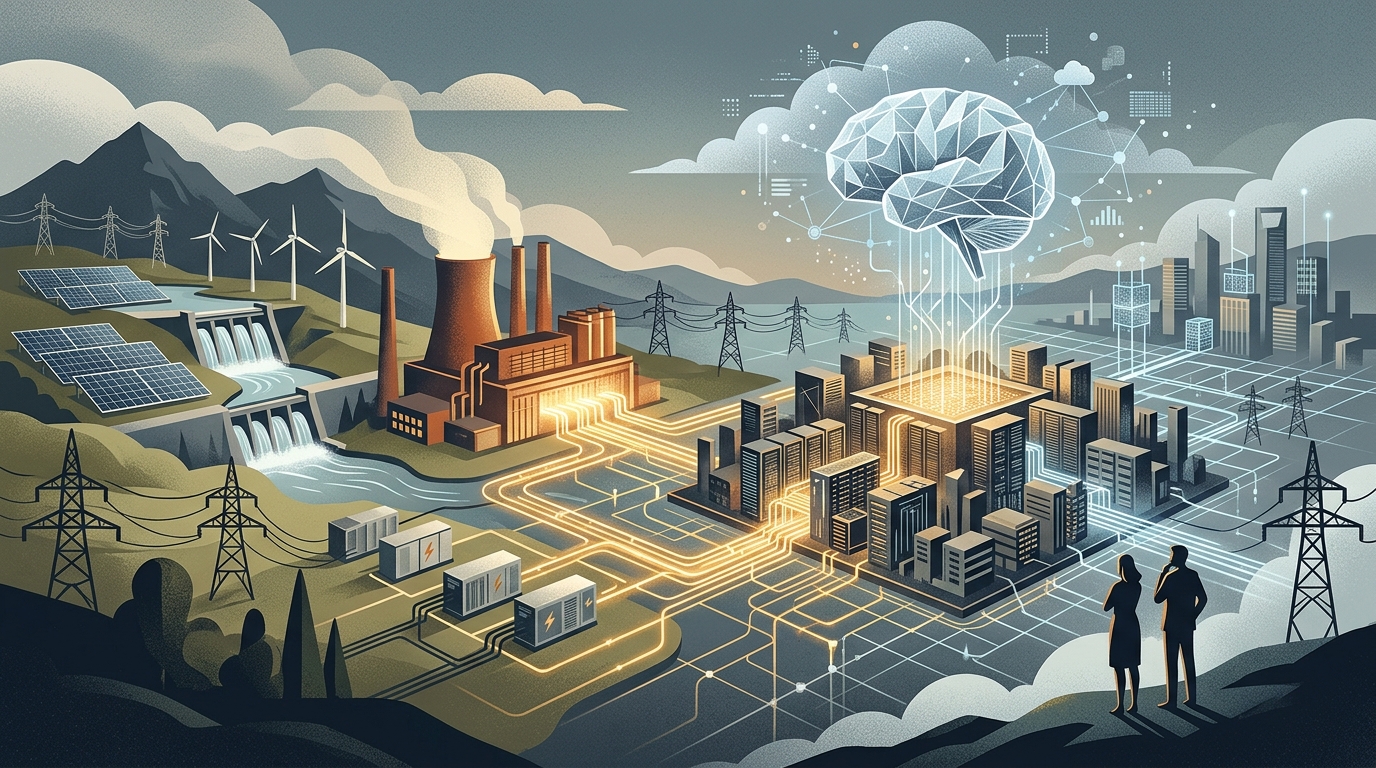
The current market sentiment is increasingly bifurcated. We are witnessing a transition from the 'Generative Era' to the 'Agentic Era.' This is evidenced by Moonshot AI’s strategic restructuring for its Hong Kong IPO and Mistral AI’s acquisition of Austrian industrial AI specialists. Investors are moving away from broad AI promises toward companies that offer 'Industrial Intelligence'—AI that manages logistics, optimizes energy consumption, and provides tangible ROI during inflationary periods. The 'Efficiency Hedge' is the new mandate for the C-suite.
"In 2026, the divide between companies that have integrated agentic AI and those still in the pilot phase is becoming the primary predictor of stock performance."
Greece: From Digital Follower to Algorithmic Leader
In the domestic market, the narrative is shifting from recovery to structural transformation. Prime Minister Kyriakos Mitsotakis’s characterization of AI as Greece's 'New Industrial Revolution' is backed by a significant €3.2 billion fiscal roadmap. The Athens Stock Exchange is closely watching the 'AADE Digital Sword'—the automated tax compliance system—which represents a landmark in fiscal transparency. For the Greek SME sector, the challenge remains the 'AI Paradox': high adoption rates but stalling transformation due to legacy infrastructure. However, the success of companies like Intralot, which reported strategic resilience in Q1 2026, suggests that Greek enterprises with global footprints are successfully leveraging digital tools to navigate global headwinds.
Market Implications and Actionable Insights
For institutional investors, the 'Great Productivity Divergence' suggests a portfolio rebalancing is necessary. Companies capable of using AI to hedge against the 2026 energy shock are the new 'defensive' plays. While the EU’s regulatory moves against deepfakes and 'nudification' apps create a tighter compliance environment, they also provide the legal certainty required for long-term institutional investment in ethical AI frameworks. The outlook remains cautious due to geopolitical friction, but the underlying productivity data suggests that the AI-driven wealth map is being redrawn in favor of the agile and the automated.