
The Maturation of the AI Trade
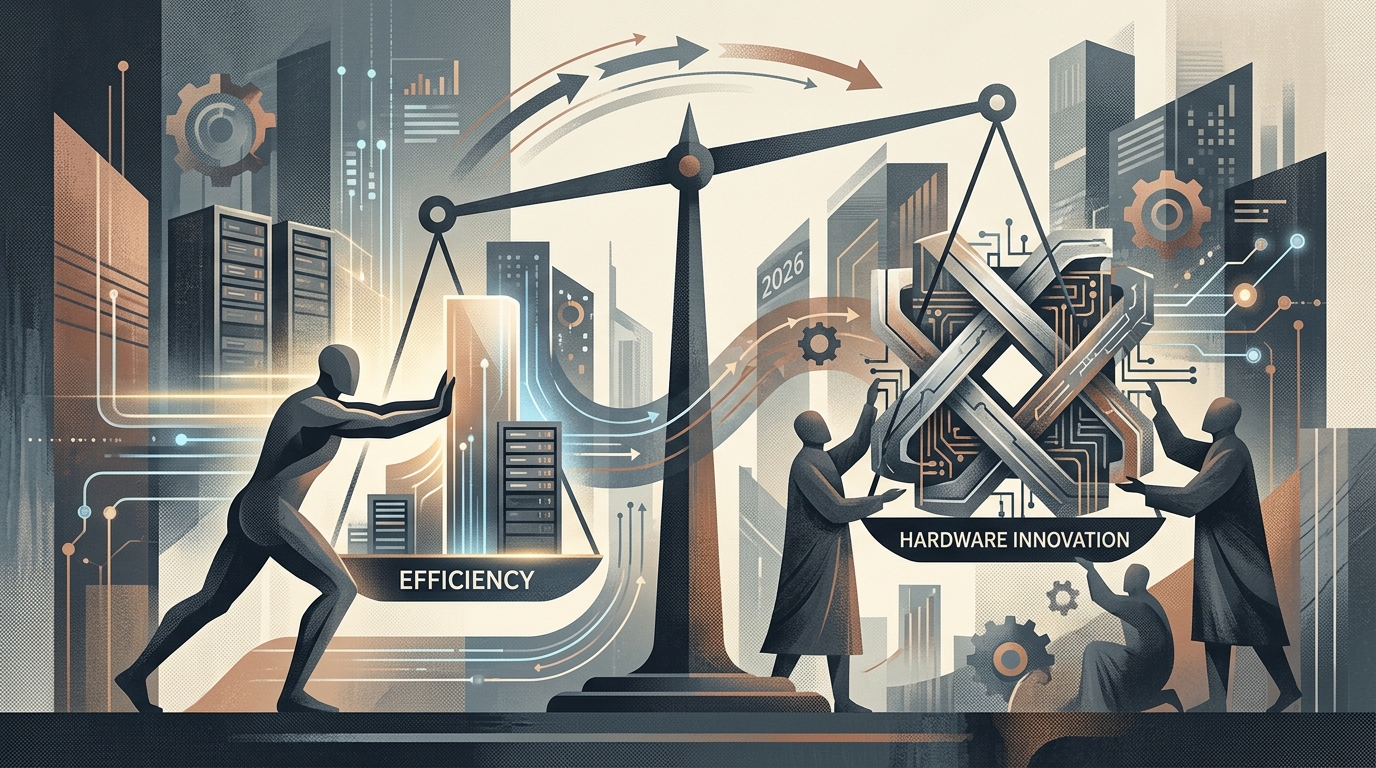
As we navigate the first weeks of July 2026, the global markets are witnessing what I term the 'Great AI Hardware Rebalancing.' The recent 17% retreat in Nvidia’s valuation has sent ripples through portfolios, yet it would be a mistake to view this as the end of the 'Gold Rush.' Instead, we are observing a sophisticated rotation. Investors are moving away from the monolithic GPU dependency that defined 2024 and 2025, pivoting toward a more diversified hardware stack. The emergence of SambaNova’s RDU architecture—now valued at $11 billion—and DeepSeek’s strategic pivot to custom silicon demonstrate that the market is no longer satisfied with a single-vendor ecosystem.
The Capital Blitz and State-Backed Ambitions
Amazon’s recent $25 billion bond issuance is a masterclass in strategic debt management. By locking in capital during this period of relative volatility, the retail and cloud giant is preparing for the next phase of infrastructure expansion. This is not isolated corporate maneuvering; it mirrors the macro-economic shifts we see in East Asia. South Korea’s colossal investment plan for AI supremacy and China’s 'Silicon Great Wall' indicate that AI infrastructure has transitioned from a corporate advantage to a cornerstone of national economic policy. For the savvy investor, this means the 'AI trade' is no longer just about software margins, but about the industrial backbone of the 21st century.
The shift from general-purpose GPUs to application-specific integrated circuits (ASICs) and custom RDU architectures represents the second act of the AI revolution.
The Athens Alpha: A Mediterranean Resilience
Closer to home, the Athens Stock Exchange (ASE) is carving out a unique narrative. While Wall Street grapples with high-beta volatility, the ASE is experiencing a bull run fueled by tangible digital transformation. The alliance between Eurobank and Inbank in the embedded finance sector is a prime example of how AI is being operationalized in the 'Real Economy.' By integrating financial services directly into consumer and SME workflows, Greek institutions are creating defensible revenue streams that are less sensitive to the semiconductor cycle. The 'Athens Alpha' in 2026 is built on the successful marriage of traditional fiscal discipline and aggressive AI adoption.
Market Implications and Actionable Insights
For the remainder of Q3 2026, I anticipate a continued 'rotation to quality.' We are seeing a recovery in memory chip markets as high-bandwidth demand finally absorbs the oversupply of previous years. Investors should look beyond the headline-grabbing GPU manufacturers and focus on the 'Resilience Stack': companies specializing in AI-driven material science and superconducting materials, which are rewriting the investment playbook for energy-efficient computing. The market sentiment remains cautious but constructive, as the transition from speculative hype to infrastructure hardening provides a more stable foundation for long-term growth.