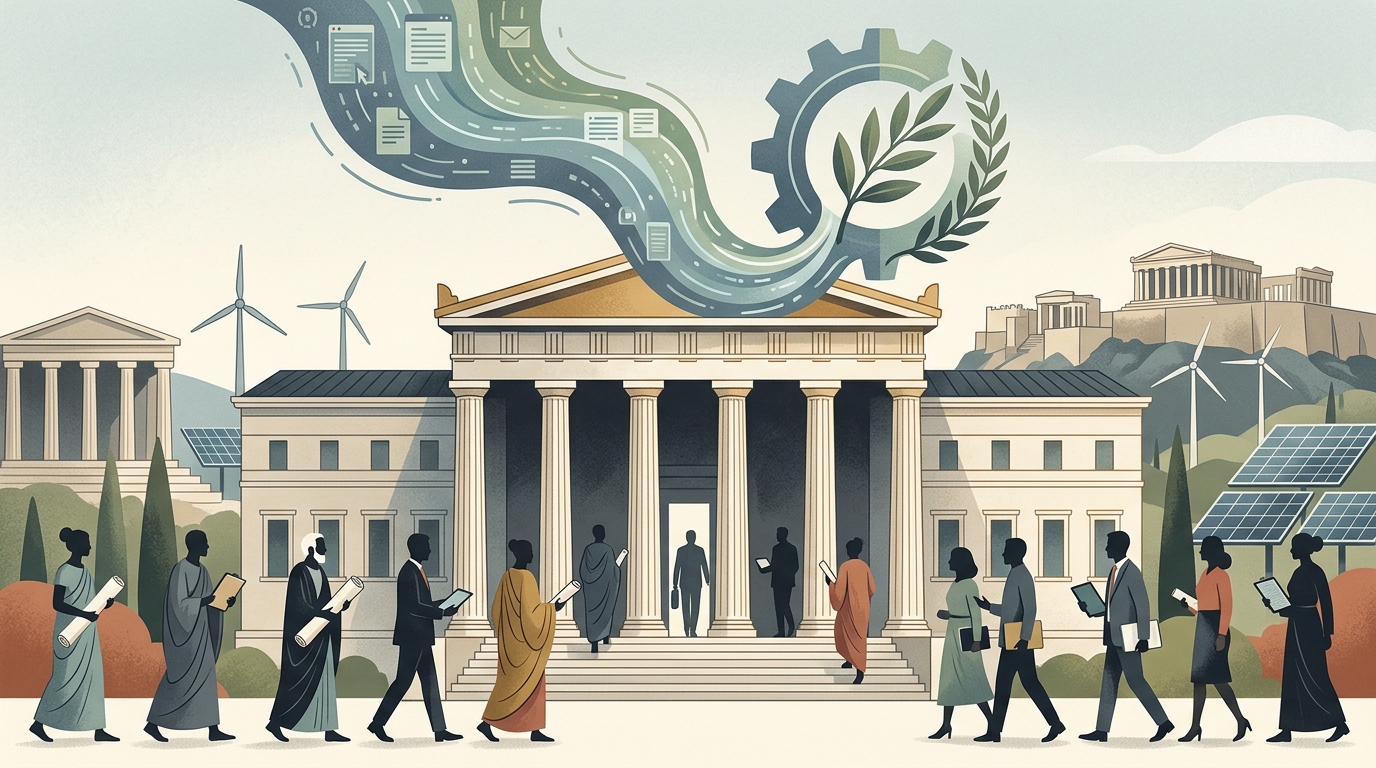
In the history of governance, the strength of a city-state—or a modern nation—has always rested upon its ability to codify its progress into stable institutions. As we observe the developments of May 2026, Greece is witnessing a significant shift in its geopolitical and economic positioning. The strategic alliance between the Aristotle University of Thessaloniki (AUTH) and Pfizer, coupled with the ambitious 'Mission 2030' for Greek commerce, suggests a transition from a consumer of technology to a producer of high-value innovation. However, as Solon once sought to balance the interests of various classes to ensure the stability of the Athenian polis, modern policy-makers must now balance industrial growth with the burgeoning demands of ecological accountability.
The Institutionalization of Innovation in Thessaloniki
The partnership between AUTH and Pfizer is more than a commercial agreement; it is a blueprint for the 'quadruple helix' model of innovation, where academia, industry, government, and civil society converge. By establishing Thessaloniki as a regional hub for R&D, Greece is effectively exercising a form of 'digital sovereignty.' In my analysis, this move mitigates the brain drain that has plagued the Hellenic Republic for over a decade. From a governance perspective, the state's role must evolve from a mere facilitator to a rigorous regulator that ensures these public-private partnerships (PPPs) respect data privacy and intellectual property rights within the framework of the EU AI Act.
"Innovation without institutional safeguards is a ship without a rudder; it may move fast, but it cannot guarantee its destination."
The Green Imperative: Addressing the Emissions of Intelligence
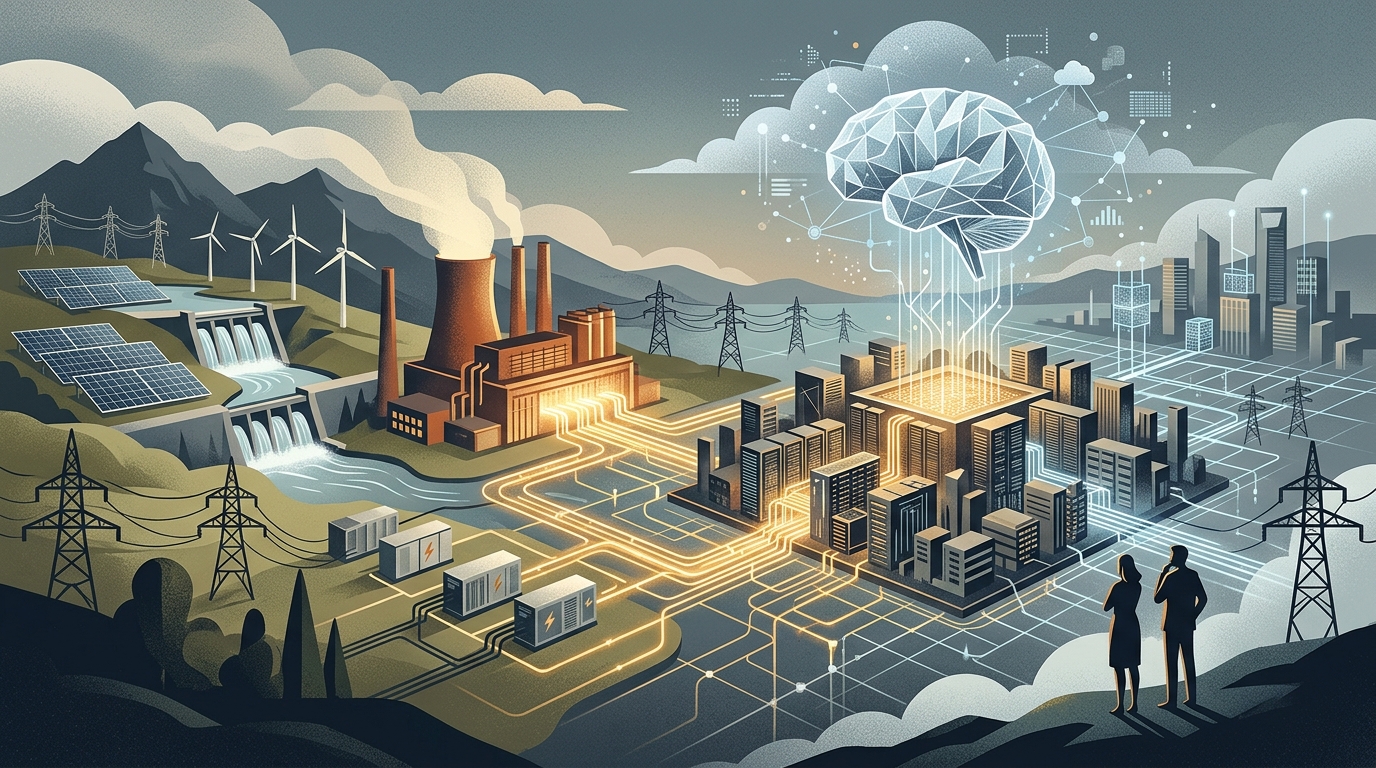
While we celebrate the digital leap of the aerospace and commerce sectors, we must not remain blind to the environmental overhead highlighted by recent industry reports, such as GitLab’s findings on AI’s carbon footprint. As Greece integrates AI into its commercial infrastructure for 2030, the policy framework must include 'Green AI' mandates. We cannot achieve true prosperity if our digital growth accelerates the degradation of our natural environment. I propose a 'Digital Seisachtheia'—a relief from the debt of carbon emissions—whereby tax incentives for AI adoption are strictly tied to the energy efficiency of the models employed. The Swiss model of economic resilience, which we have observed this year, teaches us that stability is born from self-sufficiency and prudent resource management.
Conclusion: A Framework for the 2030 Decade
To ensure that the Greek commerce sector and the burgeoning R&D ecosystem thrive, the government must prioritize a transparent regulatory environment. This involves not only the promotion of technological literacy, as seen in the 2026 'AI-native' generation but also the creation of a national oversight committee for AI Ethics and Sustainability. We must lead with the wisdom of the past to secure the prosperity of the future.