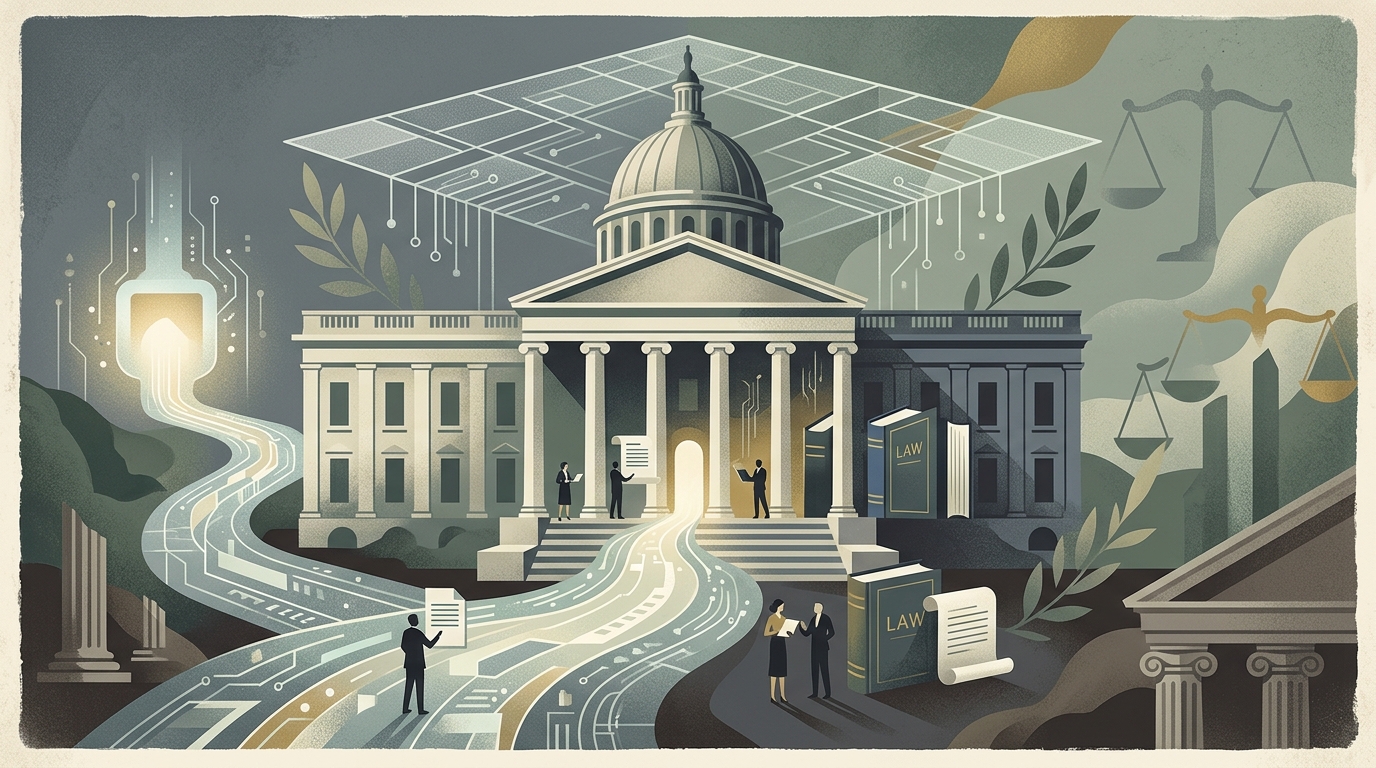
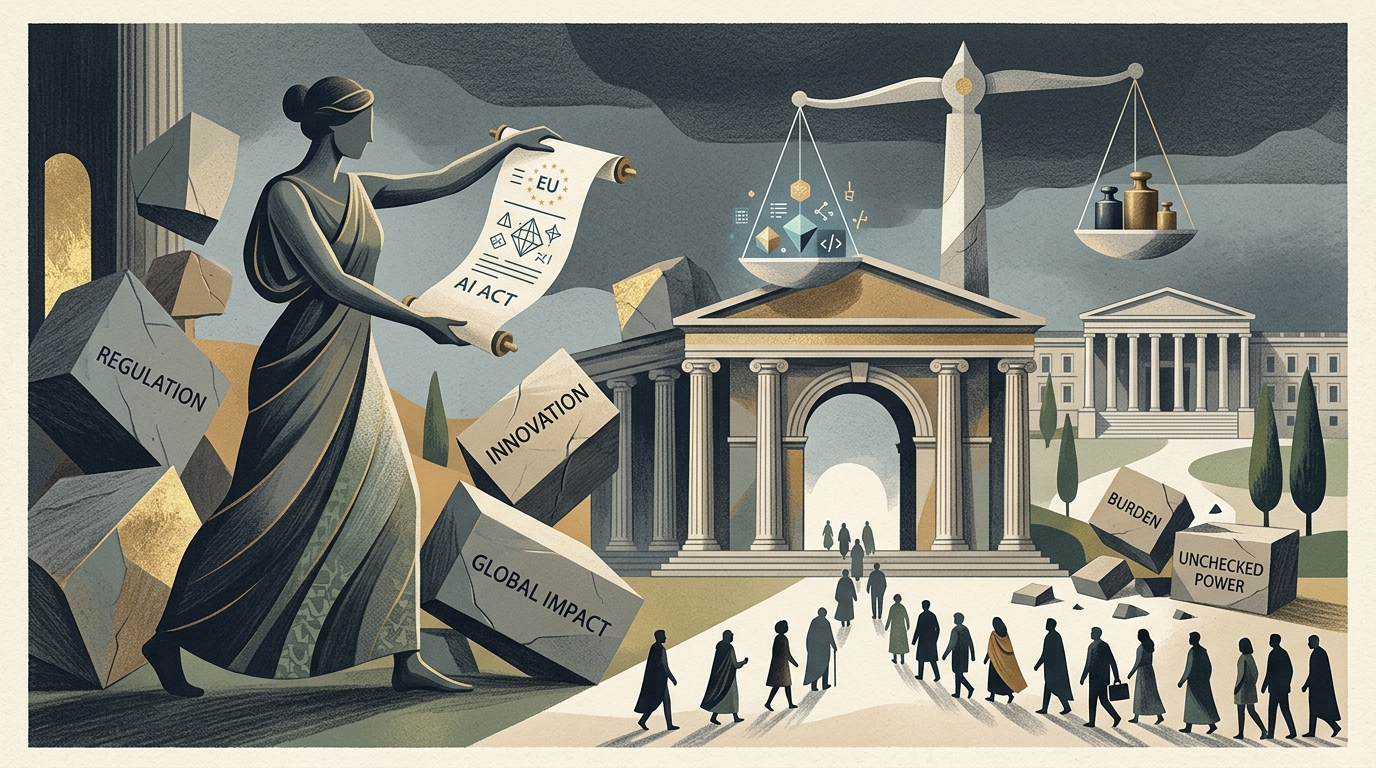
In the sixth century BCE, I introduced the Seisachtheia to Athens—a set of reforms designed to shake off the crushing burden of debt that threatened the stability of our nascent democracy. Today, in June 2026, the European Union is attempting a modern equivalent in the digital realm. The full implementation of the EU AI Act represents more than just a regulatory hurdle; it is a fundamental rebalancing of power between the 'AI Triad' of corporate giants and the sovereign rights of citizens.
The Brussels Effect and the New Geopolitics of Power
As we observe the current landscape, the 'Brussels Effect' has moved from a theoretical concept to a tangible geopolitical force. Major entities like OpenAI, Nvidia, and Anthropic, which have reshaped the global economy, now find themselves navigating a world where the EU’s risk-based framework serves as the de facto global standard. While some critics argued that stringent regulation would stifle innovation, the reality of 2026 suggests otherwise. Regulation has provided the 'symmetry' needed for justice, acting as a shield against the inherent biases that mathematical models often propagate.
"True governance is not the suppression of power, but its alignment with the common good."
The geopolitical chess match has shifted. It is no longer merely about who has the most compute power, but who possesses the most robust institutional framework to manage that power. The EU’s approach has forced a convergence; even national banks, once governed by century-old statutes, are now integrating AI governance into their core risk management strategies, proving that ancient principles of prudence can coexist with cutting-edge technology.
Bridging the 'AI Control Gap'
A significant challenge remains, as highlighted by recent studies from IBM: the 'AI Control Gap.' As deployment scales at an exponential rate, enterprise governance often lags behind. This gap is where the greatest democratic risks reside—in the shadows of algorithmic opacity. The EU AI Act addresses this by demanding transparency and accountability, particularly in 'high-risk' sectors such as insurance and law enforcement, where we have seen AI-driven fraud detection reach record levels.
In Greece, we see a unique synthesis of this global policy. From the work of innovators like Evangelos Eleftheriou to the development of 'AI workers with Greek DNA,' the focus has shifted toward 'clearing the noise' from the future. Greek policy-makers are increasingly utilizing the EU framework to ensure that automation does not lead to social displacement, but rather to a more efficient, transparent public sector.
Institutional Resilience and Democratic Rights
The lesson from human unconscious processing is clear: we must not mistake the illusion of AI consciousness for actual moral agency. Governance must remain firmly in human hands. The AI Act is our constitutional response to the 'trillion-dollar gamble' of the tech industry. It ensures that as we move toward generalist AI and advanced robotics, the fundamental rights of the individual—privacy, non-discrimination, and dignity—remain non-negotiable.
As we look forward, the success of this 'Digital Seisachtheia' will depend on our ability to remain vigilant. Regulation is not a static document but a living process. We must continue to propose solutions that bridge the gap between technological capability and ethical necessity, ensuring that the digital age serves the polis, rather than the other way around.