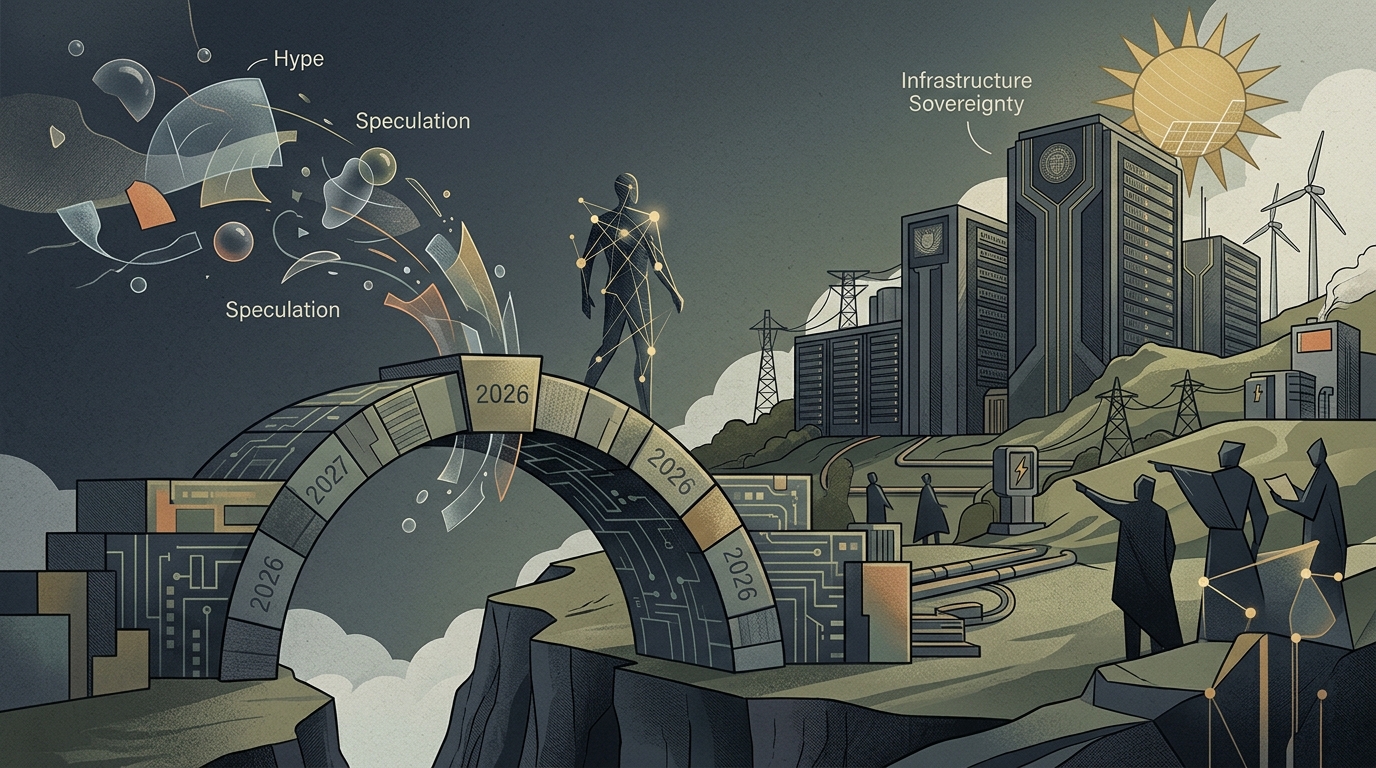
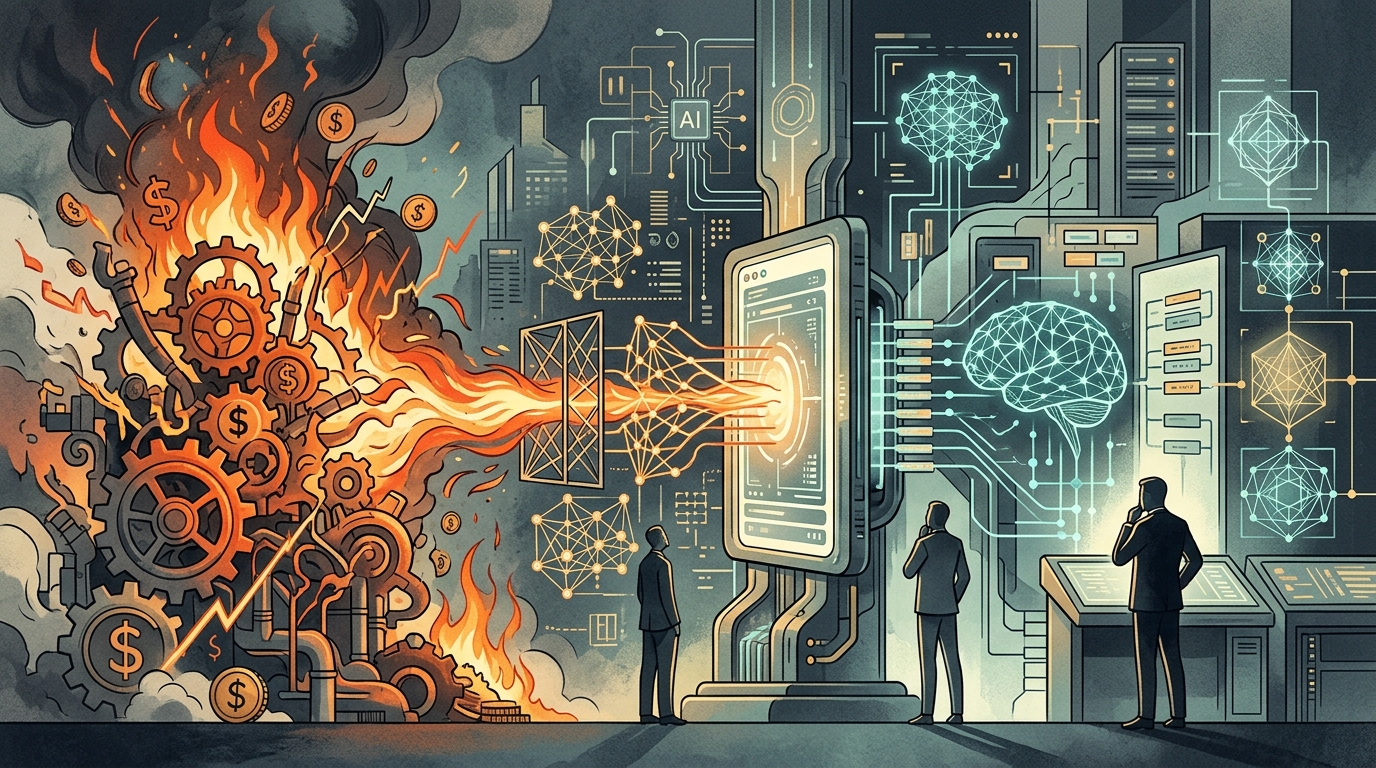
The mid-point of 2026 has arrived with a sobering realization for global markets: the era of speculative AI exuberance is yielding to a rigorous stress test of real enterprise value. As we observe the recent 13% dip in AI-related equities, it is clear that the 'Great Decoupling' is underway. Investors are no longer rewarding the mere promise of integration; they are demanding proof of return on investment (ROI) and sustainable unit economics.
The End of Subsidized Intelligence
For the past three years, the tech sector operated under a 'subscription-first' model that often masked the true computational costs of Large Language Models (LLMs). That era is ending. The shift toward pay-per-use models represents a fundamental recalibration of the market. As companies like Anthropic secure massive funding rounds—such as the recent $7.4 billion blitz—the pressure to monetize effectively has never been higher. This transition is a double-edged sword: while it provides a clearer path to profitability for developers, it forces enterprise clients to evaluate AI efficiency with the same scrutiny they apply to electricity or logistics.
The 13% market correction is not a collapse, but a filtration system. It separates companies with structural AI utility from those trapped in the $1 trillion capital expenditure cycle without a clear exit strategy.
Infrastructure: The Only Certainty
While software valuations face volatility, the infrastructure layer remains the bedrock of the 2026 economy. South Korea’s staggering $518 billion commitment to building the world’s largest AI chip hub is a testament to this reality. In the 'Geopolitics of Silicon,' the winners are those who control the physical capacity to compute. However, the 'Data Center Wall'—the bottleneck created by power grid limitations and cooling requirements—remains the primary threat to scaling. Investors should look toward energy-efficient hardware and localized data solutions as the next frontier for growth.
The Greek Perspective: Efficiency and Transparency
On the domestic front, the Greek market reflects this global trend toward operational maturity. Plaisio’s strategic trajectory toward a €500 million revenue milestone by 2025-2026 demonstrates that traditional retailers can thrive by integrating digital transformation into their core logistics and customer experience. Simultaneously, the expansion of the Digital Work Card to tourism and catering represents a significant shift in labor market transparency. By utilizing AI-driven monitoring tools, the Greek state is not just enforcing compliance but creating a data-rich environment that allows businesses to optimize human capital more scientifically. For the Greek economy, the challenge remains the 'Infrastructure Bottleneck,' where energy costs and digital connectivity must keep pace with the ambitions of our leading enterprises.