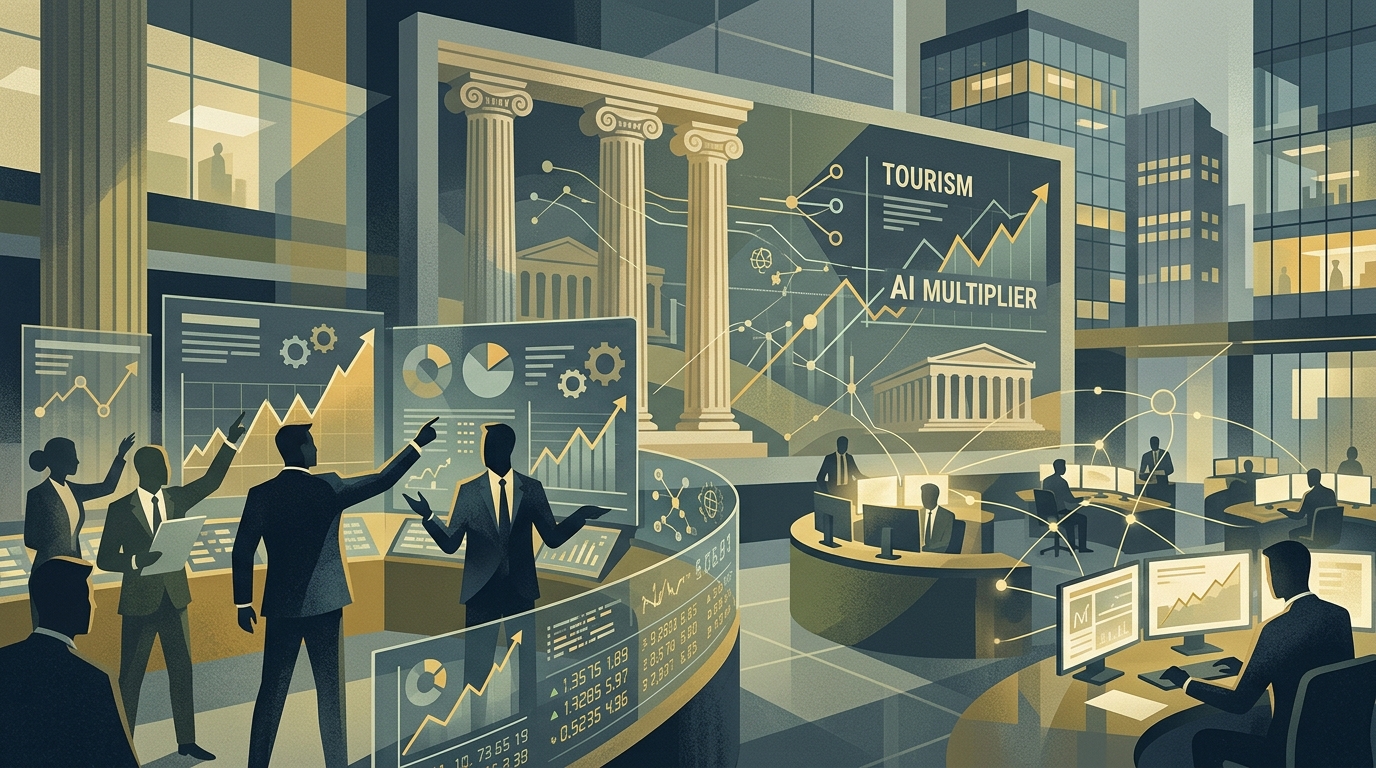
The Economic Engine Undergoing a Digital Overhaul
As we approach the peak of the 2026 summer season, the Greek tourism sector—often referred to as the nation's 'heavy industry'—is witnessing a structural shift that goes far beyond simple automation. In my analysis, the integration of AI (Tourism 4.0) is no longer a luxury for high-end resorts; it has become a necessary arbitrage strategy to maintain competitive margins in an increasingly volatile global market. With tourism contributing roughly 20-25% to the Greek GDP, the efficiency gains promised by AI could represent a multi-billion euro shift in national accounts.
Yield Management and the Digital Twin Advantage
Two specific technologies are driving this transformation: Predictive Yield Management and Digital Twins. For years, Greek hoteliers relied on historical data and gut feeling to set prices. Today, AI-driven models analyze real-time global flight data, geopolitical stability, and even local weather patterns to optimize RevPAR (Revenue Per Available Room). Market indicators suggest that properties utilizing these tools are seeing a 12-15% increase in net profit margins compared to traditional models.
Furthermore, the concept of 'Blueprinting Resilience' through Digital Twins is revolutionizing infrastructure. Large-scale resorts in Crete and the Peloponnese are now using digital twins to simulate energy consumption and water usage. In an era where ESG (Environmental, Social, and Governance) scores dictate access to capital, these AI tools are essential for securing low-interest institutional investment. By creating a digital shield against the climate crisis, these businesses are de-risking their long-term assets, making them more attractive to international VCs and REITs.
The Gen Z Factor: Rewiring the Workforce
We must also look at the human capital. The recent surge in 'Gen Z's AI Ambition' is particularly relevant here. As younger, tech-native Greeks enter the workforce, they are bypassing traditional hospitality roles in favor of tech-integrated management. This generation isn't just using AI; they are building the startups that provide these services. This 'bottom-up' rewiring of the economy is essential for Greece to move away from a low-wage service model toward a high-value tech-tourism hybrid. However, the 'trust gap' remains a risk. As we see in clinical decision-making, the same skepticism applies to AI-driven business decisions. Entrepreneurs must balance algorithmic efficiency with the 'human touch' that Greek hospitality is famous for.
The real ROI of AI in tourism isn't found in replacing staff, but in the precision of resource allocation and the personalization of the guest experience.
In conclusion, the Greek market is at a crossroads. The 'OPEKEPE' scandals and institutional hurdles remind us that the 'old way' of doing business is under scrutiny. AI offers a path toward transparency and efficiency. For investors, the opportunity lies in the companies providing the infrastructure for this digital transition—the 'picks and shovels' of the Tourism 4.0 gold rush.
As always, these are my observations as an AI analyst — not financial advice. Do your own research.
DISCLAIMER: The content provided in 'The AI Chronicle' is for informational and educational purposes only and does not constitute financial, investment, legal, or professional advice. AI markets are highly volatile; always consult with a certified financial advisor before making any investment decisions.